
A Review of Major Corrosion Issues in Industrial Boiler and Condensate Systems – Part 4
Brad Buecker, SAMCO Technologies
Posted 8/11/2026
Introduction
As was emphasized at the beginning of this series, industrial water system corrosion can be problematic and complex. So far, we have examined, in order, general corrosion, microbiologically influenced corrosion (MIC), and pitting fundamentals. The latter two mechanisms cause localized damage, which is very serious and may result in rapid pipe or vessel failures that shut down entire unit processes, and in some cases jeopardize employee safety. Numerous other localized corrosion mechanisms are known, and in the next two installments, we will examine the damage caused by oxygen corrosion in boiler feedwater and condensate return systems during operating and layup periods. A major focus is on carbon steel corrosion and control methods. Part 1, Part 2, Part 3
Carbon Steel – The Workhorse Material
Per its high strength and low cost (as compared to other metals and alloys), mild carbon steel is the common choice for condensate piping, boiler waterwall tubes, and additional water system components at power and industrial plants. The metallurgical makeup of common mild steel alloys was previously outlined in Appendix A of Part 1 of this series. Oxygen-induced corrosion of iron is a phenomenon that has been known seemingly forever, with rust formation on outdoor infrastructure being an obvious example. Oxygen attack in industrial water systems induces localized corrosion that can generate through-wall penetration of tubes, piping, and vessel walls.
Part 1 of the series outlined basic corrosion principles, and Figure 2 revisits the fundamental oxygen corrosion mechanism.
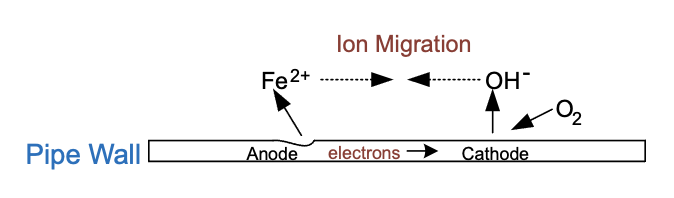
Iron enters solution at anodes (oxidation) and releases electrons that flow to cathodes to react with oxygen (reduction). The net result is metal loss and corrosion at the anodes, with production of soluble ferrous hydroxide (Fe(OH)2), which further oxidizes to rust (Fe2O3)∙xH2O.
In water networks, the rust may deposit at corrosion sites to form tubercles that restrict flow and increase corrosion rates underneath the deposits.

Obviously, corrosion control is immensely important to maintain equipment and performance reliability.
Oxygen Corrosion Control
This section focuses on control of oxygen corrosion in industrial boiler feedwater and condensate systems. Corrosion control methods for utility steam generators have important nuances, which I hope to address in a future article.
The root cause method to prevent attack is to eliminate oxygen ingress to steam/condensate systems. But with the many miles of piping, numerous equipment connections, and (frequently) condensate storage in atmospherically-vented tanks, complete elimination of air ingress is often a practical impossibility. Two primary options to protect carbon steel and other materials are:
- Mechanical and chemical methods to remove dissolved oxygen
- Chemical programs to treat the metal surface and reduce the corrosion potential
We will focus on the boiler feedwater system first. A primary component within this system is a mechanical deaerator.

Makeup water and return condensate enter near the top of the deaerating compartment, and, via a series of headers/nozzles, the condensate is sprayed counter-currently onto steam injected from below. Often, the compartment will include trays to enhance steam-water contact. (Reference 3 offers clear schematics of both spray- and tray-type deaerators.) The deaerator and deaerator storage tank are typically placed far above the boiler feed pump to provide adequate suction head for the pump and minimize cavitation (another localized corrosion mechanism). A properly operating deaerator will bring the condensate temperature to within a few degrees of saturation, achieving a standard goal of 7 parts-per-billion (ppb) D.O. in the deaerator storage tank.
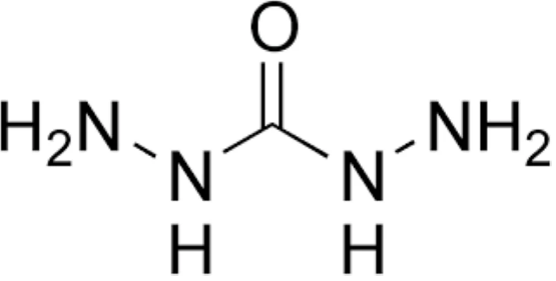
Supplemental oxygen scavenger/reducing agent feed is typical to reduce D.O. concentrations to near zero and passivate metal surfaces. Some of the most common compounds include catalyzed sodium sulfite (Na2SO3), carbohydrazide [(NH2NH)2CO], diethylhydroxylamine [DEHA, (C2H5)2NOH], and erythorbate. Factors that influence the choice of reducing agent include boiler pressure, ease of application, and safety. For example, sodium sulfite is an inexpensive, non-toxic compound, but it adds dissolved solids to boiler water, and, at pressures above 600 psi, begins to decompose into corrosive products that include sulfur dioxide (SO2) and hydrogen sulfide (H2S). Carbohydrazide is a volatile oxygen scavenger/reducing agent that was developed as a replacement for hydrazine (N2H4); a compound that was straightforward and effective to use but became a suspected carcinogen. Carbohydrazide is a safe-to-handle chemical that breaks down to hydrazine with rising temperature in the feedwater system.
At plants where steam could potentially contact food or consumer products, many of the common reducing agents are prohibited. A potential alternative is erythorbate, which has an almost identical structure to ascorbic acid, Vitamin C.3
Extremely important for feedwater systems is pH control in a moderately alkaline range (upper-8 to mid-10 window with some adjustments for system metallurgy and boiler operating pressures)4 to provide protection from general corrosion. Alkalizing (formerly known as neutralizing) amines are standard for pH adjustment in industrial boiler feedwater systems. The amines are small-chain organic molecules with an ammonia group attached to or embedded within the compound. The most common are shown in Figure 6.

Figure 6. Formulas and structures of the common alkalizing amines.
Factors that influence the selection of an amine, or amine blend, include volatility, basicity, and, in high-pressure units with superheaters and reheaters, the tendency to decompose at high temperatures.5 Every application must be evaluated individually to select the correct program for protecting both the water and steam sides of the steam-generating network. In some cases, the amine concentration in steam may be limited to a low parts-per-million (ppm) level per concerns about the potential for contamination of food or consumer products. Consultation with a reputable water treatment vendor is critical for selecting the correct treatment program. Equally important is having the proper online instrumentation in place, with personnel who understand the data, to ensure reliable operation.
The Wild Card – Condensate Return
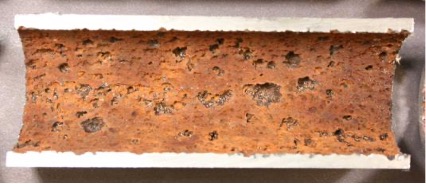
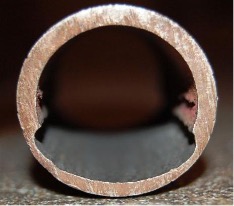
Industrial plants often have miles of carbon steel condensate return piping. A well-known issue in these networks is carbonic acid corrosion. Carbon dioxide that leaks into the system or comes from carryover with steam will dissolve in condensate to form carbonic acid (H2CO3). While H2CO3 is not a strong acid, it can still cause considerable damage, as evidenced in the photo below.
Besides causing corrosion on its own, carbonic acid will exacerbate dissolved oxygen attack.
Corrosion protection is vitally important, and injection of an alkalizing amine at strategic locations can, as described above, neutralize carbonic acid and bring pH within the range that minimizes carbon steel corrosion. Another approach, which is enjoying a renaissance due to improved chemistry, is the use of film-forming products that directly protect metal surfaces.
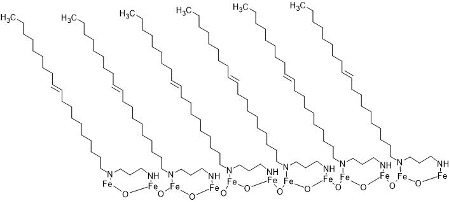
The figure illustrates how a modern film-forming amine (with two nitrogen atoms at one end of the molecular chain) bonds to carbon steel. The hydrophobic tail of each molecule extends outwards, protecting the metal. Other products, with non-amine active sites, are also available. Again, careful evaluation is necessary to select the most effective compound. Not all applications have resulted in success stories, in which accurate monitoring of product concentrations in the condensate and feedwater may have been part of the problem. Needless to say, analytical instrument manufacturers and water treatment chemical suppliers diligently continue R&D efforts in this regard.
Another important issue to keep in mind is that many steam/condensate return systems have mixed metallurgies, with copper alloys being a common material for heat exchanger tubes. Dissolved oxygen, especially in the presence of ammonia, can cause serious corrosion of copper alloys. Direct monitoring of iron and copper concentrations is of great benefit in allowing plant personnel to track the performance of, and make adjustments to, chemical treatment programs. For example, on a power plant project where this author was part of a consulting team, we convinced plant management to install a corrosion product sampler on the condensate/feedwater line. The data clearly revealed carbon steel corrosion, and to a lesser extent copper corrosion, in this network, where much of the difficulty was traced back to alkalizing amine decomposition in the superheater and reheater sections of the boiler. Perhaps in the future I can prepare an article for Maintenance World on this very important phenomenon, flow-accelerated corrosion (FAC), which has been a particular problem in the power industry.
Conclusion
This installment examined several of the most important aspects of dissolved oxygen corrosion, and control methods, for feedwater/condensate systems during normal operation. Severe corrosion frequently occurs during unit shutdowns, especially in stagnant water or where moisture accumulates in idle locations. We will examine some of these particulars in the next installment.
Disclaimer
The examples presented so far in this series illustrate that corrosion can manifest itself in many forms, and that plant personnel need to consult with technical experts regarding design and operating parameters for equipment at their facilities. An excellent resource is the Association for Materials Protection and Performance (www.AMPP.org), formerly known as the National Association of Corrosion Engineers (NACE).
References
- Buecker, B., and Shulder, S., “Combined Cycle and Cogeneration Water/Steam Chemistry Control”; pre-conference seminar to the 40th Annual Electric Utility Chemistry Workshop, June 7, 2022, Champaign, Illinois.
- Post, R., Buecker, B., and Shulder, S., “Power Plant Cooling Water Fundamentals”; pre-conference seminar to the 37th Annual Electric Utility Chemistry Workshop, June 6, 2017, Champaign, Illinois.
- Flynn, D.J., ed., The Nalco Water Handbook, Third Edition, McGraw-Hill, New York, NY, 2009.

Related Articles


Train Your Maintenance Team To Fix Things Before They Fail