

Pump Reliability: Mechanical Seals – Small Component, Big Impact
Posted 7/29/2026
Mechanical seals are often overlooked because of their small size compared with pumps, motors, piping systems, and other rotating equipment components. However, their role is critical. A mechanical seal is not simply a replaceable wear component—it is a containment device, reliability component, emissions-control barrier, and, in many applications, a key safety feature. When seals perform properly, equipment operates reliably with minimal attention. When they fail, the consequences can include leaks, unplanned downtime, environmental releases, equipment damage, and significant maintenance costs. (Source: Bhachu, ReliabilityWeb, “Mechanical Seals: Small Components, Major Consequences for Pump Reliability and Process Safety”)
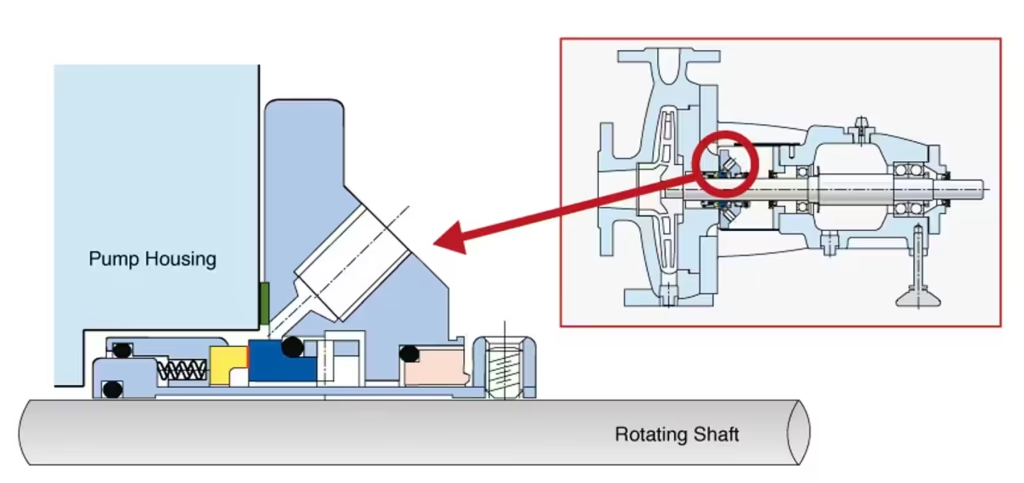
Mechanical seals prevent process fluids from escaping where a rotating shaft passes through a stationary pump casing. They accomplish this through two highly finished surfaces: a stationary seal face and a rotating seal face. Springs or bellows maintain contact between the faces while the shaft rotates. A thin fluid film between the faces provides lubrication and cooling, preventing direct contact that would quickly generate excessive heat and destroy the seal. (Source: Sondalini, MaintenanceWorld, “Get Mechanical Seals Working Properly,” 2024)
The performance of a mechanical seal depends on maintaining this delicate balance. The fluid film must be thick enough to lubricate and remove heat but thin enough to control leakage. Any condition that disrupts this film—such as dry running, flashing, contamination, excessive temperature, vibration, or poor operating conditions—can cause the seal faces to separate, resulting in leakage and premature failure. (Sources: Bhachu, ReliabilityWeb; Sondalini, MaintenanceWorld, 2024)

Why Do Mechanical Seals Fail?
A leaking mechanical seal is usually a symptom of a larger problem. Simply replacing the seal cartridge without identifying the underlying cause often leads to repeated failures.
Common causes include:
- Loss of lubrication due to dry running or vaporization
- Contaminated process fluid or solids entering the seal interface
- Excessive heat caused by poor cooling or inadequate flush systems
- Shaft misalignment, vibration, or excessive movement
- Improper installation or damaged seal faces
For long seal life, seal faces must remain clean, cool, lubricated, flat, and properly aligned. Precision is especially important because seal faces are manufactured to extremely tight tolerances. Field repairs or improper handling can compromise these surfaces and significantly reduce operating life. (Source: Sondalini, MaintenanceWorld, 2024)
Seal Support Systems Improve Reliability
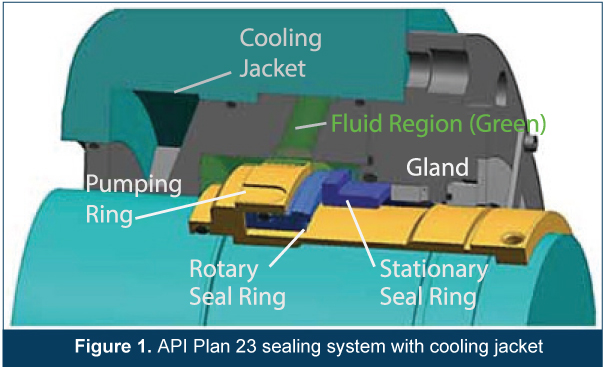
Mechanical seals operate best when they are provided with the correct environment. Seal support systems help control temperature, pressure, lubrication, and contamination around the seal faces. In demanding applications, dual seal arrangements and API 682 seal plans are often used to improve reliability and safety. (Source: Bhachu, ReliabilityWeb)
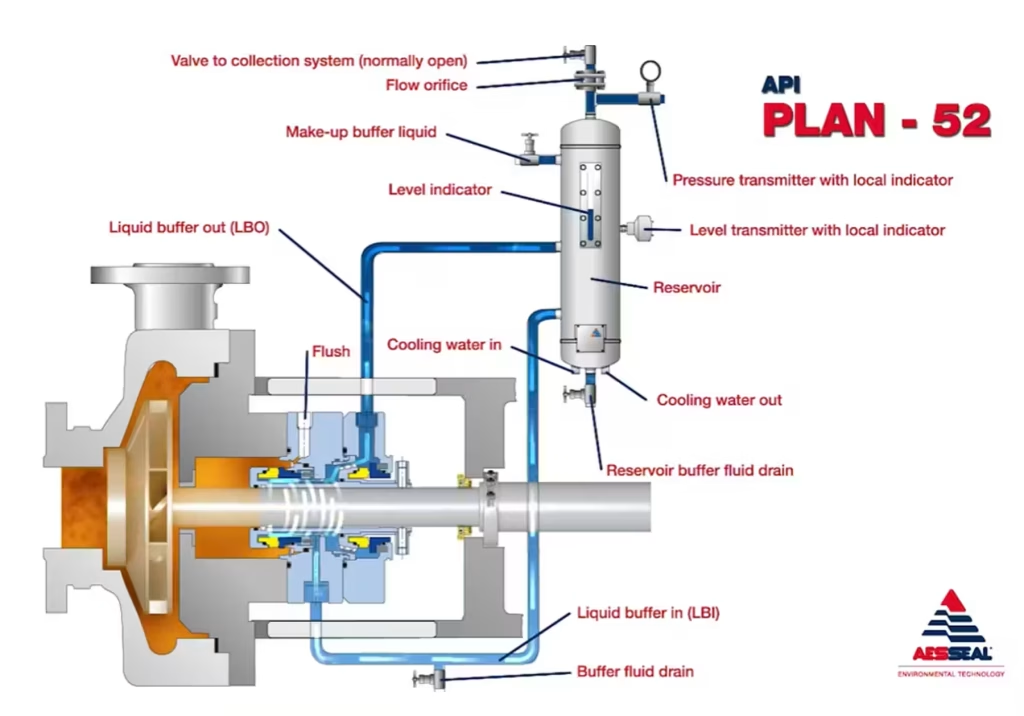
For example, Plan 52 uses an external reservoir containing buffer fluid between two seals. This provides containment and helps manage leakage. Plan 53B uses a pressurized barrier fluid system that maintains pressure above the process fluid, helping prevent contaminants from entering the seal faces and improving lubrication. (Source: Bhachu, ReliabilityWeb)
The difference between these systems is more than a design choice—it changes how the seal operates. A pressurized barrier system encourages clean fluid flow toward the process, while an unpressurized system allows process leakage toward the buffer system. In hazardous or environmentally sensitive applications, these differences can have a major impact on safety and reliability. (Source: Bhachu, ReliabilityWeb)
The Impact of Variable Speed Drives on Mechanical Seals
Variable speed drives (VSDs) have become increasingly common because they allow pumps to operate closer to system requirements, improving energy efficiency and reducing issues such as cavitation and excessive wear. However, changes in pump speed can also affect mechanical seal performance. (Source: Azibert, Fluid Sealing Association via MaintenanceWorld, “How Do Variable Speed Drives Impact Mechanical Seals?” 2014)
Mechanical seals are influenced by pressure, temperature, fluid properties, and the velocity of the sliding seal faces. While fluid properties typically remain consistent, changing pump speed affects pressure and seal face velocity. Increased speed generates more heat at the seal faces, while reduced speed may decrease circulation through seal support systems, potentially reducing cooling effectiveness. (Source: Azibert, 2014)
In many applications, modern mechanical seals can handle variable operating conditions without problems. However, special attention is required when seal support systems rely on pump discharge pressure or circulation devices.
For example, API Plan 11, Plan 21, and Plan 31 systems depend on pressure differences to provide cooling, flushing, or clean fluid circulation. If pump speed decreases too far, these systems may not provide sufficient flow or cooling, leading to increased seal temperatures and reduced seal life. (Source: Azibert, 2014)
Before adding a VSD to an existing pumping system, engineers should evaluate how the changing operating range affects the mechanical seal and its support system. The lowest operating speed is often the most critical condition because reduced flow may limit cooling performance. (Source: Azibert, 2014)

Improving Mechanical Seal Life
Extending mechanical seal life requires treating the seal as part of the entire pumping system rather than as an isolated component. Effective practices include:
- Maintaining proper alignment between the pump and motor
- Reducing vibration and shaft movement
- Ensuring flush and barrier systems are clean and operating correctly
- Monitoring seal temperatures, pressures, and leakage
- Investigating the root cause of failures instead of only replacing failed components
When properly installed and operated, mechanical seals can provide years of reliable service. In clean, controlled applications, seal life of five years or more is achievable, with some systems operating much longer. (Source: Sondalini, MaintenanceWorld, 2024)
Mechanical seals may be small, but their impact on equipment reliability, safety, and operating costs is significant. Reliable sealing depends on more than the seal itself—it requires proper design, installation, operating conditions, maintenance practices, and consideration of how changes such as variable speed operation affect the system. By managing the seal environment and understanding failure mechanisms, organizations can reduce downtime, improve pump reliability, and protect both people and processes.
References
- Bhachu, Umeet. Mechanical Seals: Small Components, Major Consequences for Pump Reliability and Process Safety. ReliabilityWeb.
- Sondalini, Mike. Get Mechanical Seals Working Properly. MaintenanceWorld, 2024.
- Azibert, Henri. How Do Variable Speed Drives Impact Mechanical Seals? Fluid Sealing Association via MaintenanceWorld, 2014.
Related Articles

The Importance of Equipment Fit, Tolerance, and Clearance

The Cost of Producing Electricity

Suction Bell Upgrades for Vertical Turbine Pumps
How do I Test Relays and Contactors?
Major Corrosion Issues in Industrial Water Systems – Part 1