In today’s fast-paced and technology-driven world, the role of facility managers is rapidly evolving, becoming more strategic and encompassing a broader scope of responsibilities. Gone are the days of simply managing work orders and third-party vendors. Nowadays, facility managers are tasked with streamlining workflows to ensure uninterrupted operations and leveraging the right tools for overall operational effectiveness. However, a few standard practices can hinder you from embracing this evolution and realizing your potential as a value provider. In this article, we will explore three crucial practices that you should steer clear of today as a facility manager.
Living in chaos with multiple platforms:
Facility managers rely on multiple-point solutions to manage their data, resulting in scattered information across emails, excel sheets, and other disparate systems. This fragmented approach can lead to confusion, errors, and a chaotic work environment. Losing track of important facility information, such as maintenance schedules, work orders, and equipment details, when stored in different places will impede your ability to make data-driven decisions. This will eventually lead to increased downtime, equipment failures, and potential safety hazards.
Adopting a unified platform can centralize your data by having all relevant information available in one place without the hassle of switching between different tools. This will improve overall efficiency, increase cost savings, optimize resources, and give you a clear overview of what’s happening with your facilities.
Losing control of your CMMS as a Facility Manager:
Facility managers often encounter situations where they have to configure workflows within their CMMS. While it may seem easier to ask for help from IT or a service provider, doing this can lead to a loss of control over your own processes, decreased autonomy, and reduced productivity. As a facility manager, you possess an in-depth understanding of your facility’s specific needs, making you the most qualified person to configure workflows efficiently and effectively. Relying on external assistance for managing your workflows can lead to delays in implementing changes, errors, and inefficiencies.
To take charge of your CMMS, all you need to do is utilize a no-code tool that empowers you to configure workflows intuitively and efficiently without having to know how to code. Taking ownership of your CMMS allows you to make quick adjustments, add new features, or modify existing workflows to facilitate seamless maintenance operations. Remember, your CMMS should be a system of action that simplifies your work and makes your life easier, not one that adds complexity and requires constant IT intervention.
Firefighting instead of future-proofing:
Unfortunately, many facility managers are trying to solve their O&M problems after they have occurred rather than implementing proactive maintenance strategies. If you find yourself constantly reacting to asset failures instead of preventing them, it’s a sign that your CMMS might not be fulfilling its potential. Reactive maintenance for your facilities is not only stressful and time-consuming, but it also often leads to increased asset downtime, higher repair costs, and compromised operational efficiency.
Your CMMS should be giving you real-time insights and predictive analytics to identify trends and help you chart out a proactive action plan. Adopting a proactive approach can steer your facility towards long-term goals, anticipate and mitigate risks, and enable you to make data-driven decisions to stay ahead in the modern operations era.
To excel as a facility manager in today’s evolving landscape requires embracing practices that enable you to provide strategic value to your organization. When you leverage the right technology and harness the true potential of your CMMS, you can easily break free from the tactical & mundane, and unlock your full potential as a facility manager.
Nivedha Sridhar
Nivedha Sridhar is the Director of Marketing and a founding team member at Facilio Inc., an enterprise-wide facilities O&M software platform provider headquartered in New York. Nivedha’s career spans over 8 years of product, growth, and corporate marketing focused on enterprise IoT software and business cloud applications. Before starting with Facilio in 2017, she managed Global Marketing for an enterprise brand at Zoho Corporation.
Besides being the central hub for maintenance, the storeroom also provides functions that are absolutely critical to the maintenance operation. These functions are so important that when the storeroom is operating in a best practices mode, the rest of the maintenance operation can excel – the storeroom is the enabler. Put another way, if the storeroom is run improperly (such as poor inventory accuracy, parts unavailable when needed due to poor replenishment and procurement practices, etc), the rest of the maintenance operation has no chance of achieving high service levels of equipment availability and reliability.
Besides being the central hub for maintenance, the storeroom also provides functions that are absolutely critical to the maintenance operation. These functions are so important that when the storeroom is operating in a best practices mode, the rest of the maintenance operation can excel – the storeroom is the enabler. Put another way, if the storeroom is run improperly (such as poor inventory accuracy, parts unavailable when needed due to poor replenishment and procurement practices, etc), the rest of the maintenance operation has no chance of achieving high service levels of equipment availability and reliability.
Thinking back about the initial resistance to TPM, Don Russell laughs and says, "At first a lot of folks here defined TPM as 'Totally Painted Machines'. Now I can say we all define TPM as 'Taking Pride in our Machines'."
Thinking back about the initial resistance to TPM, Don Russell laughs and says, "At first a lot of folks here defined TPM as 'Totally Painted Machines'. Now I can say we all define TPM as 'Taking Pride in our Machines'."
Yesterday you were a happy camper. Today you are told your Maintenance Cost (MC) as a percent of your Estimated Replacement Value (ERV) is 4.9%. According to Consulting, Inc. and your corporate management 4.9% is way too high. Good performers are under 3%, some operations are even under 2%. So, the question is what are you going to do about it Mr. Maintenance Manager?
Yesterday you were a happy camper. Today you are told your Maintenance Cost (MC) as a percent of your Estimated Replacement Value (ERV) is 4.9%. According to Consulting, Inc. and your corporate management 4.9% is way too high. Good performers are under 3%, some operations are even under 2%. So, the question is what are you going to do about it Mr. Maintenance Manager?
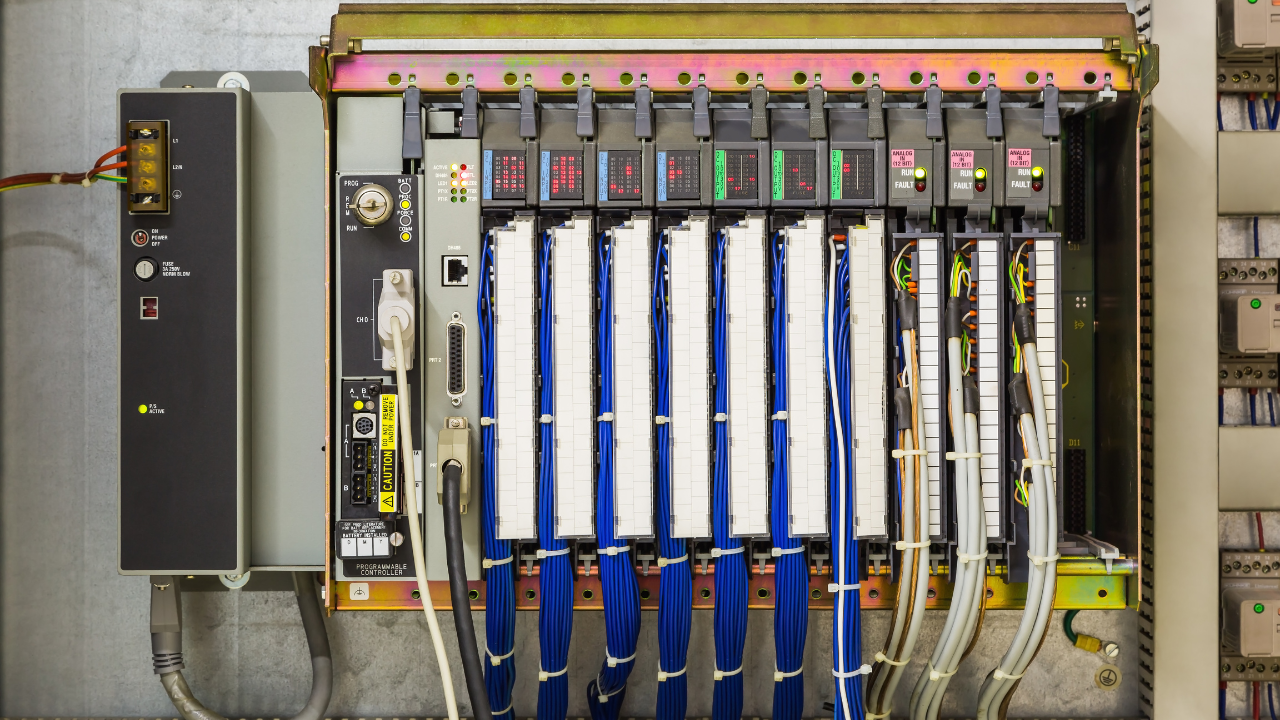
You need to read this article on maintenance management of PLCs. Why? Because the PLCs (Programmable Logic Controllers) are the brains of your operation. When the PLC is not functioning properly, lines shut down, plants shutdown, even city bridges and water stations could cease to operate. Thousands to millions could be lost by one little PLC in an electrical panel that you never even knew existed. But most importantly, damage to machine and personnel could result from improper maintenance management of your company’s PLCs.
You need to read this article on maintenance management of PLCs. Why? Because the PLCs (Programmable Logic Controllers) are the brains of your operation. When the PLC is not functioning properly, lines shut down, plants shutdown, even city bridges and water stations could cease to operate. Thousands to millions could be lost by one little PLC in an electrical panel that you never even knew existed. But most importantly, damage to machine and personnel could result from improper maintenance management of your company’s PLCs.
The last of the ‘baby boomer’ generation are now retiring from the workplace. As they walk out of the door of your business for the last time, they are taking with them a lifetime's experience from old-school apprenticeship programmes to a lifetime of fault diagnosis and learning in the ‘university of life.’ That experience is what helped your business grow, become successful, and kept your customers happy and returning with repeat orders! So, what can be achieved in the time before valued employees retire for knowledge capture and knowledge transfer so your business can maintain momentum?
The last of the ‘baby boomer’ generation are now retiring from the workplace. As they walk out of the door of your business for the last time, they are taking with them a lifetime's experience from old-school apprenticeship programmes to a lifetime of fault diagnosis and learning in the ‘university of life.’ That experience is what helped your business grow, become successful, and kept your customers happy and returning with repeat orders! So, what can be achieved in the time before valued employees retire for knowledge capture and knowledge transfer so your business can maintain momentum?
Training the next generation of Lean leaders (lean leadership training) is a multifaceted process that encompasses education, practical experience, and tailored continuous development focused specifically on developing promoters of business performance. Particularly important in achieving this performance is to build cultures where inclusive leadership can thrive.
Training the next generation of Lean leaders (lean leadership training) is a multifaceted process that encompasses education, practical experience, and tailored continuous development focused specifically on developing promoters of business performance. Particularly important in achieving this performance is to build cultures where inclusive leadership can thrive.