Where Do Maintenance Professionals Come From?
www.machineryreliability.com
-“World-class performance is impossible to achieve without qualified maintenance professionals…”-
Not long ago, the maintenance manager of a world-scale petrochemical plant located off shore sent us a distress message. He detailed the long-term effects of “reengineering” by blindly downsizing the reliability assurance and improvement function in a number of modern plants.
“We are continuously plagued with problems associated with plant rotating equipment and turbomachinery,” he wrote. “The quality of maintenance on our rotating equipment has deteriorated to the point where we suffered severe losses, including fatalities … To this end, I am seeking assistance, support, and guidance in how I should proceed.”
This manager deserves considerable credit for recognizing the seriousness of the situation and asking for help. Encouraged by our quick response, he sent additional details. He candidly outlined what went wrong, his current competency gap, and how he planned to recover, suggesting the following:
- Carry out an audit of his maintenance systems, procedures, and personnel specific to rotating equipment maintenance.
- Set up a team of professionals and experts to work with him for an initial period of 6 months.
- Provide consulting support and follow-up service for some period thereafter.
He continued by highlighting the overall purpose of the team—“to complement the existing maintenance team by injecting professionalism, quality, experience, and expertise” in the following disciplines: rotating equipment maintenance, electrical and instrument maintenance, maintenance supervision, and maintenance planning.
For members of the rotating equipment team, he specified:
- 10 to 15 years of hands-on experience in maintaining and overhauling rotating equipment, including general purpose steam turbines, high speed/high horsepower turbomachinery, pumps, compressors, blowers, gearboxes, lubrication systems, bearing maintenance, mechanical seals, alignment, and leak repairs.
- Mechanical engineering technician diploma as a minimum requirement.
- Systematic approach to troubleshooting and diagnostics of problems associated with plant rotating equipment, through quality procedures and checklists.
Requirements for the other disciplines were equally rigorous—10 to 15 years experience, technician diploma, etc. Furthermore, he specified that all members of the team must be between 35 and 45 years of age; able to communicate professionally to all levels of the organization; proactive in their approach to work; able to adapt to the local environment and local organizational and societal culture in a very short time period; and more.
We simply couldn’t help but notice the age qualifications sought in this instance. The expert retiree is ruled out, and one might wonder as to which qualified 35- to 45-year-old resident of North America or Western Europe is willing to take on the cultural, technical, and procedural challenges that were laid out or implied by the client. Which brings us to the point:
Where were the maintenance and reliability professionals to come from?
Many managers are unaware that best-in-class companies routinely design-out maintenance at the inception of a project. That, clearly, is the first key to highest equipment reliability and plant profitability. Whenever maintenance events occur as time goes on, the real industry leaders see every one of these events as an opportunity to upgrade. Indeed, upgrading is the second key, and upgrading is the job of highly trained, well-organized, knowledgeable reliability professionals.
World-class performance is impossible to achieve without qualified maintenance professionals, and the notion that these professionals could always be hired on a moment’s notice is unrealistic. Similarly, the idea that contractors can fill the gap surely lacks merit. Where would the contractor’s young engineers have received their training?
And, while we will do our best to work with this client, here’s our advice to the plant manager who understands the value of a thoroughly well-trained maintenance-reliability workforce: Develop them and hold on to them.
Start by compiling a role statement, then progress to mapping out a training plan. Interview a number of interested candidates and select the right ones. Give them periodic performance feedback, defend their goals and contributions as necessary and appropriate. Don’t ever allow the trained reliability professional to become just a pair of hands, or a person whose entire time is spent fighting repair deadlines rather than being immersed in proactive failure prevention. Groom this reliability professional’s abilities, judgment, and motivation; do it by encouraging access to his or her peers. Ask this person to use analytical skills to the utmost, to read, to write, to communicate. All parties will benefit if you carefully and consistently implement this “grow-your-own” formula.
Related Articles
How does the current state of leadership affect employee engagement? What is the effect of both good and bad leadership as it pertains to organizational health and engagement? From a leadership perspective, who actually is responsible for employee engagement?
How does the current state of leadership affect employee engagement? What is the effect of both good and bad leadership as it pertains to organizational health and engagement? From a leadership perspective, who actually is responsible for employee engagement?
See More
The phrase “It’s just common sense” is used quite often to describe conclusions or circumstances that are obvious to most people, at least those within earshot. However, W. Edwards Deming, a well-respected management guru and quality expert, famously said ‘There’s no such thing as common sense. If there were, it would be common.’ So, I suppose we have our answer to the title question, at least from Deming’s perspective. That said, let’s explore this further, and perhaps try to begin to understand why he said this, and why so often we see instances where “common sense” is not applied. Maybe it’s just not as common as it should be.
The phrase “It’s just common sense” is used quite often to describe conclusions or circumstances that are obvious to most people, at least those within earshot. However, W. Edwards Deming, a well-respected management guru and quality expert, famously said ‘There’s no such thing as common sense. If there were, it would be common.’ So, I suppose we have our answer to the title question, at least from Deming’s perspective. That said, let’s explore this further, and perhaps try to begin to understand why he said this, and why so often we see instances where “common sense” is not applied. Maybe it’s just not as common as it should be.
See More
As a leader you need to create an organization that will follow you to make your vision, or future organization, a reality. In my experience as a leader I have found it very important to develop and communicate your beliefs to your organization. These maintenance management strategy beliefs will then be guiding your organization on their journey towards your goals.
As a leader you need to create an organization that will follow you to make your vision, or future organization, a reality. In my experience as a leader I have found it very important to develop and communicate your beliefs to your organization. These maintenance management strategy beliefs will then be guiding your organization on their journey towards your goals.
See More
Many facility managers continue to rely on paper maps, blueprints, and spreadsheets to track assets, navigate spaces, and manage emergencies. While digitized floor plans are often seen as an improvement, it remains limited in functionality, offering little more than a digital version of its paper counterpart. This is where a dynamic mapping solution, takes the lead.
Many facility managers continue to rely on paper maps, blueprints, and spreadsheets to track assets, navigate spaces, and manage emergencies. While digitized floor plans are often seen as an improvement, it remains limited in functionality, offering little more than a digital version of its paper counterpart. This is where a dynamic mapping solution, takes the lead.
See More
The current economic climate dictates that cost management is a critical activity for many companies and their managers. Maintenance is very often seen as an area where cost cutting targets can be easily and quickly achieved. Many maintenance managers take the view that this type of philosophy always ends up with increased costs in the future. This is not true in many cases. 15 years of analysis and review of maintenance programs by the author shows that most maintenance departments are more reactive than they should be and because of this, they over spend and underperform.
The current economic climate dictates that cost management is a critical activity for many companies and their managers. Maintenance is very often seen as an area where cost cutting targets can be easily and quickly achieved. Many maintenance managers take the view that this type of philosophy always ends up with increased costs in the future. This is not true in many cases. 15 years of analysis and review of maintenance programs by the author shows that most maintenance departments are more reactive than they should be and because of this, they over spend and underperform.
See More
Technical visionaries often invoke terms like the Internet of Things, smart machines and machine to machine (M2M) to ease our fears about managing the upcoming brain drain that accompanies the graying American industrial workforce. The theory goes that one day, self-learning machines and massively parallel computing may replace the operator. Perhaps, but not in the foreseeable future. That's because smart machines are very good at keeping us from doing dumb things, like stalling a commercial airliner, or pushing a gas compressor beyond safe tolerances. In the realm of black and white, the value of artificial intelligence is unassailable. But what about the rest of the time?
Technical visionaries often invoke terms like the Internet of Things, smart machines and machine to machine (M2M) to ease our fears about managing the upcoming brain drain that accompanies the graying American industrial workforce. The theory goes that one day, self-learning machines and massively parallel computing may replace the operator. Perhaps, but not in the foreseeable future. That's because smart machines are very good at keeping us from doing dumb things, like stalling a commercial airliner, or pushing a gas compressor beyond safe tolerances. In the realm of black and white, the value of artificial intelligence is unassailable. But what about the rest of the time?
See More
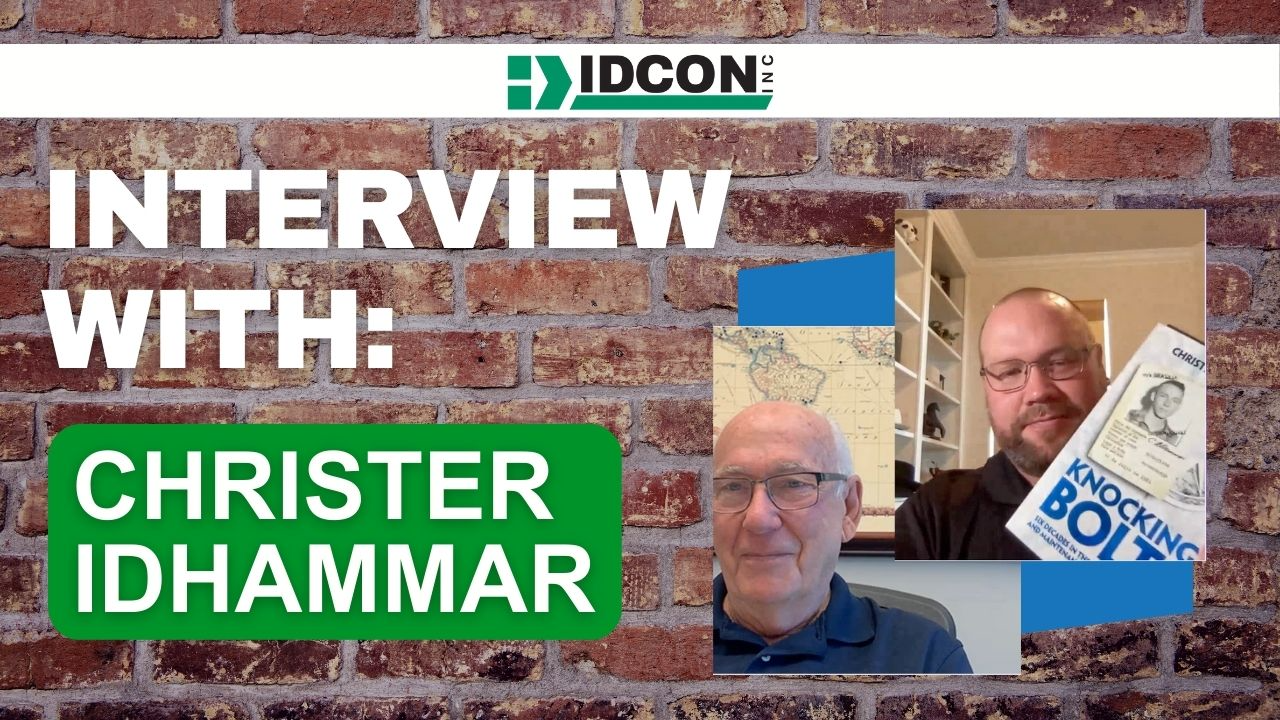
Christer Idhammar is recognized as a maintenance guru across the world in the maintenance and reliability community. As the founder of IDCON INC and recipient of numerous awards and speaking invitations, he has established himself in his field through engaging and often hands on demonstrations. Christer sits down with Greg Mecomber to discuss his experiences over the years and his appreciation for the field.
Christer Idhammar is recognized as a maintenance guru across the world in the maintenance and reliability community. As the founder of IDCON INC and recipient of numerous awards and speaking invitations, he has established himself in his field through engaging and often hands on demonstrations. Christer sits down with Greg Mecomber to discuss his experiences over the years and his appreciation for the field.
See More