

Online Condition Monitoring Reaps Benefits for Borealis
ME Plant and Maintenance Magazine
Click here to download the full pdf.
ME Plant and Maintenance Magazine
Related Articles

Shock Pulse Goes Spectrum
SPM Instrument AB, Sweden, launches a brand new diagnostic method in connection with Leonova™, a hand-held machine condition analyzer. Called the SPM Spectrum™, it is the result of an FFT on the time signal recorded with an SPM shock pulse transducer from a rolling element bearing. The individual bearing frequencies (BPI, BPO, 2*B2 and FT) and their harmonics are highlighted in the spectrum. This is displayed together with the measured shock value and a light signal, green, yellow or red that shows the result of bearing condition evaluation.
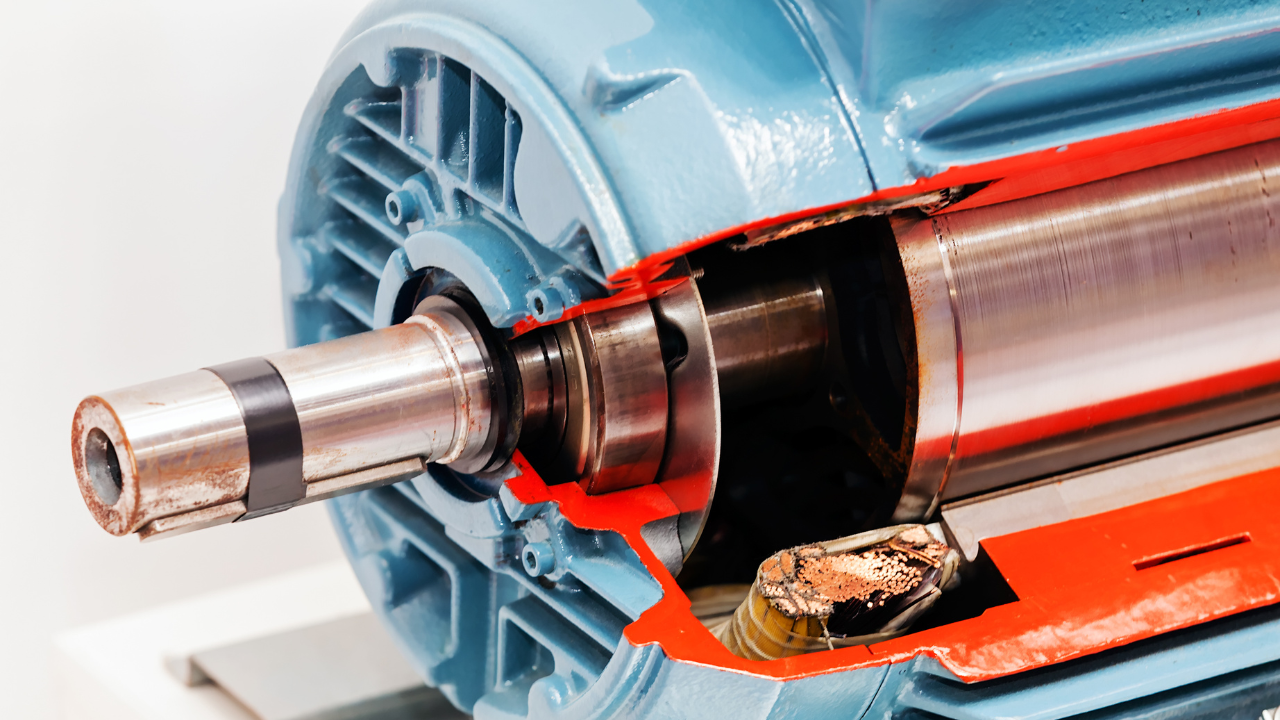
In-Process Motor Testing Results Using Model Based Fault Detection Approach
Rapid progress in process automation and tightening quality standards result in a growing demand being placed on fault detection and diagnostics (FDD) methods to provide both speed and reliability of motor quality testing. This paper presents the findings of a decade long research and development efforts in the field of experimental modeling technique and its practical applications for the fault detection purposes, first in the fields of aerospace and defense, and now in the context of highvolume electric motor manufacturing. Underlying this patented technology is a set of proprietary algorithms that enable precise tracking of the parameters pertaining to the physical structure of the motor.

Making the Case for Harmonics, Part 2
The question I posed is: Are the harmonics real? In other words, although the mass is still only bouncing up and down 30 times per second, is there actually real vibration occurring at 60, 90 and 120 Hz, etc.? OR are these just artifacts of the FFT?

Data Analysis Tip 2 – Create a Vibration Test and Analysis Guide
A vibration test and analysis guide is a simple book or electronic document that contains a variety of information about the machine. Information should include: A simple schematic of the machine with test points identified, instructions for testing the machine (especially if loads and speeds must be manipulated or verified), name plate information and a simple schematic of internal components. This information is invaluable for conducting a proper diagnosis of the machine.

Condition Monitoring of Pumps in the Food and Beverage Industry
From stringent hygienic requirements to ensure food safety, to tight production schedules and constantly changing consumer tastes, food and beverage processors face a number of unique challenges. It’s imperative that processors’ equipment operates at peak performance, minimizing downtime while ensuring high quality end products for consumption. Pump performance is a critical factor in overall operational efficiency. Properly functioning pumps ensure product flows effectively through the line to final packaging and distribution, and they play a crucial role in efficient cleaning-in-place processes. Condition monitoring of pumps in the food and beverage industry.

Define and Measure KPIs and Goals for Condition Based Maintenance
Condition based maintenance offers a large array of benefits if done correctly. It is not enough however to know we are doing a good job. We have to be clear about our goals and we have to be clear about how we are going to measure if we are meeting our goals or not. There are all sorts of fancy software platforms with dashboards that can help us define and measure KPIs, and track and visualize them, but we have to actually use them!

Beyond the Usual Applications for Infrared Thermography
There are many uses for infrared thermography other than inspecting electrical switchgear and mechanical components. Inspecting buildings for heat loss was one of the first commercial uses for infrared thermography.