7 Points to Successful Root Cause Analysis (RCA)
Successful Root Cause Analysis (RCA) is a useful tool for trouble shooting breakdowns and efficiently coming to a solution. I propose the following seven points for successful implementation of RCA that will naturally result in increased profits.
Seven Points For Successful Root Cause Analysis
I. Describe the actual breakdown.
II. Define the physical phenomena of the breakdown.
III. Organize the details of the breakdown by using the ‘3W2H’ (with what, when, where, how, how much) tool.
IV. Work as a team, respecting each other’s expertise and knowledge, rather than individually.
V. Consider every possible cause of the breakdown.
VI. Verify all logical causes and eliminate all illogical causes.
VII. If determined that the cause of the breakdown was human error, separate that cause from the physical causes.
I. Describe the actual breakdown.
Describe all observations of the breakdown. Frequently people do not check the breakdown in detail. That is really dangerous way of finding causes, solving the problem. There should be a physical examination of the machines involved and a detailed description of the actual break. In not checking all aspects, there is a high probability of missing the cause. Every aspect must be checked.
II. Define the physical phenomena of the breakdown.
When you are looking for the cause of the breakdown, it is imperative that you define the problem to physical phenomena. For example: If the lamp is off, rather than just stop at problem’s phenomena, define ‘Lamp off ‘ in physical phenomena. If you define ‘lamp off’ to ‘electricity can’t go through lamp in the circuit’, you can get to problem essentially. This is a more exact and helpful description of the problem
III. Organize the details of the breakdown by using the ‘3W2H’
Do not make any assumptions when examining a problem. No two problems are exactly the same in nature and cause. Actually, it is extremely rare for the exact same breakdown to occur twice. Look at each problem as if you were looking at the situation for the first time. It looks like even though that cause is different, but their breakdown phenomena looks same. For each problem use: with what, when, where, how, and how much. In answering these questions from a new perspective each time, RCA will be more quickly achieved.
IV. Work as a team, respecting each other’s expertise and knowledge, rather than working individually.
The more input a problem from various perspectives, the better. Everyone will look at the problem differently, so it is to your advantage to seek the assistance of everyone involved in the situation from machine operators, supervisors and managers. One paper company, when their managers joined in an effort to improve their production, thought of a better design for a paper machine. The manufacture of the machine implemented their suggestions with very positive results.
V. Consider every possible cause of the breakdown.
Looking problems in the past may be helpful in determining your cause of the breakdown; however, you should take care in not limiting yourself to past causes. Every possible cause must be considered. All potential causes need to be cleared.
VI. Verify all logical causes and eliminate all illogical causes.
In processing cause analysis, you must consider all causes. It will become clear in the process that some causes will be illogical. Remove all illogical causes after careful examination. You can see they are logical or not by reversing it. Let’s look at the simple physical phenomena as an example. ‘Lamp off’ means ‘electricity cannot travel through the lamp’. If one of the causes of electricity cannot travel through the lamp is ‘fuse out’, so to find out whether this is appropriate or not, look if fuse is out, electricity cannot travel through the lamp. If it does, you can see that as a possibility of cause.
VII. If determined that the cause of the breakdown was human error, separate that cause from the physical causes.
In the process of team evaluation, it will become obvious that the cause of the breakdown was human error. It is important to separate the human error factors from the physical factors. If there is a human cause, the participation of attendees can be lower. So don’t except that possibility. Organize them separately and don’t leave out the physical causes.
Jinsso Kim
Related Articles
If I have an unwanted situation which consumes resources and tends to happen in a repeated fashion then there is a possibility that it might be beneficial to figure out what is really causing this situation to occur and remove it so the situation does not occur again. This is generally referred to as Root Cause Analysis, finding the real cause of the problem and dealing with it rather than simply continuing to deal with the symptoms.
If I have an unwanted situation which consumes resources and tends to happen in a repeated fashion then there is a possibility that it might be beneficial to figure out what is really causing this situation to occur and remove it so the situation does not occur again. This is generally referred to as Root Cause Analysis, finding the real cause of the problem and dealing with it rather than simply continuing to deal with the symptoms.
See More
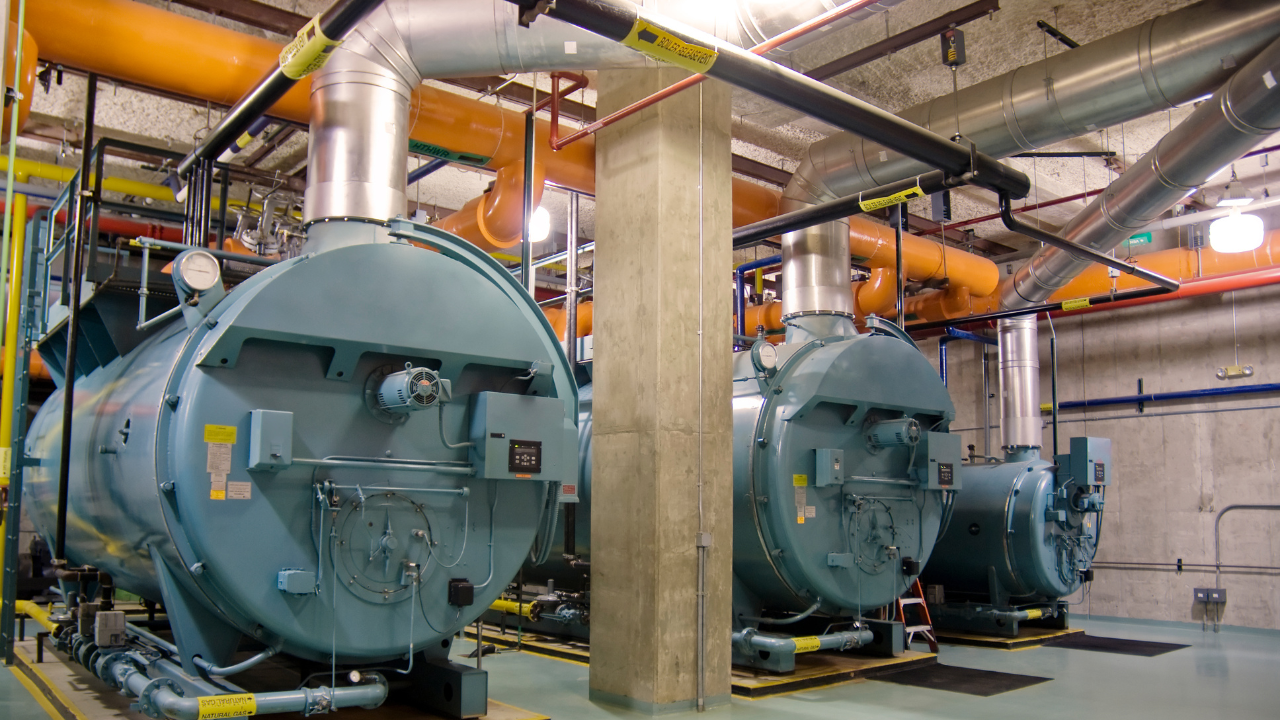
The power industry’s operating and maintenance practices were held up to intense regulator and public scrutiny when on November 6, 2007, a Massachusetts power plant’s steam-generating boiler exploded and three men died. The Department of Public Safety’s Incident Report investigation determined that the primary cause of the Dominion Energy New England’s Salem Harbor Generating Station Unit 3 explosion was extensive corrosion of boiler tubes
The power industry’s operating and maintenance practices were held up to intense regulator and public scrutiny when on November 6, 2007, a Massachusetts power plant’s steam-generating boiler exploded and three men died. The Department of Public Safety’s Incident Report investigation determined that the primary cause of the Dominion Energy New England’s Salem Harbor Generating Station Unit 3 explosion was extensive corrosion of boiler tubes
See More
To successfully carry out this mission, a root-cause investigation needs to be evidence-driven in accordance with a rigorous application of the bedrock of all root-cause methodologies: the Scientific Method. Consistent with the Scientific Method, underlying assumptions have to be questioned and conclusions have to be consistent with the available evidence, as well as with proven scientific facts and principles. Sometimes root-cause investigations fail to fulfill their primary mission and the failure recurs. In that regard, diagnosing the root cause of root-cause investigation failures is, in itself, an interesting topic. Here are three common reasons why some root-cause investigations fail their mission.
To successfully carry out this mission, a root-cause investigation needs to be evidence-driven in accordance with a rigorous application of the bedrock of all root-cause methodologies: the Scientific Method. Consistent with the Scientific Method, underlying assumptions have to be questioned and conclusions have to be consistent with the available evidence, as well as with proven scientific facts and principles. Sometimes root-cause investigations fail to fulfill their primary mission and the failure recurs. In that regard, diagnosing the root cause of root-cause investigation failures is, in itself, an interesting topic. Here are three common reasons why some root-cause investigations fail their mission.
See More
A fault tree is constructed starting with the final failure and progressively tracing each cause that led to the previous cause. This continues till the trail can be traced back no further. Each result of a cause must clearly flow from its predecessor (the one before it). If it is clear that a step is missing between causes it is added in and evidence looked for to support its presence. Below is a sample fault tree for the moral story of the kingdom lost because of a missing horseshoe nail.
A fault tree is constructed starting with the final failure and progressively tracing each cause that led to the previous cause. This continues till the trail can be traced back no further. Each result of a cause must clearly flow from its predecessor (the one before it). If it is clear that a step is missing between causes it is added in and evidence looked for to support its presence. Below is a sample fault tree for the moral story of the kingdom lost because of a missing horseshoe nail.
See More
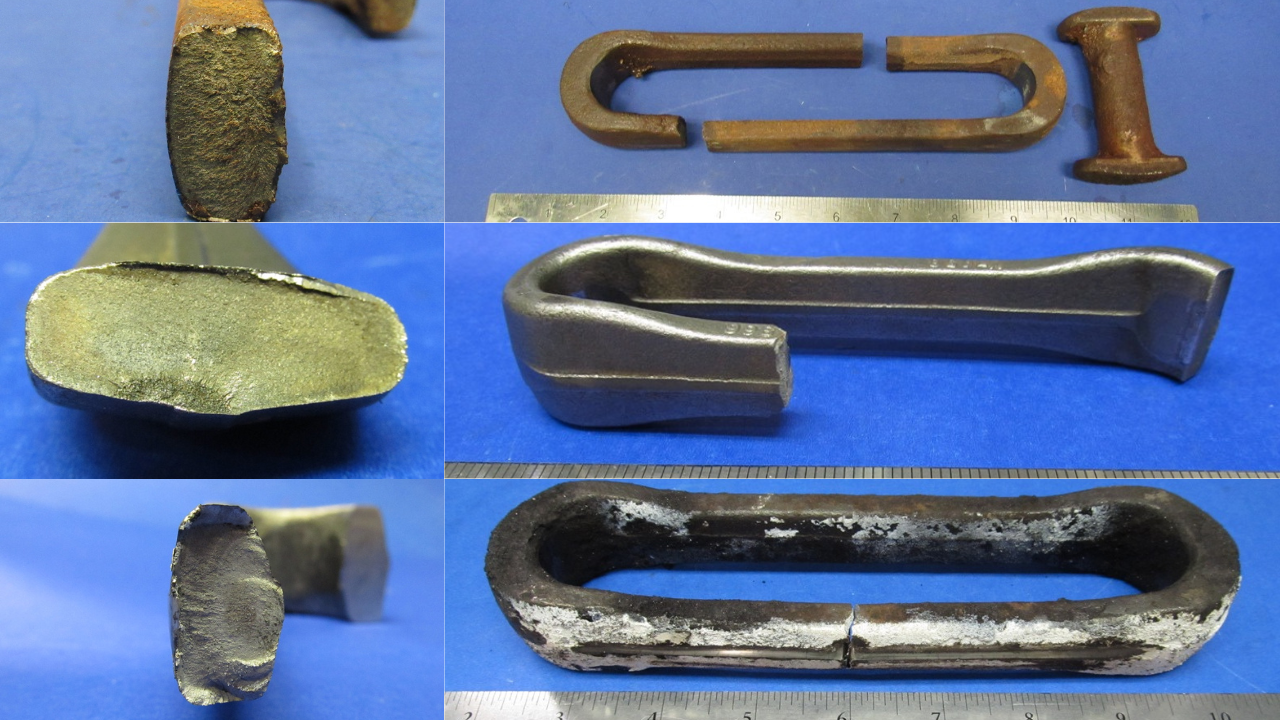
To understand why a part or equipment failed, how it failed must be first diagnosed. Different failure modes such as fatigue, brittle, and corrosion all have very different causes and very different solutions. If an investigation were to guess at the failure mode and guess wrongly, the planned remediation may not address the true cause of failure and additional failures may occur. This article considers three failed chain links and demonstrates the importance of identifying how something failed.
To understand why a part or equipment failed, how it failed must be first diagnosed. Different failure modes such as fatigue, brittle, and corrosion all have very different causes and very different solutions. If an investigation were to guess at the failure mode and guess wrongly, the planned remediation may not address the true cause of failure and additional failures may occur. This article considers three failed chain links and demonstrates the importance of identifying how something failed.
See More
Hidden but powerful forces within our organizations are causing people to make serious mistakes. Until someone deals with these forces, they will continuously but unpredictably snare people into doing things they should not do. These forces are like a "trap," waiting to catch the next person. The most proactive of all industrial action might be to identify and remove these latent traps. But all our attempts to identify and remove these latent causes of failure start at the human. Humans do things "inappropriately," for "latent" reasons.
Hidden but powerful forces within our organizations are causing people to make serious mistakes. Until someone deals with these forces, they will continuously but unpredictably snare people into doing things they should not do. These forces are like a "trap," waiting to catch the next person. The most proactive of all industrial action might be to identify and remove these latent traps. But all our attempts to identify and remove these latent causes of failure start at the human. Humans do things "inappropriately," for "latent" reasons.
See More
I was recently engaged by a client to conduct failure analysis on a large (and expensive) hydraulic cylinder off an excavator. This hydraulic cylinder had been changed-out due to leaking rod seals after achieving only half of its expected service life. Inspection revealed that apart from the rod seals, which had failed as a result of the 'diesel effect', the other parts of the hydraulic cylinder were in serviceable condition.
I was recently engaged by a client to conduct failure analysis on a large (and expensive) hydraulic cylinder off an excavator. This hydraulic cylinder had been changed-out due to leaking rod seals after achieving only half of its expected service life. Inspection revealed that apart from the rod seals, which had failed as a result of the 'diesel effect', the other parts of the hydraulic cylinder were in serviceable condition.
See More