

Pitfalls of Pump Piping
Ross McKay
Click here to download the full pdf.
Ross McKay
Related Articles

Use the Right Grease for the Job
Grease – use the right one for the job. The classification, selection, and application of greases is included in this article. Greases are designed for specific applications and if used in the wrong service they will not be effective. Compare the properties of greases and check those used in your equipment are suited to the service.

The Importance of Equipment Fit, Tolerance, and Clearance
Ensuring proper fit, tolerance, and equipment clearance is essential to the reliable operation and longevity of mechanical equipment.
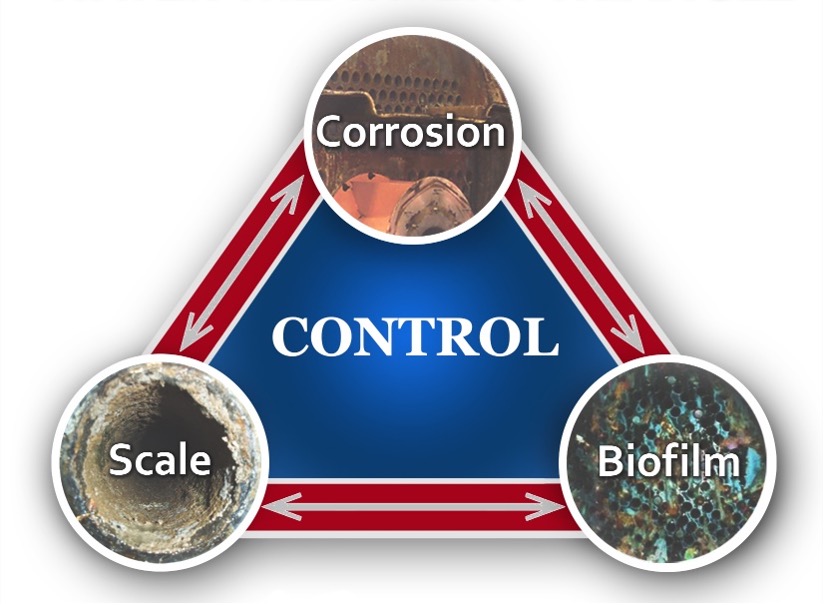
Protecting Cooling Water Systems – Part 2
Cooling systems are vital and integral components at thousands of industrial plants. Properly designed and operated chemical treatment systems, preventive maintenance of such, and monitoring are absolutely critical to minimize failures that otherwise may cause partial or full plant outages. In the next three parts of this series, we will examine the water-side issues of microbiological fouling, scale formation, and corrosion that require attention during both the design and operation of open-recirculating cooling systems like those discussed in Part 1 of this series.

Plant Numbering and Asset Identification
This article covers the two main plant numbering systems that together form the framework on which all maintenance programmes are based and describes the value that can be created by integrating these identification systems. These two systems are: Equipment Numbers, or more accurately, Equipment Location Numbers Stock-Keeping Unit (SKU) numbers or, preferably, Material Catalogue Numbers. A third, less critical but still important numbering system for Stores location (or “bin”) numbers, is also included.

The Cost of Producing Electricity
The cost per kWhr, the "cost of producing electricity", is the cost of the energy which is taken out of the steam by the turbine generator system and converted into electricity. The following paper discusses calculation methods for determining this cost -- a critical step in the process of evaluating cogeneration feasibility.
A Guide to Matching Electric Motors with Hydraulic Power Units
Sizing electric motors correctly for hydraulic power units can save a sizable amount of money over the life of the equipment. If system pressure and flow are constant, motor sizing simply boils down to the standard equation: hp = QP / 1714EM