
Preventive Maintenance: Preparing Water Treatment Systems for Colder Weather
Brad Buecker and Julia Biddle, SAMCO Technologies
Posted 12/2/2025
Preparing Water Treatment Systems for Cold Weather – Introduction
For industrial plant water treatment systems, cooler weather brings changes in raw water quality, chemical performance, and equipment efficiency. Preventive maintenance not only protects systems from damage but also ensures stable operation heading into the colder months. This article provides important reminders in this regard, and it also offers information about protecting water treatment chemicals from Old Man Winter. It is just one part of the effort that should go into the design, installation, and operation of plant water treatment systems.1
The General Influence of Colder Weather
The following list highlights in general how cold weather influences water treatment equipment and processes. This list is followed by an examination of specific processes that are common at many plants and can be affected by temperature.
- Makeup Water Temperature Drop: As water cools, viscosity increases, which can reduce flow rates and increase pressure drop across membranes and filters.
- Seasonal Turnover in Surface Water Sources: Lakes and reservoirs in mid-latitude and northern climates experience turnover in the fall when temperature gradients become less pronounced. This effect can increase raw water organics, color, and turbidity. Turnover also occurs in the spring when water at the upper levels warms and generates circulation. (See Figure 1 at the conclusion of this article.)
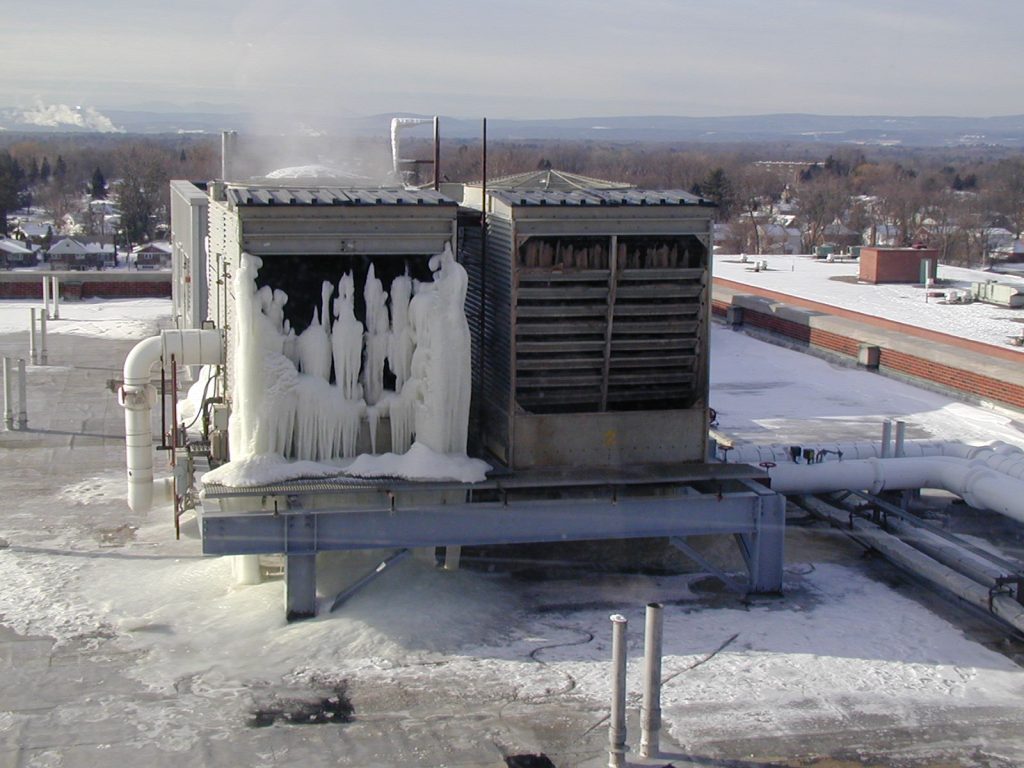
- Risk of Freezing: Outdoor tanks, piping, and chemical storage are at risk if not insulated or heat traced. This is an obvious statement, but every winter equipment at some plants freezes. Notable examples have come from Texas in recent years, where pronounced cold spells caused widespread power outages when power plant equipment froze. A major problem was freezing of moisture in instrument air lines.
- Changes in Biological Activity: Biological activity decreases in cold weather, but that doesn’t mean it entirely disappears, especially if dormant microbes revive in warm cooling water locations or in ultrafiltration (UF) and reverse osmosis (RO) systems. A common mistake is to shut down biocide feed systems, only to discover slimy masses in some spots, or to see explosive microbiological growth as winter moves into spring.
System Specific Details
We will now turn our attention to more specific items that can help in protecting equipment during cold weather and to maintain process efficiency.
Clarifiers
Many plants still have clarifiers for primary makeup water pretreatment. Some clarifiers, and particularly modern units with their smaller footprints, may be in an enclosed structure, while larger units may be exposed to the elements. Either way, in northern locations the inlet water temperature can decline to just above freezing in the dead of winter. Advice for maintaining reliable operation includes:
- Perform (or work with a reputable vendor to conduct) jar testing to adjust coagulant and flocculant dosages as influent water cools.
- Calibrate coagulant/flocculant polymer feed systems for the higher viscosities generated by cold water.
- Inspect sludge scrapers, pumps, and underflow systems to confirm steady operation and to remove accumulated material if necessary.
- Ensure that sludge disposal lines are protected from freezing. While the clarifier may be in an enclosed building, sludge disposal piping, and perhaps even the clarified water line, might be exposed to ambient conditions.
Whether a plant has a clarifier or not, high-purity makeup water treatment is often required. As an example, a common configuration for modern high-purity systems is the following:

Changing water temperatures can affect each of these systems. Consider the following guidelines to maintain proper performance.
UF
- Perform a clean-in-place (CIP) to remove particulates and other foulants from the membranes and restore baseline transmembrane pressure (TMP). If performance does not return to expected parameters, consider performing a membrane integrity test.
- Examine the air scour and backwash systems to ensure that valves and blowers are operating properly.
- Inspect skids, piping, and drain lines for leaks or exposure to freezing temperatures.
RO
- Have a reliable RO normalization program in place with personnel trained to enter and interpret data. RO membrane “pores” (see Figure 2) shrink as water cools, which reduces throughput. This effect can mask membrane fouling or other problems that normalized data would detect.
- Monitor pump pressures and flows regularly; the higher viscosity of cold water can put a strain on high-pressure pumps.
- Ensure that caustic and anti-scalant chemicals are stored in a heated area. Some products may crystallize at low temperatures if not stored correctly.
- Verify that permeate and concentrate lines which might be exposed to ambient conditions are insulated or heat traced to prevent freezing.
IX
- For plants where sodium softening is the IX method, check softener brine tanks for salt bridging, which can worsen in cooler, humid conditions.
- Be prepared to modify regeneration frequency, as influent water quality fluctuates with seasonal turnover. Colder, more dense water usually requires adjustment of backwash flow rates of IX resins to prevent accidental discharge during the backwash process. The same principle applies to backwashing of media in filtration systems, which are common equipment for polishing clarifier effluent.
- Inspect valves, actuators, and other system components to ensure proper operation; leaks in colder weather can reduce regeneration efficiency.
Chemical Storage Tips for Cooler Weather
Many water treatment chemicals are sensitive to temperature changes, which impacts how they should be stored and fed to the process. Colder water can also reduce reaction rates of the treatment chemicals.
Caustic
Caustic (sodium hydroxide) is typically shipped and stored as a 50% solution. The freezing point at this concentration is 54o F, so storage tanks should be inside a structure with adequate heating. Insulation and heat tracing of transfer lines is also necessary if they are exposed to ambient air.
Sulfuric Acid
Sulfuric acid is less prone to freezing than caustic, but viscosity significantly rises with decreasing temperature, which can stress feed pumps and affect chemical dosing. Verify that pump seals and lines are rated for cold-weather transfer. In general, for hazardous chemicals like caustic and sulfuric acid, regular inspections of tanks, valves, and piping are important for discovering potential problems before they turn into a major issue.
Inorganic Coagulants (Alum, Ferric Chloride, etc.)
These compounds can crystallize or form sediment in cold storage vessels. Inspect tanks for settled solids and clean the tanks periodically to avoid clumped material and inconsistent dosing.
Coagulant and Flocculant Liquid Polymers
Drums or totes should be stored indoors or in heated storage cabinets. Cold weather increases viscosity, which can lead to chemical feed pump cavitation or inaccurate dosing. Very common, regardless of temperature, is to feed the polymer to a mixing device for pre-blending with water. Pre-mixing allows the polymer chains to uncoil, making them much more effective when injected into the makeup water stream.
Lime and Soda Ash Silos
For plants equipped with lime or lime/soda ash softening clarifiers, temperature issues can affect the properties of these two materials.
Cool, humid air can promote condensation inside lime silos, leading to bridging, ratholing, or caking of lime powder. Soda ash is hygroscopic and readily absorbs moisture from the air, which can lead to hardening and blockages. It is important to keep silo hatches closed tightly and ensure vent filters are clean and dry. Plant operators should regularly inspect fill lines, hoppers, and feeders for solids buildup. If winter-time condensation is a recurring issue, a corrective measure is installation of a dehumidified air or low-humidity purge system.
Additional General Cold Weather Preparedness Tips
Other additional, and logical, measures that should be implemented include:
- Inspect insulation and test heat tracing on exposed piping and tanks.
- Verify that the heaters in chemical feed buildings and chemical storage areas are working properly.
- Test backup power systems to ensure reliability in case of storm-related power outages.
It is imperative for plant personnel to develop a comprehensive check list of these and other measures to which they can refer as summer moves towards autumn and then winter. The document will serve as a guide for preventive maintenance to catch small issues before they become winter emergencies. In fact, this should be just a part of an overall plant operations and safety manual, place in easily accessible computer files and the plant library. Much too often, a problem arises for which the staff cannot readily find the proper documents.
Not to be Forgotten, Cooling Towers
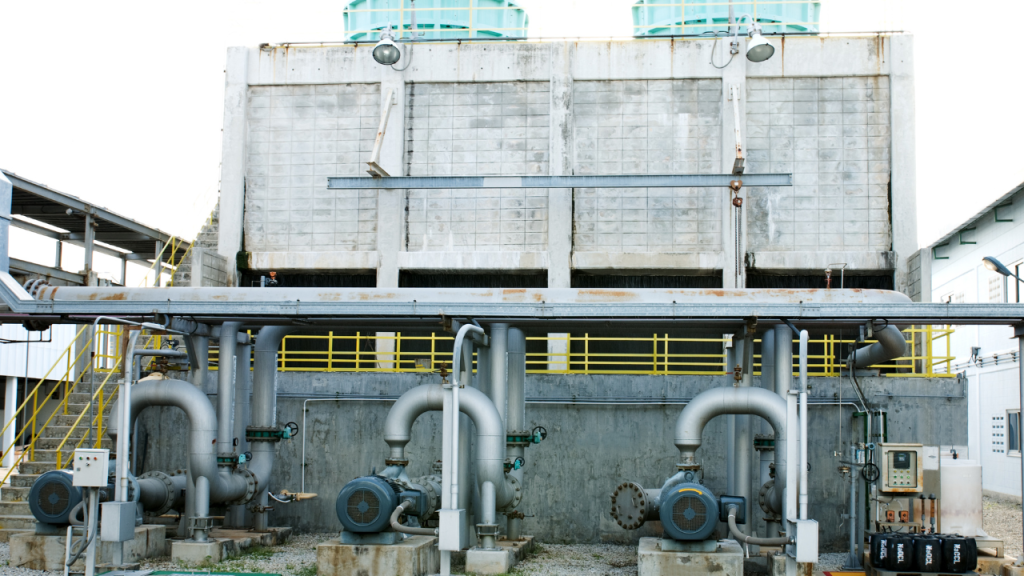
Large plants may have numerous cooling towers, some sitting in out-of-the-way places. Procedures should be in place that guide plant personnel on how to make adjustments to water flow, fan operation, louver settings, etc., to minimize ice formation as air temperatures drop below freezing.
Figures


References

Julia Biddle
Julia Biddle is a Field Service Engineer with SAMCO Technologies, based in Herndon, Virginia. She has worked in the water treatment industry for eight years, including six years with SUEZ Water Technologies & Solutions and the past two years with SAMCO. Biddle commissions and provides technical field support for a wide range of water and wastewater treatment systems, including ultrafiltration (UF), reverse osmosis (RO), clarification, ion exchange, and dissolved air flotation (DAF). Her experience includes system commissioning, troubleshooting, pilot testing, and process optimization for industrial and municipal applications. In addition to her field engineering responsibilities, Biddle authors SAMCO’s monthly Aftermarket Newsletter, where she shares practical insights on system performance, maintenance, and water chemistry. Biddle holds dual Bachelor of Science degrees in Chemical Engineering and Chemistry from Virginia Commonwealth University and is a certified Engineer-in-Training (EIT). She can be reached at biddlej@samcotech.com and Julia.biddlecheme@gmail.com.

Related Articles

Internal Clearance & Its Effect on Bearing Fatigue Life

Vibration Analysis: Interpreting the Vibration Signature of Plant Equipment

10 Ways to Reduce Reactive Maintenance

Vibration Analysis Using ADCs Keeps Industrial Equipment Working
Checking Best Practices for Preventive Maintenance
Equipment Inspections: Who is Doing Them?