5 Ways to Enhance Maintenance Team Communication with Model Context Protocol (MCA)
Ahmed Rezika, SimpleWays OU
Posted 11/6/2025
In the world of industrial maintenance, communication isn’t just about messages — it’s about meaning. Every message, from a technician’s note in the CMMS to a planner’s scheduling update, depends on how well information moves across teams and how accurately it carries its context. Yet in many organizations, maintenance still speaks in fragments: one language for operations, another for procurement, and yet another for reliability. These silos don’t just slow down workflows — they erode situational awareness, causing missed signals and reactive decisions.
Meanwhile, in the world of artificial intelligence, a similar challenge has been unfolding — and being solved at remarkable speed. The emergence of the Model Context Protocol (MCP) has given AI agents a standardized way to share context, understand intent, and collaborate across different tools and data environments. In essence, MCP is teaching machines how to talk — not just exchange data, but align on purpose.
Riding the Wave of Rapid Tech Advancement
The pace of digital evolution is accelerating faster than ever. MCP itself is only months old, yet it has already sparked a wave of experimentation in how AI systems cooperate across models, data sources, and organizations. This speed of innovation doesn’t have to leave maintenance behind; it can pull maintenance forward — if we act now.
By adopting the principles of structured communication, contextual awareness, and federated learning, maintenance can leapfrog from reactive routines to proactive, intelligent, and agentic operations.
The opportunity is clear: maintenance doesn’t need to wait for technology to trickle down — it can lead.
And by learning from how AI agents communicate through MCP, we can redesign how our own teams talk, decide, and collaborate — turning maintenance into one of the most adaptive, intelligent, and forward-moving functions in the modern enterprise.
For maintenance leaders, there’s a powerful parallel here. Just as AI agents are learning to communicate through shared protocols, maintenance teams can elevate their own collaboration by adopting structured, contextual, and interoperable ways of working. The principles that make MCP effective in the digital realm can just as effectively enhance communication in the human one.
In this article, we’ll explore five practical ways maintenance teams can improve cross-silo communication by drawing inspiration from MCP — turning fragmented information into shared intelligence, and routine coordination into adaptive orchestration.
And if you’ve been following our earlier discussions — on how Agentic AI frameworks [1] are transforming decision-making, and how Maintenance Cloud Operations[2] are reshaping visibility and integration — this piece completes the triangle. It focuses on the human layer: how communication itself becomes the protocol that connects people, systems, and intelligent agents into one cohesive ecosystem.
1. Create a “Maintenance Context Protocol”
In AI, the Model Context Protocol (MCP) defines how agents exchange information so that data isn’t just shared — it’s understood. Every agent knows what a request means, what data it needs, and how it fits into a broader goal. Without this shared context, even the smartest agents would talk past each other.
Maintenance teams face the same problem. Most organizations already have digital systems — CMMS, ERP, IoT dashboards — but the language between them (and between teams) is inconsistent. What operations calls an “incident,” maintenance logs as a “breakdown,” and reliability engineers tag as an “unplanned event.” Each team communicates in its own dialect, forcing translation at every handoff.
Creating a Maintenance Context Protocol doesn’t mean writing a new piece of software — it means agreeing on a shared communication schema. The goal is to make sure every piece of information, whether it’s a work order or a downtime alert, carries standardized meaning and sufficient context. Let’s see what an MCP means in the AI realm and how we can learn from it in maintenance and operations.
Model Context Protocol (MCP) in the AI Realm
MCP gives AI agents a standardized interface to access tools and data, Technically, MCP works by having a host application (the LLM environment) initiate one or more clients which connect to servers exposing “tools” and “resources” via JSON-RPC 2.0 [3]. For example, an MCP server might expose file-system commands, database queries, or HTTP API endpoints, and the client discovers and invokes these using the list_tools() and call_tool() methods[4]. In maintenance terms, you could think of a work-order system, an inventory database, and a machine-sensor feed as analogous “tool sets” that a maintenance “agent” might access via a shared protocol. The key technical features—capability negotiation, session management, and context metadata metadata in _meta fields—map to human teams agreeing on what a “critical asset” means, who owns the context, and how the session (handover) is managed.
By using a defined protocol, agents avoid ad-hoc integrations; similarly, a maintenance protocol avoids each team inventing their own semantics and formats. Just like MCP enforces a separation of client and server roles and a common transport (JSON-RPC over HTTP/SSE or stdio) [4], the Maintenance Context Protocol would define who is the “host” (maintenance coordination), who are the “clients” (operations, procurement, reliability) and what “servers” represent (systems like CMMS, ERP, sensor analytics).
Here’s how it could look like in the Maintenance Realm:
- Define shared data structures: Agree on key fields and naming conventions — asset ID, fault code, impact level, risk score.
- Align on context rules: When reporting an event, include not just what happened, but why it matters(production loss, safety risk, energy impact).
- Create “translation bridges” between systems: If your CMMS and ERP use different codes, implement mappings or dashboards that reconcile them automatically.
- Make communication protocol part of onboarding: New team members should learn how to communicate information, not just where to record it.
A clear context protocol turns communication from a series of disconnected messages into a flow of meaningful signals. It also prepares maintenance teams to interact seamlessly with AI agents and automated workflows in the near future — speaking the same structured, context-rich language that machines are now learning to use through MCP.
Just as MCP gives AI agents a common way to interpret and act on information, a Maintenance Context Protocol gives teams a shared foundation for clarity, speed, and alignment across silos.
Real-World Analogy: Tech world continues to highlight opportunities for Maintenance
We’ve explored many analogies between the digital technology world and maintenance practices, highlighting ways to enhance maintenance by learning from the evolution of digital tools. From my experience, digital technologies and systems often arrive in the maintenance domain later than in other disciplines. That’s why I focus on bridging the gap between what is already digitally available and proven, and how it can be applied effectively in maintenance. Whether looking forward to the future or reflecting on lessons from the past, I firmly believe that in maintenance, we should be at the forefront of early adoption, not trailing behind in a game of catch-up.
Platforms like ServiceDesk Plus (SDP), originally designed for IT service management, illustrate how structured communication protocols can bridge silos. SDP now supports both IT and non-IT assets, allowing organizations to track facilities, equipment, and other operational assets in addition to traditional IT infrastructure [5].
2. Adopt Shared Semantics and Contextual Tagging
Speaking the Same Language Across Machines, Teams, and Systems
In the Model Context Protocol (MCP), AI agents don’t just pass data — they exchange structured meaning. Each message includes metadata and context that clarify what is being said, how it should be interpreted, and why it matters to the shared goal. This semantic alignment is what allows independent agents to coordinate dynamically without constant human supervision.
Semantics and Contextual Tagging in the AI Realm
Technically, MCP introduces a structured schema defined in TypeScript (and exported as JSON Schema) specifying message formats, standard fields, versioning and metadata keys (e.g. _meta). [3] When a client sends the request {“jsonrpc”:”2.0″,”id”:1,”method”:”call_tool”,”params”:{…}}, the server must respond with the same id, a result or error object, and any shared metadata. Additionally, MCP servers advertise their tool sets (via list_tools()), clients filter or pick required tools, and tool invocation can encapsulate structured parameters and respond with typed content, enabling agents to interpret meaning rather than raw text [4].
How Semantics and Contextual Tagging would look like in the Maintenance Realm?
In the maintenance-team analogy, “shared semantics” are equivalent to defining a standard schema for all teams: fields like assetId, failureModeCode, downtimeImpact, riskScore, reportingTeam, etc. These mirror the typed parameters in an MCP tool call. The “contextual tagging” aligns with the _meta metadata in Model Context Protocol messages, which allow clients and servers to attach background info (timestamp, sessionId, lineage) to enable interpretable, traceable workflows. By adopting a schema-based tagging protocol, teams ensure that when one system flags “asset-failure → severity HIGH”, another system interprets it uniformly — just as an MCP-compliant client and server agree on the parameter definitions and result types before proceeding
- “Failure” might mean equipment stopped to an operator, performance dropped to an engineer, and SLA (Service Level Agreement) breach to a planner.
- A “critical asset” may be defined by cost in finance, by downtime risk in operations, or by safety impact in HSE.
This lack of shared semantics leads to inefficiencies, duplicate work orders, and mismatched priorities — the human equivalent of AI agents misinterpreting each other’s context.
Building Shared Semantics in Maintenance
To fix this, maintenance teams should establish a semantic layer — a consistent, context-rich way to tag and interpret every piece of operational data. Here’s how:
- Standardize terminology and taxonomies: Use ISO 14224 (for equipment taxonomy) or align with the asset hierarchy in your CMMS/ERP. Shared terms reduce confusion across disciplines. You can find an example on applying ISO 14224 in Implementing ISO 14224 taxonomy and equipment model in WellMaster Reliability Management System (WRMS) [6].
- Introduce contextual tagging: When logging events or work orders, add structured tags for location, failure mode, impact level, and root cause. This transforms raw logs into analyzable, interoperable data.
- Automate context capture: Modern IoT and CMMS integrations can automatically append context — like ambient conditions, runtime, or vibration anomalies — directly to maintenance records.
- Build a “shared meaning map”: Document how each team defines key concepts (criticality, downtime, defect, backlog) and align them through workshops or digital glossaries embedded in your CMMS.
When semantics are aligned, data stops being a pile of disconnected records and becomes a shared narrativethat both humans and AI systems can follow.
Why This Matters for the Future
As agentic AI frameworks start interacting with maintenance environments, semantic clarity will become critical. If a predictive agent flags an “anomaly” but the planner interprets it differently, action stalls. If a procurement bot can’t map a part name to a BOM code, the automation breaks.
Shared semantics and contextual tagging are the foundation that will let maintenance systems — and eventually AI agents — speak the same operational language.
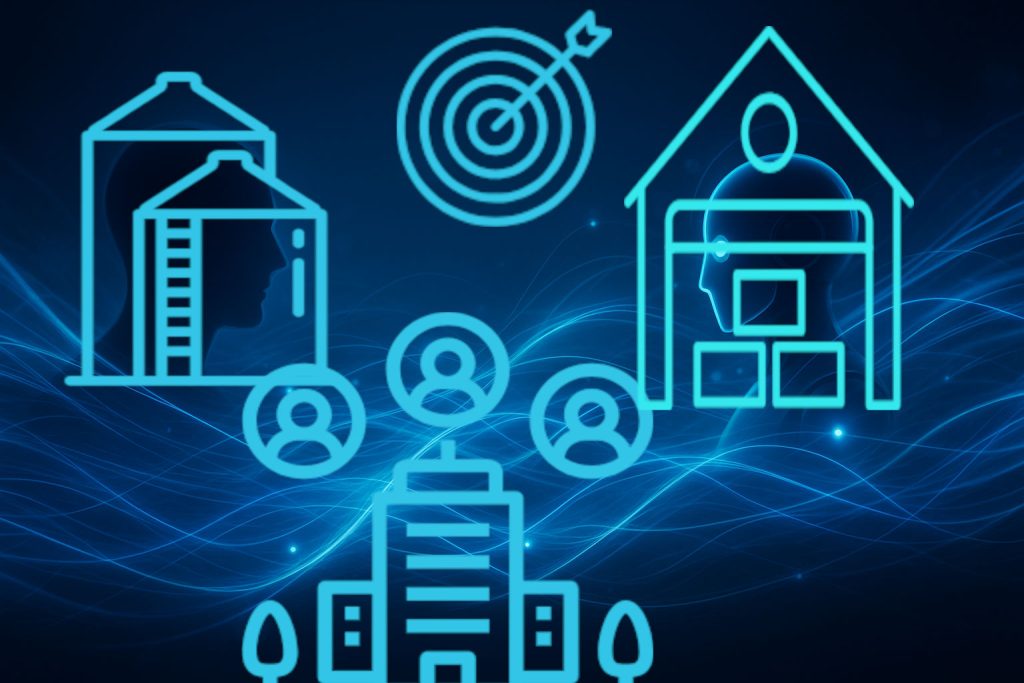
3. Design Dynamic, Goal-Oriented Communication Flows
From Reactive Exchanges to Adaptive Coordination
In the Model Context Protocol (MCP), communication between agents isn’t static — it’s goal-driven and dynamically updated as the context evolves. Agents don’t just push messages back and forth; they coordinate through stateful sessions, exchanging updates based on shared objectives. When one agent modifies the context, others immediately realign their decisions.
How MCP Achieves This Technically?
In Model Context Protocol, each agent participates in context sessions managed by the host. These sessions persist across interactions and are updated via JSON-RPC methods like update_context() and notify(), enabling asynchronous collaboration.
The protocol’s subscription and streaming model (using Server-Sent Events or WebSockets) allows agents to maintain real-time awareness of each other’s state changes — similar to how maintenance teams can use live dashboards or event buses to synchronize decisions.
The result is not just faster communication, but a living coordination fabric — one that learns, adapts, and self-optimizes toward collective goals. That’s exactly what maintenance communication must evolve into: not a series of static reports, but a continuous, context-aware conversation between people, systems, and now, intelligent agents.
How Model Context Protocol Achieves This In Maintenance?
That principle can completely transform how maintenance teams communicate. Traditional workflows are usually event-driven and linear: an operator reports an issue, maintenance logs a ticket, procurement checks inventory, and planning schedules a fix. Each handoff is a waiting period. The process follows a chain of tasks rather than a shared goal.
Imagine a “goal” defined as maximize uptime at minimal energy cost. In an MCP-like setup:
- IoT sensors feed live performance data into a contextual layer.
- A diagnostic agent flags anomalies, updating a shared context object (like MCP’s “session state”).
- Maintenance and planning agents consume that context, adjusting work schedules, spare parts reservations, and technician routing — without waiting for explicit handoffs.
Maintenance teams can apply the same logic:
- Shift from task-triggered to goal-triggered workflows. Define system-wide goals (uptime, compliance, cost efficiency) and align each role’s actions toward them.
- Create shared state visibility. Instead of isolated dashboards, use shared workspaces or digital twins where all updates — from sensor data to supply delays — are reflected in real time.
- Enable adaptive decision loops. When new data arrives, communication should automatically reorient, just as MCP agents update their session context dynamically.
4. Enable Federated Knowledge and Learning Loops
Turning Distributed Expertise into Collective Intelligence
One of the most powerful ideas behind the Model Context Protocol (MCP) is federation — the ability for multiple independent systems (or agents) to collaborate without merging their data into a single monolithic model. Each agent retains its autonomy, yet contributes to a shared context through standardized protocols. In technical terms, MCP enables distributed knowledge composition, where each agent serves its domain of expertise but can publish updates or insights to a common context fabric.
How does Model Context Protocol Help Communication?
MCP specifies a context state model where agents can append, modify, or subscribe to segments of shared context using structured JSON documents. Updates are idempotent and versioned, ensuring consistency across distributed participants.
Agents can also advertise capabilities through list_tools() so others know what expertise or data they can contribute. This is conceptually similar to a maintenance department declaring, “I handle vibration diagnostics,” while another covers “asset reliability analytics.” Together they form a dynamic, federated network of expertise.
Maintenance teams are naturally federated too. Reliability engineers, planners, operators, and procurement specialists each own a part of the operational truth. But in most organizations, their knowledge remains fragmented — stored in isolated CMMS notes, spreadsheets, or even personal experience. The result is lost context: the same failure might be analyzed three times by different people, each unaware of the other’s insight.
The MCP approach offers a model for bridging those silos in maintenance:
- Treat every knowledge source as an “agent.” Whether it’s the CMMS, vibration analytics, supplier data, or a technician’s feedback app, each one publishes structured knowledge to a shared maintenance context.
- Use context synchronization instead of file exchange. Instead of emailing reports or exporting logs, allow systems to sync through APIs that align on metadata — like MCP’s update_context() messages that merge relevant information without overwriting local intelligence.
- Promote learning loops. When a root cause is confirmed or a fix validated, that insight should propagate automatically to planning, training, and predictive models. Each “agent” learns from the collective result, similar to how MCP agents refine their reasoning using shared context updates.
In maintenance, this means moving from isolated fixes to shared foresight — where every lesson learned, from a failed bearing to a procurement delay, enriches the collective intelligence of the organization. Just as MCP lets AI agents collaborate without central control, maintenance can evolve into a federated system of continuous learning — agile, adaptive, and smarter with every cycle.
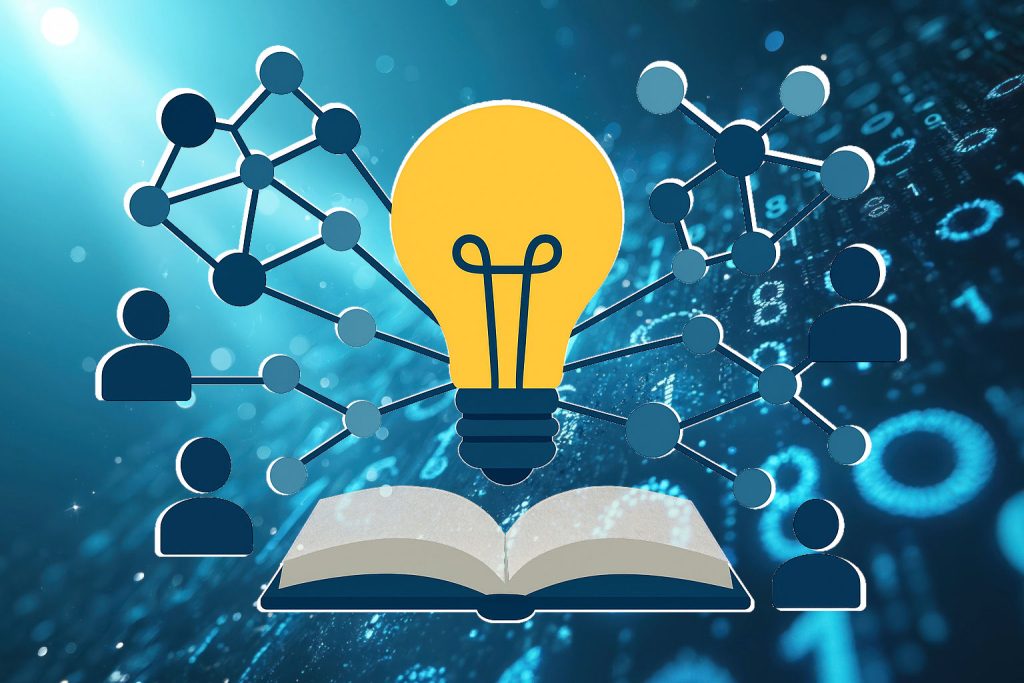
5. Build Trust, Transparency, and Governance Around Shared Contexts
The Foundation of Reliable Human–Machine Collaboration
In both AI ecosystems and maintenance organizations, trust is the linchpin of effective collaboration. The Model Context Protocol (MCP) is not just about connecting agents — it’s about ensuring that each message, context, and decision can be traced, verified, and governed. In MCP, every action is tied to a session, every tool invocation is logged, and every context update carries metadata that captures its origin, time, and version. This enables not only interoperability but accountability.
Maintenance environments have their own trust challenges:
- Teams need to know who changed what, and why.
- Data coming from sensors, vendors, or operators must be authentic, reliable and, secured.
- Decisions, once automated, must still be auditable.
By adopting governance ideas from MCP, maintenance teams can embed traceability and transparency directly into their communication frameworks.
As maintenance grows more connected and AI-assisted, decisions will increasingly be shared between humans and autonomous agents. Without clear governance, that partnership risks confusion or blind trust. With governance built in, every context — whether human-written or AI-generated — becomes explainable, accountable, and verifiable.
Just as MCP establishes technical trust among AI agents through structured traceability, maintenance leaders must establish operational trust through transparent, auditable, and well-governed communication. Only then can human teams and intelligent systems collaborate safely and confidently on the same mission: reliable, efficient, and intelligent operations.

Conclusion: From Framework to Action — Pulling Maintenance Forward with MCP Principles
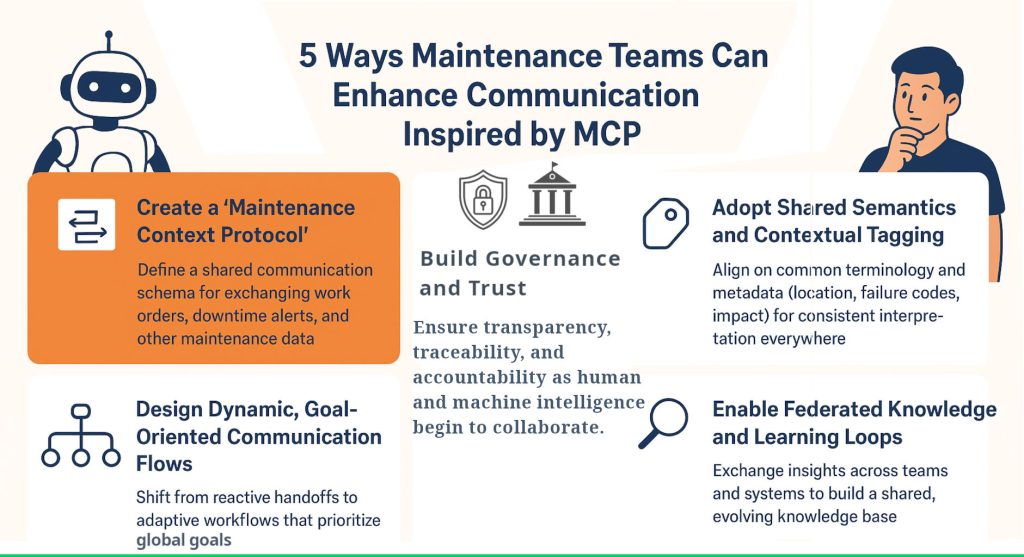
The five ideas explored here — building a Maintenance Context Protocol, adopting shared semantics, designing dynamic flows, enabling federated knowledge, and establishing governance and trust — aren’t just concepts borrowed from AI. They are actionable steps maintenance teams can start applying today to evolve their communication and collaboration practices.
- Create a Maintenance Context Protocol: Define how teams exchange data and context just as MCP defines how agents share state and meaning.
- Adopt Shared Semantics and Tagging: Align on terms, taxonomies, and metadata so every alert or work order carries clear, structured intent.
- Design Dynamic Communication Flows: Replace linear reporting chains with adaptive, goal-driven coordination that evolves in real time.
- Enable Federated Knowledge: Let each domain — operations, reliability, procurement — contribute to and learn from a shared, distributed context.
- Build Governance and Trust: Ensure transparency, traceability, and accountability as human and machine intelligence begin to collaborate.
These steps form a bridge between today’s fragmented maintenance communication and tomorrow’s agentic, context-aware ecosystem. The rise of MCP shows that interoperability and understanding between agents can scale intelligence — and the same is true for people and systems in maintenance.
Must-Know Jargon
MCP (Model Context Protocol): An emerging open protocol that lets AI agents share context, tools, and data through standardized JSON-RPC messages — enabling multiple intelligent systems to collaborate dynamically across different environments.
Context Session: In MCP, a persistent shared state that carries memory, goals, and metadata between agents — similar to a digital workspace where all updates remain synchronized in real time.
Federated Knowledge: A distributed approach where independent systems or teams share insights through structured protocols without merging data into one database — maintaining autonomy while building collective intelligence.
Semantic Layer: A shared vocabulary and structure that ensures all systems (and people) interpret data in the same way — like a translator that prevents meaning loss across tools and teams.
JSON-RPC: A lightweight data-exchange format used in MCP for communication between agents and servers, allowing standardized tool invocation and result handling.
Idempotent: Idempotence is the property of certain operations in mathematics and computer science whereby they can be applied multiple times without changing the result beyond the initial application.
Governance Layer: The set of rules, roles, and traceability mechanisms that ensure transparent, auditable, and trustworthy communication between people and intelligent systems.
References
1- MaintenanceWorld.com, Ahmed Rezika, Oct 2025, Is Agentic AI Just a Fancy CMMS?, https://maintenanceworld.com/2025/10/02/is-agentic-ai-just-a-fancy-cmms/
2- MaintenanceWorld.com, Ahmed Rezika, Sep 2025, Maintenance Cloud Operations – Updates are the new Spare Parts, https://maintenanceworld.com/2025/09/09/maintenance-cloud-operations-updates-are-the-new-spare-parts/
3-Modern Context Protocol, Specifications, https://modelcontextprotocol.io/specification/2025-06-18
4- OpenAI Agents SDK, MCP, https://openai.github.io/openai-agents-python/mcp/
5- Laos County Council extending SDP beyond IT, https://servaplex.com/case-study/laois-county-council/
6- Implementing ISO 14224 taxonomy and equipment model in WellMaster Reliability Management System (WRMS), https://standard.no/globalassets/fagomrader-sektorer/petroleum/paris/2022-12-01-1510—iso-seminar-paris-1-dec-2022—hans-peter-jenssen.pdf
Related Articles
The Importance of Process Confirmation and Layered Process Audits in Lean Manufacturing

Can Operations Manage Maintenance?


Rethinking the Decision Factory