

How do you Measure Reliability?
Tor Idhammar, CEO & President, IDCON INC
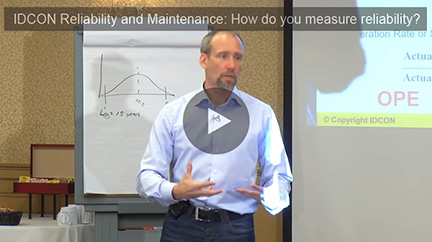
Reliability is often used by plants to define future improvement efforts and set expectations for employees and managers. Understanding how it’s defined and how to measure it can often be confusing to your organization.
This video will give you IDCON’s concept of Overall Production Efficiency.
Related Articles

Evolution of the "Grease Monkey" to the Maintenance Professional
To compete in this adverse environment, companies switched mantras, from "do or die" to "do more with less or die." Every year, the bar of acceptable performance is raised. Employees are challenged to achieve these objectives with fewer resources. According to the U.S. Labor Department's Bureau of Labor Statistics, between 1981 and 1996, the total number of workers who lost jobs they held for three or more years because their plant or company closed or moved was nearly 18 million.

Breakthrough Technology for Maintenance Inspections
Drones and reality modeling can and should be part of every maintenance organization and every proactive maintenance workflow to dramatically enhance productivity and safety in infrastructure asset inspections.

The Fuzzy Side of Equipment Reliability
In nearly all of the 250 or so equipment intensive plants and facilities I have visited, taught at, and worked in over the past 30 years, I have observed the relationships between the skills of employees and the reliability of the equipment. These observations may provide helpful insights for plant and facility managers who are troubled with unreliable equipment and high maintenance costs. Here are a few:
Maintenance Key Performance Indicators (KPIs)
It is often said that "what gets measured gets done". And getting things done, through people, is what management is all about. Measuring things that get done and the results of this effort is an essential part of successful management, but too much emphasis on measurements, or the wrong measurements may not be in your company's best interests.
Leveraging BIM for Enhanced Maintenance: A New Era in Facility Management
Over the past twenty years, building information modeling (BIM) has been steadily securing itself as an essential tool in the architecture, engineering, and construction fields. Its advanced 3D capabilities are used in just about every design and construction phase. However, with new developments in real-time data collection, the advantages of BIM can extend beyond the completion of a facility.When applied to facility management, BIM opens the door to better asset management, improved safety, and optimized maintenance strategies that ensure that a building performs at its best 100 percent of the time.
A Framework for Achieving Best Practice in Maintenance
This paper outlines the key factors that you should consider when establishing a Maintenance Change program in your organization. In doing so, it provides a framework which you can apply to increase the chances of success in your change efforts. The paper draws heavily on Price Waterhouse experience in implementing Maintenance change at many major organizations throughout WA, as well as our international experience in implementing change as articulated in our book "Better Change."
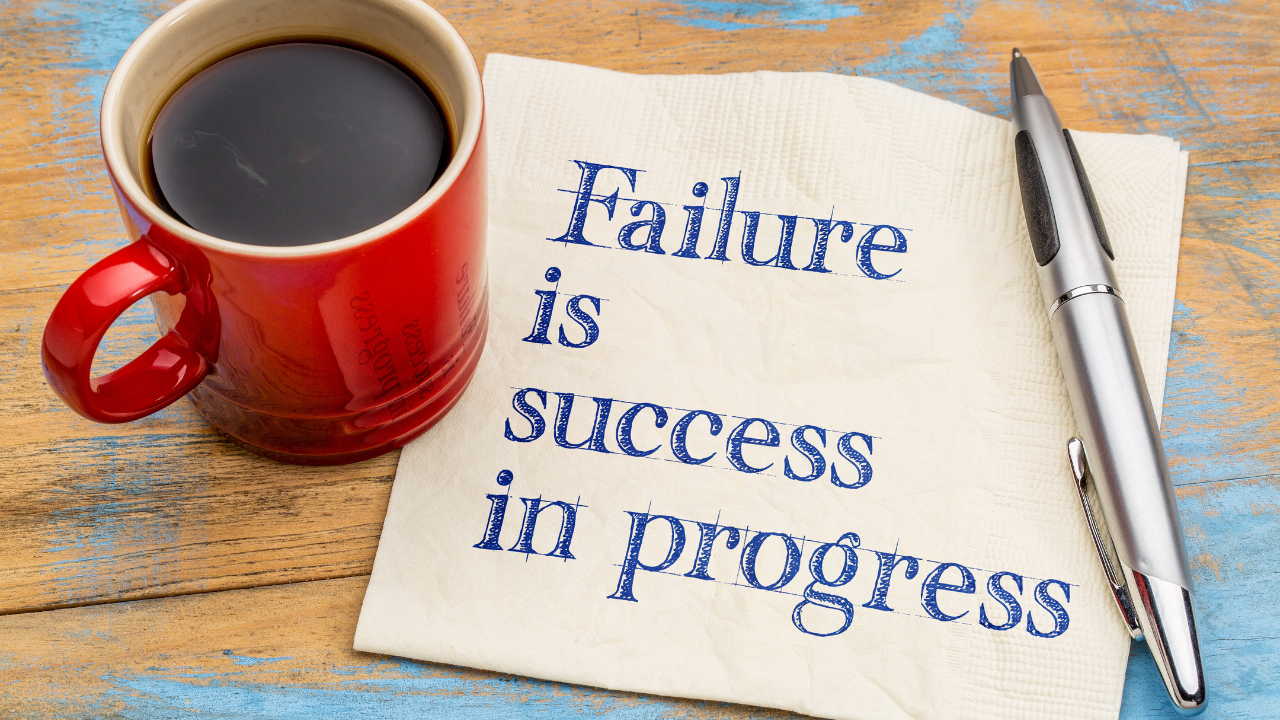
Failure Teaches Success
I absolutely hate to fail, but must admit that failure is an unescapable part of life. Thankfully most of my failures over the years have been relatively minor. Nonetheless, they have been a true source of irritation and frustration that in many ways outweigh the successes. Fortunately my early mentors taught me to use failure, no matter how serious or minor, as a learning tool and a platform to build upon.