
Principles of Insulation Testing
Cadick CorporationÂ
Click here to download the full pdf.
Cadick CorporationÂ
Related Articles

The Integrity Test Advantage Â
Integrity Testing is a proactive approach to preventive maintenance for Plate and Tubular Heat Exchangers in sanitary processing environments. This process allows for the early identification of potential leaks and failures, serving as a cost-effective and environmentally friendly form of preventive maintenance.  

Shock Pulse Goes Spectrum
SPM Instrument AB, Sweden, launches a brand new diagnostic method in connection with Leonovaâ„¢, a hand-held machine condition analyzer. Called the SPM Spectrumâ„¢, it is the result of an FFT on the time signal recorded with an SPM shock pulse transducer from a rolling element bearing. The individual bearing frequencies (BPI, BPO, 2*B2 and FT) and their harmonics are highlighted in the spectrum. This is displayed together with the measured shock value and a light signal, green, yellow or red that shows the result of bearing condition evaluation.

Analyzing Mechanical Systems Using Infrared Thermal Imaging
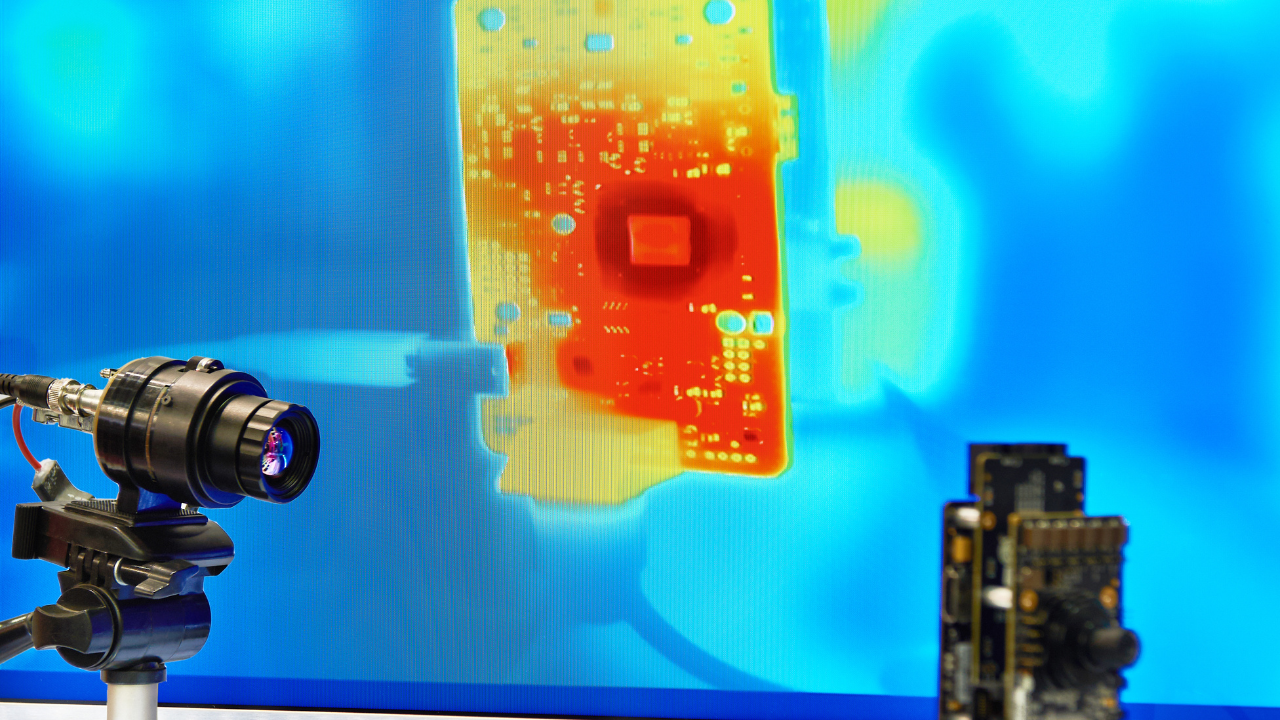
Infrared Thermal Imaging is an excellent condition monitoring tool to assist in the reduction of maintenance costs on mechanical equipment. The technique allows for the monitoring of temperatures and thermal patterns while the equipment is online and running under full load. Most mechanical equipment has allowable operating temperature limits that can be used as guidelines. Unlike many other test methods, Infrared Thermal Imaging can be used on a wide variety of equipment including pumps, motors, bearings, pulleys, fans, drives, conveyors etc.

Condition Monitoring of Steam Turbines by Performance Analysis
Many power generation steam turbine generators today are required in service well beyond their intended lifetimes. Dismantling for inspection is expensive, and owners need to consider all relevant information in making the decision. Application of condition monitoring in all the applicable methods is justified, with each showing different degradation modes. Performance analysis is less well publicised, yet unlike vibration analysis and oil debris analysis, it will show conditions which reduce machine efficiency and output, such as deposits on blades and erosion of internal clearances. The paper outlines, with examples, some condition monitoring techniques that have contributed to retaining some large fossil machines in service for up to 17 years without opening high-pressure sections.

AI-Powered Mapping Technology for Condition Monitoring and Predictive Maintenance
Enter dynamic AI-powered mapping technology: an AI-powered application that integrates Internet of Things (IoT) sensors, real-time monitoring, and artificial intelligence (AI) to revolutionize maintenance practices.
Harmonics and SidebandsÂ
In a recent article I talked about linear and nonlinear systems and how the output of these systems contain frequencies, such as harmonics and sidebands, that are not in the inputs. In this article I want to share a short video I made with my signal processing simulator that demonstrates the concepts. You will want to watch the video with the sound on.


Inspecting Seals with IR Thermography
In today's industry, practices that were once acceptable are no longer even tolerated. Environmental concerns and EPA mandates are applying more and more pressure on businesses like the chemical industry to improve the manufacturing processes being used, to the point that not only is a slight drip from a pump seal not acceptable, but in 2004 the MACT will be enacted and only 500 - 1,000 parts per million vapor will be allowed and, eventually, no vapor at all.