
Waiting for Godot?
Tracy Smith and Clay Bush
Have you recently implemented an Enterprise Asset Management (EAM) or Computerized Maintenance
Management Software (CMMS) System? Did you develop a “Return on Investment” justification for the
project, promising substantial improvements in asset perfonnance, reduced equipment downtime, lowered MRO inventory levels and decreased purchasing costs? Did you commit a large amount of money
and time to implementation? And are you still waiting for the savings to arrive and those promises to be fulfilled?
Click here to view the full pdf.
Related Articles
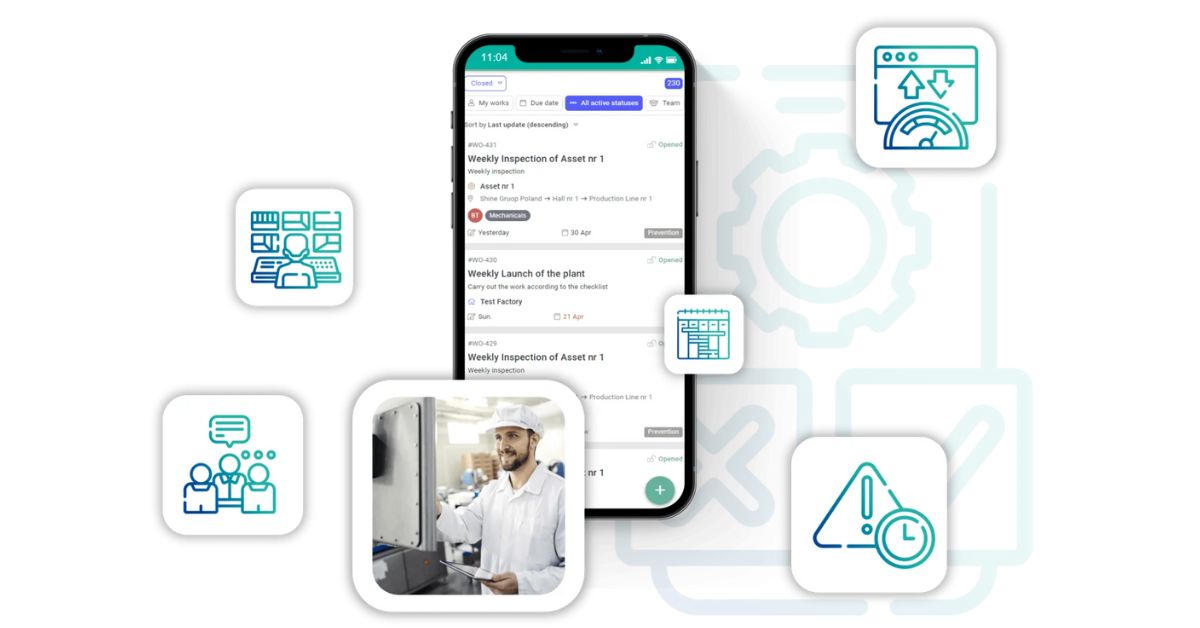
Fault Reporting: How to Improve Workflows in Maintenance Operations
In this article, we share insights on the importance of fault reporting for maintenance workflows. Suppose you are a maintenance manager, plant manager, technician, or engineer. This article reveals effective ways to improve your organization's information flow and basic workflow processes for better-performing maintenance work.

Maintenance Checklist Templates in the CMMS System
Maintenance checklists have evolved from simple paper flyers to integrated computerized maintenance management systems (CMMS) components. They are initially used as a fundamental tool to organize and standardize maintenance tasks. They ensure accuracy and promote safety, and their digital transformation within a CMMS offers many additional benefits.

Working with SAP Master and Transactional Data
SAP, as with any enterprise asset management software suite, is a collection of many diverse software solutions and applications. No matter which module of SAP you are working with, there are master and transactional data sets that you must consider as you are making changes to an existing system, migrating from one system to another, or standing up a new system altogether.
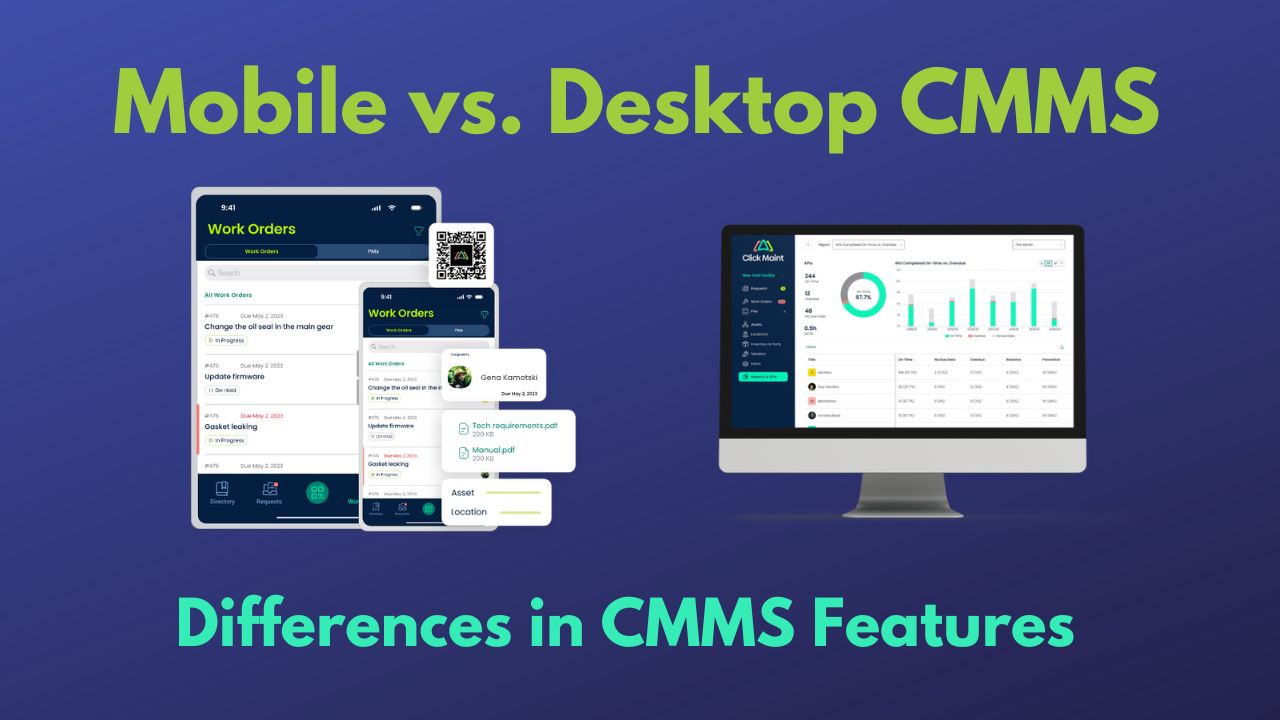
Mobile vs. Desktop: Differences in CMMS Features
This article explores the differences between desktop and mobile CMMS, emphasizing their distinct features and when each should be used. It also explores some of the concerns maintenance teams may have about adopting CMMS mobile apps.

Maintenance Cloud Operations - Updates are the new Spare Parts
Every modern operation—whether it runs on machines or on servers—depends on one invisible factor: uptime. In industrial settings, maintenance ensures that equipment remains reliable, efficient, and safe. In the digital world, cloud operations ensure that IT systems continues to deliver the same qualities for data, applications, and services.
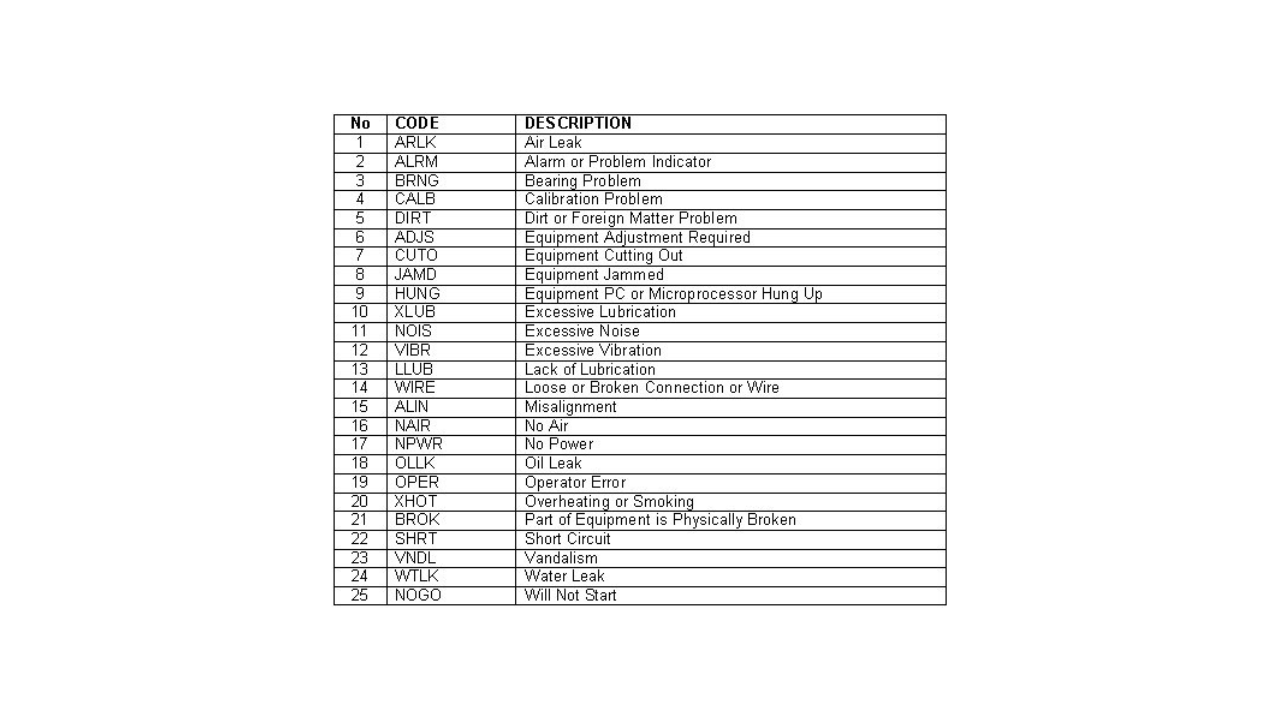
Failure Codes in Maintenance Systems - CMMS
What is a failure code? Quite simply, it is a code that illustrates why an asset failed or the reason that the asset failed. Codes can be a number which is cross referenced to a list of actual code descriptions or more conveniently a series of alphanumeric characters that are a logical abbreviation of their descriptions. However, with modern database technology and available disk space, the full descriptions are increasingly being used instead of alphanumeric codes.

Artificial Intelligence vs. Reliability Studies
Because of the telemetry available from modern equipment, the amount of well-organized data we have available to us is orders of magnitude beyond what we had just a few years back. It is very common now to have access to literally 1000’s of devices, each sending out data payloads with many data elements, at sub-second intervals. There can easily be terabytes of data available for us to analyze and then make decisions with. With so much data available, how best to ingest and use it for making near-real time decisions?