Performing the daily and job specific hazard analysis (JHA) with your crew has been a long-standing element of your safety culture. Everyone carries around the booklet, forms, and perhaps a logbook to fill in and keep as a record in some fashion. As a reference, here is the link to the OSHA definition and approach to Job Hazard Analysis.
The trouble is, as always, how do these paper records make their way to an official archive location for future reference? While the policy and procedure to protect these records may be well described and followed, there is always the possibility that the form blows away in the wind and is lost forever.
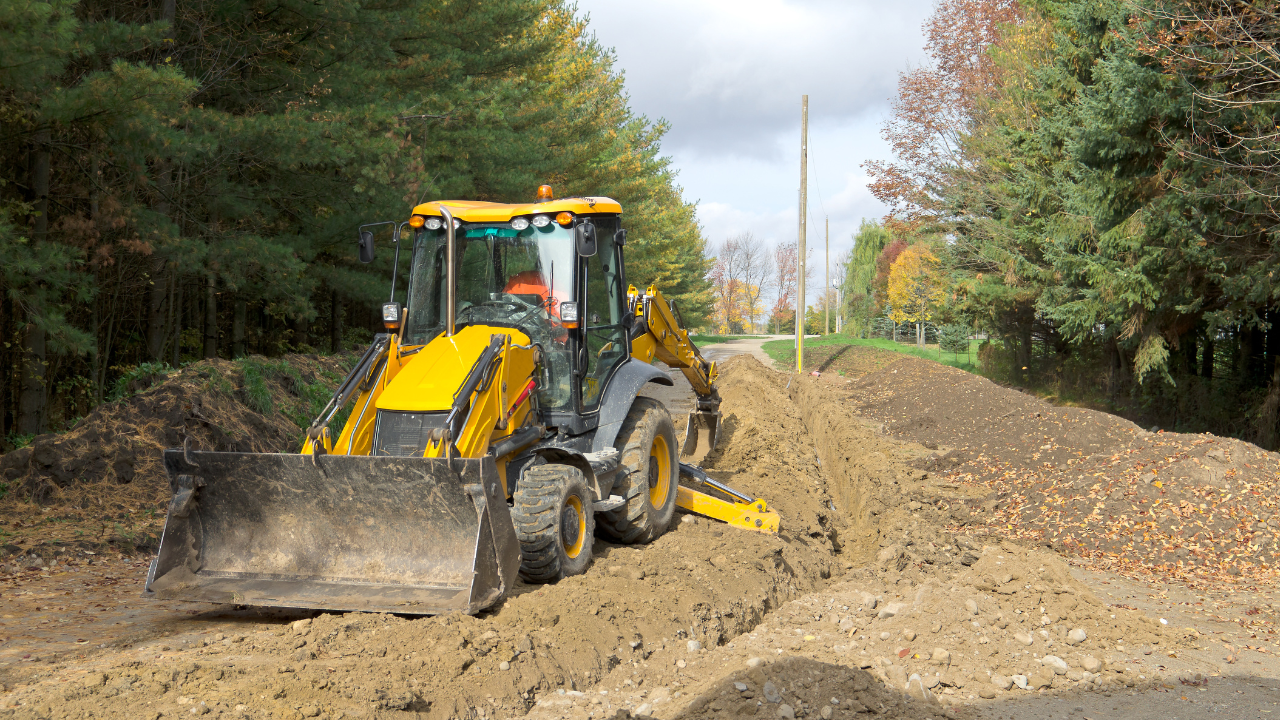
Image courtesy Kittisak Kaewchalun from Getty Images via Canva
Going Electronic
Let’s look at the Inspection Form feature/function that has been a part of IBM Maximo (and now MAS Manage) for some time. The idea of this feature is to be able to construct forms that users in the field can access and fill in from a browser or application on any mobile device. The forms are pre-built with all the questions and types of responses that are needed. The forms can be associated with Asset and/or Location records, Job Plan tasks, Route stops, or even used for ad-hoc or unscheduled “inspections.”
If you are in a Maximo/Manage instance, the creation of the forms is under the Planning module, and the conduct of the “inspection” is under Work Orders. Creating the actual forms is done via a traditional browser-based application, while the use of the form(s) can be either through a browser or mobile application.
Building the Job Hazard Analysis Form
Using the Manage Inspection Forms application, you can create, activate, and revise the forms as needed. Since we are focused on replicating a JHA, you would create questions to cover the elements you wish for a typical analysis. You can simply ask a question and have an open field for users to type their answers in, and/or you can have them pick responses such as yes/no, or from lists of choices. Text entries such as comments, work order numbers, etc. are all possibilities.
Further, you can have the users upload pictures to the form, and even have them sign the form with an actual wet signature. You can have multiple “types” of JHA forms for specific purposes if needed.
Image courtesy Total Resource Management
Once you are satisfied with the form, you make it Active and now it is available for all to use. Remember, this is a template that can/will be used by many users over time. When they fill in the form, they fill in a replicate of the template that is captured in the database for future reference. More on that in a moment.
As a side note, forms can be constructed with built-in logic to present follow-on questions/responses depending on how the user answers something. Also, when the user gets to the end of the form, they can be presented with more options (perhaps to generate a service request) depending upon how they answered a question as well. This logic/follow-on actions can be rather sophisticated.
Using the “JHA” Form
Since our goal is to have the form/template available to anyone starting work, there are several elements in Maximo/Manage that we can associate with the form for ease of location. Of course, at any time a user can create a “new or ad-hoc” inspection and associate it to an Asset or Location, no matter if they are working on a specific work order or task or not.
In the end, all completed (and pending or in progress) forms are visualized via the Work Details tables on Asset or Location records. Over time, all the JHAs for those records will appear in this section, making a look back into history far easier for supervisors and other reviewers.
The use case looks like this:
The team is gathered around a specific work order (on a tablet) that lists the tasks, skills, materials, etc. that are needed to complete the job. A “blank” JHA form is available either on the work order, the task(s), the Route stops, or is simply associated with the Asset or Location. The form is opened, and the questions/responses are typed in. Team members’ names are entered/selected in the form. Someone optionally signs the form and then the form is marked “complete.” You now have an official electronic record that the JHA for the job was performed.
No matter which direction the form comes from, it will appear on either Asset or Location records under the Work Details section/tables as discussed previously. Anyone with access can view the pending, in progress, and completed JHA forms in one place.
Auditability
Recall in the beginning of this article two points: the first being that inspection forms/templates have revisions; and the second is that the results of a filled-in form are stored in the database. Using revision control built into the function, you can be sure that users will always be presented with the most current revision of the Job Hazard Analysis form. Further, since the forms are stored on the Asset or Location records, no matter the work order being executed, the record is kept in a place that is easy to access.
As the completed inspection forms are kept in the Work Details section, they are right next to the list of work orders and other tactical records for quick cross-reference. The user completing the form, as well as the timestamp of completion, is automatically captured.
Custom BIRT reports (or even application views) can be constructed to show the JHA results more conveniently if needed.
Wrap up – Job Hazard Analysis
This was a very quick coverage of the use of the inherent inspection form feature of Maximo/Manage, but our hope is that you see the utility. If you want to see this in action or need help putting the pieces together, TRM has been working with clients and inspection forms for many years.
A chaotic or traumatic event can happen to anyone at any time or place. Would you be ready if it happened to you? Anything that threatens your sense of safety and security either physically or mentally can be considered a traumatic event. How well you respond to and recover from such events primarily depends on your overall state of well-being. Let's look at ways to develop the Internal Resources and External Resources you need to put yourself in the best possible position to deal with chaotic events.
A chaotic or traumatic event can happen to anyone at any time or place. Would you be ready if it happened to you? Anything that threatens your sense of safety and security either physically or mentally can be considered a traumatic event. How well you respond to and recover from such events primarily depends on your overall state of well-being. Let's look at ways to develop the Internal Resources and External Resources you need to put yourself in the best possible position to deal with chaotic events.
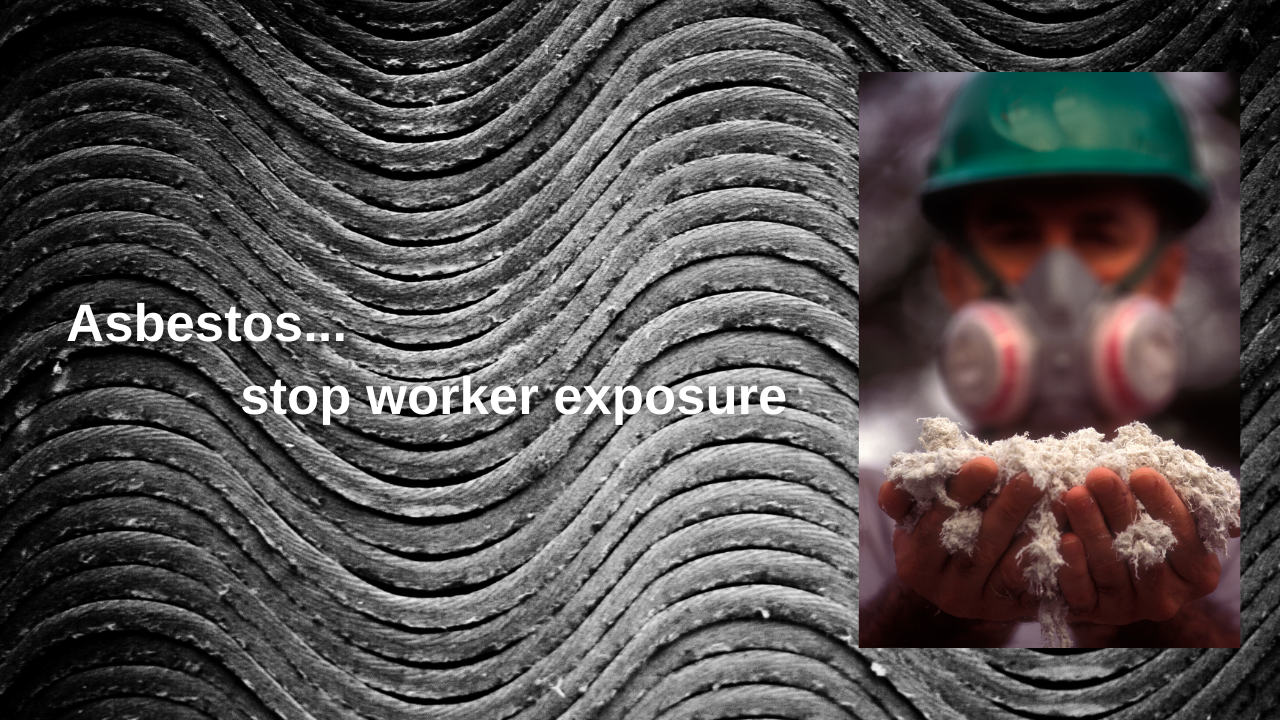
Many of today’s manufacturing plants have removed asbestos from their facilities, but some still manufacture products that contain legal amounts of asbestos. Although exposure at these plants is well monitored and minimal, there is no safe level of asbestos exposure according to the Environmental Protection Agency.
Many of today’s manufacturing plants have removed asbestos from their facilities, but some still manufacture products that contain legal amounts of asbestos. Although exposure at these plants is well monitored and minimal, there is no safe level of asbestos exposure according to the Environmental Protection Agency.
On the job accidents and injuries are most often a result of negligence and unsafe working conditions. In an effort to protect workers, the Occupational Safety and Health Administration (OSHA), created standards 1910.132 and 1910.133, to address requirements for providing Personal Protective Equipment (PPE) and eye protection in the workplace. However, most employers find it hard to sort through the standards to get to the heart of what they really mean in everyday life.
On the job accidents and injuries are most often a result of negligence and unsafe working conditions. In an effort to protect workers, the Occupational Safety and Health Administration (OSHA), created standards 1910.132 and 1910.133, to address requirements for providing Personal Protective Equipment (PPE) and eye protection in the workplace. However, most employers find it hard to sort through the standards to get to the heart of what they really mean in everyday life.
Work-related deaths at U.S. manufacturing plants declined 14.0 percent in 2007, marking a rebound from the 16.0 percent increase that occurred in 2006. This was among the findings of the new Census of Fatal Occupational Injuries report released recently by the U.S. Department of Labor's Bureau of Labor Statistics.
Work-related deaths at U.S. manufacturing plants declined 14.0 percent in 2007, marking a rebound from the 16.0 percent increase that occurred in 2006. This was among the findings of the new Census of Fatal Occupational Injuries report released recently by the U.S. Department of Labor's Bureau of Labor Statistics.
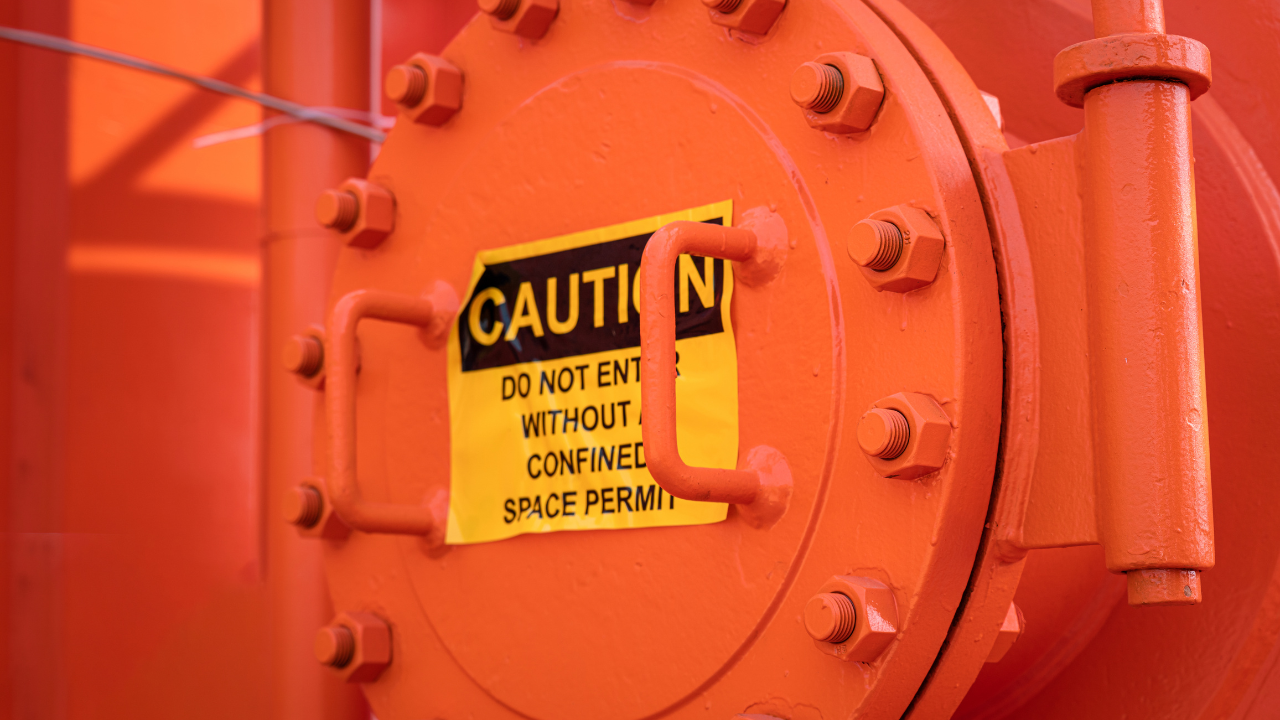
A confined space is defined as a workspace that is fully or partially enclosed, is not designed or intended for continuous human occupancy and has limited or restricted access, exiting or an internal configuration that can complicate provisions of first aid, evacuation, rescue or other emergency response services. Confined spaces can be found in almost all industries in Canada, which include tunnels, mines, grain silos, hydro vaults, shipping compartments, pump stations, boilers, chemical tanks and more. Every confined space is considered to be hazardous unless deemed not so by a competent person through a hazard identification and risk assessment.
A confined space is defined as a workspace that is fully or partially enclosed, is not designed or intended for continuous human occupancy and has limited or restricted access, exiting or an internal configuration that can complicate provisions of first aid, evacuation, rescue or other emergency response services. Confined spaces can be found in almost all industries in Canada, which include tunnels, mines, grain silos, hydro vaults, shipping compartments, pump stations, boilers, chemical tanks and more. Every confined space is considered to be hazardous unless deemed not so by a competent person through a hazard identification and risk assessment.
Due to a particularly harsh and active hurricane season, the US Chemical Safety Board is urging chemical companies to properly prepare facilities for extreme weather as soon as possible. With increasingly frequent and damaging weather on the rise due to climate change, it is important to have a plan in place for hurricanes and other natural disasters to protect the site personnel and people living in the surrounding area from harm and danger related to compromised production facilities.
Due to a particularly harsh and active hurricane season, the US Chemical Safety Board is urging chemical companies to properly prepare facilities for extreme weather as soon as possible. With increasingly frequent and damaging weather on the rise due to climate change, it is important to have a plan in place for hurricanes and other natural disasters to protect the site personnel and people living in the surrounding area from harm and danger related to compromised production facilities.
In the past few years, Hydrovacs and "daylighting" have gained industry acceptance by minimizing the challenges of exposing underground pipelines, fiber-optics, and utilities. "Daylighting" is a non-destructive process using pressurized water (hydro) and a vacuum system (vac) to remove soil cover, thereby allowing a visual observation of underground lines. Hydrovacs expose these facilities to daylight, thus the term "daylighting".
In the past few years, Hydrovacs and "daylighting" have gained industry acceptance by minimizing the challenges of exposing underground pipelines, fiber-optics, and utilities. "Daylighting" is a non-destructive process using pressurized water (hydro) and a vacuum system (vac) to remove soil cover, thereby allowing a visual observation of underground lines. Hydrovacs expose these facilities to daylight, thus the term "daylighting".