Maintenance Cost and Estimated Replacement Value
Torbjörn Idhammar, President & CEO IDCON INC
Yesterday you were a happy camper. Today you are told your Maintenance Cost (MC) as a percent of your Estimated Replacement Value (ERV) is 4.9%. According to Consulting, Inc. and your corporate management 4.9% is way too high. Good performers are under 3%, some operations are even under 2%. So, the question is what are you going to do about it Mr. Maintenance Manager?
The Number
Before we discuss what we should do about this situation, let’s discuss the number. An educated guess is that the number has emerged from financial consulting firms trying to benchmark maintenance management. Many use a MC/ERV of 2-3 percent as a benchmark for best performers. Is it reasonable to use the number as a benchmark? My opinion is that in theory it can be, but I have rarely seen it used to help and organization assess or improve maintenance. Let me explain some of the deficiencies in applying the number.
The target number (2-3%) is often applied to all industry with the assumption that all industry maintenance cost should be the same if the estimated replacement value is the same. This is not a reasonable assumption. A computer chip manufacturer may buy a piece of equipment for $5,000,000 to produce wafers while a cement operation buy three 400 ton load capacity trucks for the same cost and same ERV. Does that mean that the maintenance cost is the same for the wafer making machine and the three trucks, I highly doubt it, but that is the underlying assumption for use of the number.
The maintenance cost compared to the equipment value is different depending on industry. For example, a mining operation has a much higher MC/ ERV than a fixed plant operation. A Mining corporation that is considered an industry leader recently surveyed the MC/ERV number in 11 mine locations. The MC/ERV ranged from 18% – 36%. Equipment in some industries wears more. A Gould 3196 pump servicing water supply has a higher MC/ERV than a slurry pump servicing oil sand. The slurry pump convolute often grind down in less than a year due to the extremely sharp sand grains while the water pump may last for years.
The Maintenance Cost is measured different from areas, locations, and corporation. Some capitalize large maintenance jobs, some don’t. You may say there are rules in place for capitalizations. Area A has a $100,000 job they want to put on the maintenance budget. They simply bring out my magic wand, now there are 3 jobs for $33,333 each! And so it goes on, with different rules for different companies, different definition of maintenance, and different people. Maintenance cost can easily vary 40-50%.
A reliable ERV is equally difficult to establish. To make an attempt for getting it as close to right as possible, you need to go back to the original investment of the mill. Then, you have to decide what index to use for estimating current replacement value. After that, you need to cluster all investments and divestments, for example, in a three-year time period. When all this is done, you can calculate ERV. This number is far from an exact number regardless of how you calculate it.
What Do you Do?
Regardless of what anyone thinks about the number you will most likely have to live with it at your location. What are you going to do about the maintenance cost (you probably can change the ERV unless you use dynamite on equipment and it is not recommended)?
Poor options
If you must change maintenance cost short term you are out of any good options. Maintenance can be deferred for about 12-18 months. My recommendations is that you make sure you become a hero and is promoted out of the plant before the 12 months are up, because the deferred maintenance will catch up around that time.
You can cut maintenance staff, which also works as an automatic system for deferring maintenance. Often, the logic is that maintenance people only work 2—3 hours per day, so let’s cut 30% of the crew. The problem is that when the cut is done the remaining maintenance people now only work 1 ½ to 2 hour per day.
A good option
Sit down with your lead team and ask “what drives cost (maintenance and operational) down long term?” IDCON has done this with many corporations and with honest discussions we always come to the same conclusions. Improving the following will reduce cost and increase production volume long term: Planning, scheduling, preventive maintenance, condition monitoring, spare parts management, and root cause problem elimination.
If our American industry would get this message, we would make a lot of money with no capital investment. I’d have to find another job.
Torbjörn Idhammar
Torbjörn Idhammar is the president and CEO of IDCON INC., a Reliability and Maintenance Management Consulting Firm. Tor’s responsibilities include training IDCON consultants, product development, sales, and marketing. He gives advice to IDCON’s multi-site and international clients to ensure outcomes and deliverables are met.
Related Articles
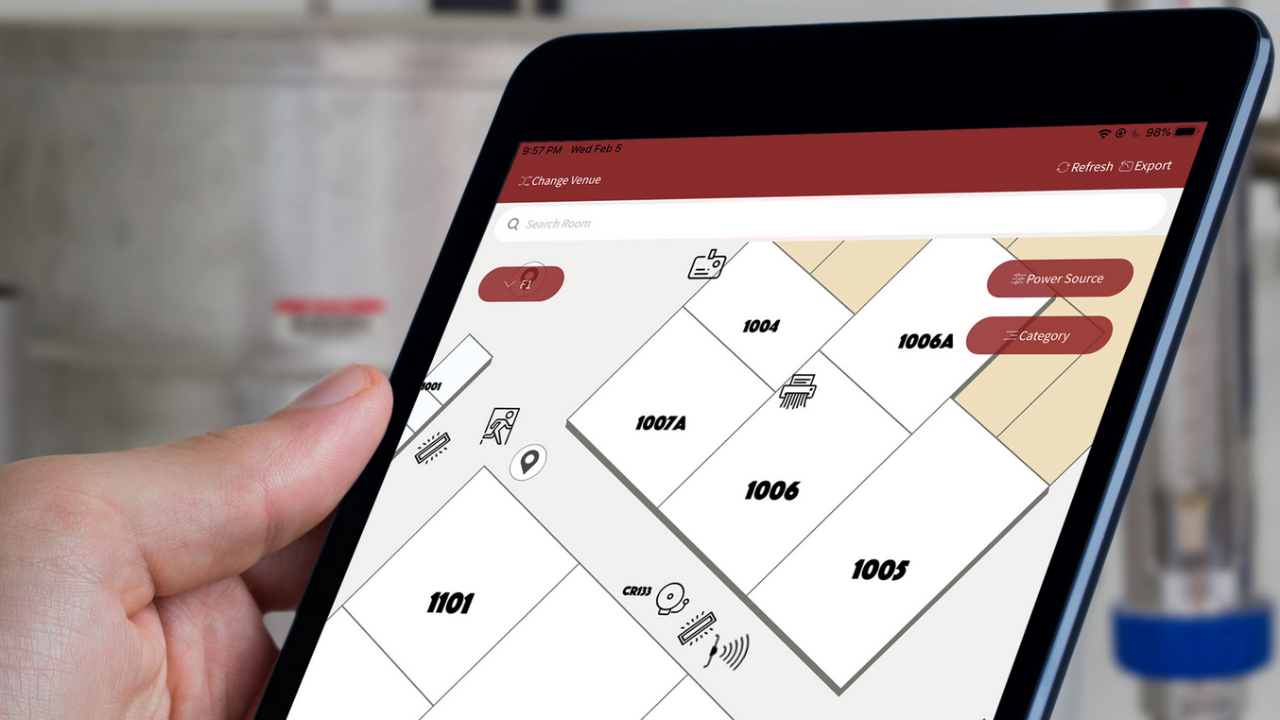
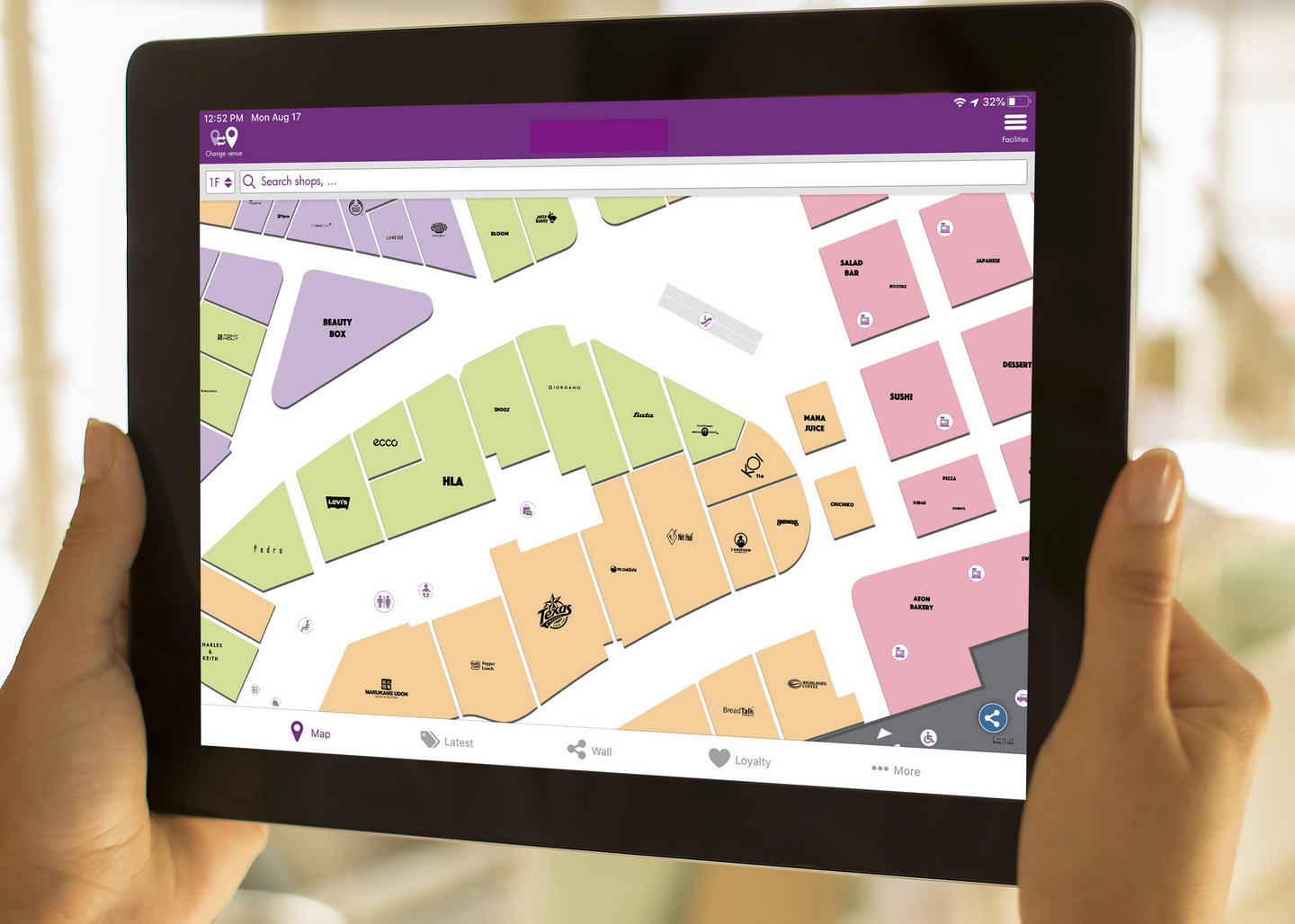
In 2023, speed and accuracy are driving forces in the facilities management industry, to keep costs low, track and maintain assets and mechanicals and be always compliant. To do this, you need technology that’s easy to use and affordable. Using paper-based floor plans, maps, blueprints that are usually dog eared, stained, and filed away where nobody can find them is a recipe for disaster.
In 2023, speed and accuracy are driving forces in the facilities management industry, to keep costs low, track and maintain assets and mechanicals and be always compliant. To do this, you need technology that’s easy to use and affordable. Using paper-based floor plans, maps, blueprints that are usually dog eared, stained, and filed away where nobody can find them is a recipe for disaster.
See More
If you are managing a large facility using blueprint floor plans and spreadsheets to track assets, this article is for you. If, the last time you had a water leak during off hours and it took the emergency repair tech a half hour to get to it after wading thru paper maps, this is for you. If your HVAC repair technician got lost on the roof while looking for unit #34 that required maintenance, this might be useful. If your employees have your facilities management team on speed dial, then this was written for you.
If you are managing a large facility using blueprint floor plans and spreadsheets to track assets, this article is for you. If, the last time you had a water leak during off hours and it took the emergency repair tech a half hour to get to it after wading thru paper maps, this is for you. If your HVAC repair technician got lost on the roof while looking for unit #34 that required maintenance, this might be useful. If your employees have your facilities management team on speed dial, then this was written for you.
See More
America began to acknowledge its cultural obsession with “busyness” a few years ago, when Tim Kreider wrote the now legendary piece “The Busy Trap” for the New York Times. Nearly three years later, while our culture certainly hasn’t changed, an admitted addiction to busyness has at least transitioned from groundbreaking journalism to mainstream conversations.
America began to acknowledge its cultural obsession with “busyness” a few years ago, when Tim Kreider wrote the now legendary piece “The Busy Trap” for the New York Times. Nearly three years later, while our culture certainly hasn’t changed, an admitted addiction to busyness has at least transitioned from groundbreaking journalism to mainstream conversations.
See More
Total Productive Maintenance (TPM) is a maintenance program which involves a newly defined concept for maintaining plants and equipment. This paper will define TPM history, benefits, strengths as a maintenance philosophy, its implementation approach, difficulties in its implementation and cost of implementing TPM. TPM is to Maintenance as Total Quality is to Production The goal of the TPM program is to markedly increase production while, at the same time, increasing employee morale and job satisfaction.
Total Productive Maintenance (TPM) is a maintenance program which involves a newly defined concept for maintaining plants and equipment. This paper will define TPM history, benefits, strengths as a maintenance philosophy, its implementation approach, difficulties in its implementation and cost of implementing TPM. TPM is to Maintenance as Total Quality is to Production The goal of the TPM program is to markedly increase production while, at the same time, increasing employee morale and job satisfaction.
See More
Reliability is not rocket science. It should be easy to achieve. Do things right the first time, from design, procurement, construction, installation, maintenance and operation, all the way through to decommissioning. Isn't this the goal of engineers? Still, in many cases we —industry in general—seem to struggle in achieving high reliability. One reason may be widespread inattention to Mechanical Quality Assurance (MQA).
Reliability is not rocket science. It should be easy to achieve. Do things right the first time, from design, procurement, construction, installation, maintenance and operation, all the way through to decommissioning. Isn't this the goal of engineers? Still, in many cases we —industry in general—seem to struggle in achieving high reliability. One reason may be widespread inattention to Mechanical Quality Assurance (MQA).
See More
Over the past twenty years, building information modeling (BIM) has been steadily securing itself as an essential tool in the architecture, engineering, and construction fields. Its advanced 3D capabilities are used in just about every design and construction phase. However, with new developments in real-time data collection, the advantages of BIM can extend beyond the completion of a facility.When applied to facility management, BIM opens the door to better asset management, improved safety, and optimized maintenance strategies that ensure that a building performs at its best 100 percent of the time.
Over the past twenty years, building information modeling (BIM) has been steadily securing itself as an essential tool in the architecture, engineering, and construction fields. Its advanced 3D capabilities are used in just about every design and construction phase. However, with new developments in real-time data collection, the advantages of BIM can extend beyond the completion of a facility.When applied to facility management, BIM opens the door to better asset management, improved safety, and optimized maintenance strategies that ensure that a building performs at its best 100 percent of the time.
See More