[webinar] Embracing Digital Transformation in Maintenance & Plant Operations | March 13 at 10AM EST – Register Now
Elastopipe: Safety Pipe for Oil Rigs
Elastopipe: Safety Pipe for Oil Rigs
Trelleborg AB
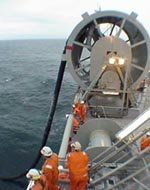
Trelleborg has developed a product, that can withstand a jet fire – the cause of the Piper Alpha disaster. The product, elastopipe, is already in use on several platforms, primarily in the North Sea.
It was 9:31 p.m. on July 6, 1988 when the alarm sounded. The Piper Alpha oil platform off the British coast was burning. The fire was intensive and spread rapidly. Within seconds, the entire platform was ablaze and had split in two. A total of 167 persons lost their lives. The cause of the fire was a leak in a pipe that started what is called a jet fire. This is a very explosive fire that can reach a temperature of 1,300°C within a few seconds. The flame, which was as hot as a welding arc, quickly burned out the water circulation system, making it impossible to save the platform.
Since this accident, Trelleborg has developed a product, Elastopipe, that can withstand a jet fire, while offering a number of other unique benefits. The product is already being used on several platforms, primarily in the North Sea. The product was developed by Trelleborg Viking A/S located in Mjondalen, Norway, about -50 kilometers west of Oslo. Development manager Kyrre Sjotun has lived with the development of Elastopipe for just over ten years. “In 1990, we started a project together with several other stakeholders to develop a non-combustible material that would also be toxin-free and not produce any smoke,” relates Kyrre. “Six years later, we had developed the basic principles for the material used to produce Elastopipe, was subsequently improved and continues to be refined.”
Norwegian government financing
The principal financiers of the project are the Norwegian government and the Statoil, Hydro, BP/Amcon and Phillips oil companies. With so many participants, each with different priorities, development work needed to take many different requirements and objectives into consideration. The initial requirement, which was that the material should be able to with-stand a jet fire, was supplement-ed by a number of others along the way. However, Elastopipe, Kyrre Sjotun and Trelleborg Viking succeeded in meeting all of these requirements.
To rationalize development work, Trelleborg Viking built a test rig in Norway that is considered one of the most advanced of its kind in the world. Several hundred tests have been conducted on this rig, which remains in use for continuous testing each week, mean-ing that it will play a key role in ongoing development. The rig allows many different possible, as well as completely impossible, scenarios to be simulated. Exactly the desired combination of flame speed, temperature and heat flux parameters can be created for testing.
Must withstand temperatures of 1,400°C
“Through testing, we have determined that the material should withstand a gas flame with an initial speed of 270 meters per second, an entry speed in the material of 110 meters per second and a temperature of 1,400° C,” says Kyrre Sjotun. “Naturally, we are not willing to reveal the secret behind Elastopipe’s unique characteristics, but I can say that an important property is that the material `sweats,’ which means that it will not start burning,” continues Sjotun.
To date, some NOK 7 million in development costs- has been invested annually. These costs are shared by the project sponsors, comprising the Norwegian government and a number of oil companies. Continued development is not expected to be as costly and will focus more on handling other derivatives, such as gas and oil, and possibly being able to offer a material in other colors for customers who wish to customize their equipment using their own color schemes.
Simpler, more efficient installation
“Elastopipe is based on synthetic rubber. Basically, it is a method for transporting water, a pipe, that at the same time must meet a number of different and very stringent requirements, of which the most fundamental is that it must with-stand the special form of fire called jet fire. Today the product can replace the steel and titanium pipes that are used on many of the world’s oil platforms. We can now compete with all the materials and dimensions used in this market,” notes Kyrre Sjotun.
“Another very important competitive advantage of Elastopipe is that installation is simpler than for competing materials,” continues Sjotun. “It is faster, in part because the pipe is easy to bend, but also because it is not necessary to stop production while installation is in progress, since no `hot work,’ such as welding, is required.”
Significant potential in a fast-growing market
Erik Leknes, president of Trelleborg Viking is very optimistic about Elasto-pipe’s prospects. “It’s always risky to make promises, but we see tremendous potential for Elastopipe, which is clearly our company’s most important product right now,” says Leknes. “We also already see that the product’s unique properties mean that it can play an important role and has a significant competitive advantage.”
How will the product be developed in the future?
“The basic application will remain the same, meaning transporting water even when a fire as violent as a jet fire erupts. One possible line of development that I foresee is that we may be able to develop a material that is thinner. We are also working to develop additional dimensions for the pipe. Currently, we offer dimensions from one to six inches. Our ambition develop an eight-inch pipe,” says Erik Leknes.
Safety standards drive the market
Customers are primarily major oil companies, including Statoil, Hydro, BP and Phillips but also companies, such as Kvaerner, Brown & Root and ABB, which provide maintenance for various types of deep–sea platforms. Customers are distributed geographically according to how high safety requirements are in their particular environments. Today’s customers are thus found in North Sea, where safety standards are high, followed by Australia, Great Britain and the Gulf, or Mexico, in that order.
Elastopipe is currently used on some 20 oil platforms primarily in the North Sea. These platforms are located in fields well known in the industry, such as Statfjorfelt and Elkofisk, the oil field where Norway’s oil adventure began.
For management, new and untrained employees present a different set of costly challenges. For example, productivity will drop due to lost time, there may be overtime expenses, insurance costs will rise and there can be potential lost customer sales. Worker's compensation claims will also increase and lead to higher premiums. How can these problems be avoided? What are some steps that can be put in place to help alleviate these concerns for new and untrained workers already in the workforce? Ideally, health and safety programs that offer basic training will fit the bill quite nicely. New and untrained workers need to learn about personal protective equipment (PPE), back-injury prevention, health and safety regulations and hazard recognition.
For management, new and untrained employees present a different set of costly challenges. For example, productivity will drop due to lost time, there may be overtime expenses, insurance costs will rise and there can be potential lost customer sales. Worker's compensation claims will also increase and lead to higher premiums. How can these problems be avoided? What are some steps that can be put in place to help alleviate these concerns for new and untrained workers already in the workforce? Ideally, health and safety programs that offer basic training will fit the bill quite nicely. New and untrained workers need to learn about personal protective equipment (PPE), back-injury prevention, health and safety regulations and hazard recognition.
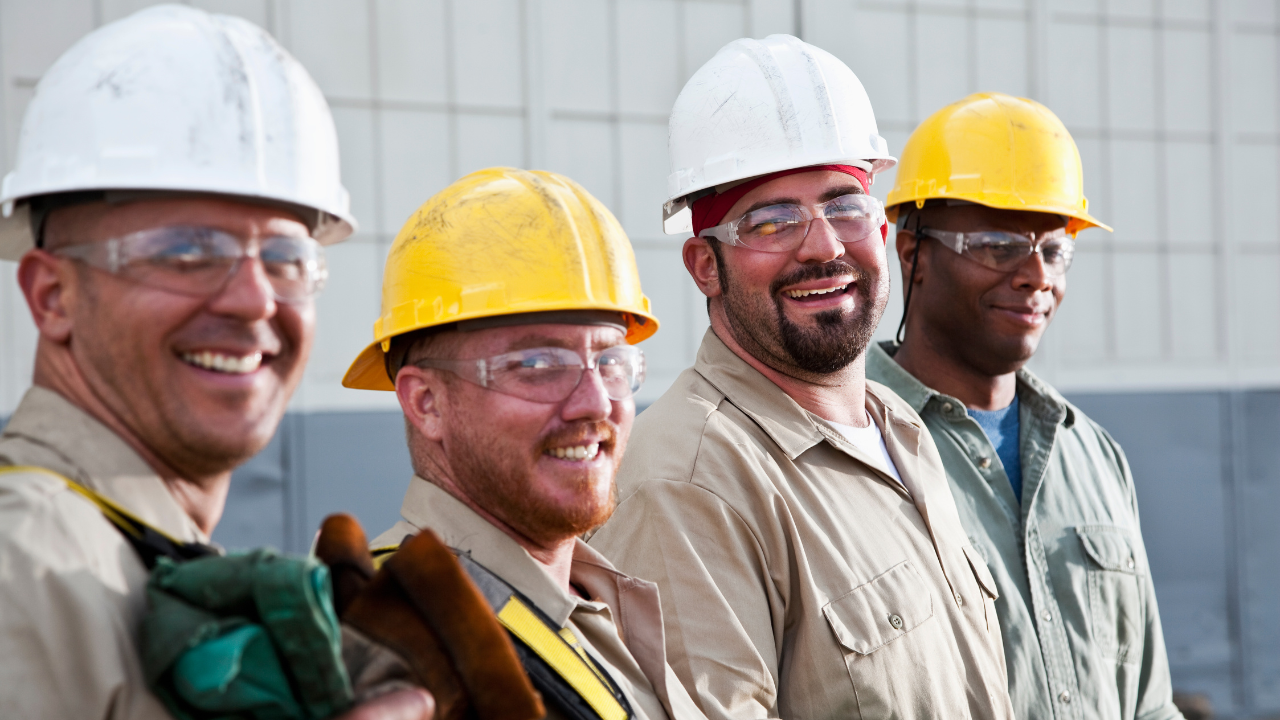
The issuance of safety eyewear to employees requires more than a handout. An important thing to remember when issuing safety eyewear is that in order to put your safety program into action, you need to communicate and educate your employees. Merely handing out free safety goggles and glasses and saying "wear these when you are working or else..." will only get you so far. Employees need to know why it is important to wear protective eyewear, and they need you to make it easy for them to do so effectively. It often helps to recite employee eye injury statistics to show workers the reality of the hazards around them, and give them a starting point for improvement.
The issuance of safety eyewear to employees requires more than a handout. An important thing to remember when issuing safety eyewear is that in order to put your safety program into action, you need to communicate and educate your employees. Merely handing out free safety goggles and glasses and saying "wear these when you are working or else..." will only get you so far. Employees need to know why it is important to wear protective eyewear, and they need you to make it easy for them to do so effectively. It often helps to recite employee eye injury statistics to show workers the reality of the hazards around them, and give them a starting point for improvement.
Significant engineering and test efforts
have been undertaken in the last few years into the area of arc flash/blast hazards in electrical equipment. The result has been a better understanding of arcing faults and how to prevent and/or minimize the hazards to personnel and equipment. This paper highlights some of the findings that may help in safety management and equipment selection. This paper concludes with some design considerations that will help reduce the hazards of arcing faults.
Significant engineering and test efforts
have been undertaken in the last few years into the area of arc flash/blast hazards in electrical equipment. The result has been a better understanding of arcing faults and how to prevent and/or minimize the hazards to personnel and equipment. This paper highlights some of the findings that may help in safety management and equipment selection. This paper concludes with some design considerations that will help reduce the hazards of arcing faults.
The rapid advancements in drone technology have brought high-performance drones to the forefront in several industries, leading to enhanced efficiencies and improved outcomes. However, the persistent concerns surrounding drone data security cannot be simply wished away. Organizations need to find a middle ground, one where they can acquire drones that deliver on their operational mandate, are cost-effective but also secure the data they hold. Because the tech is only going to get more powerful – but it doesn’t have to be at the expense of integrity and security of user data.
The rapid advancements in drone technology have brought high-performance drones to the forefront in several industries, leading to enhanced efficiencies and improved outcomes. However, the persistent concerns surrounding drone data security cannot be simply wished away. Organizations need to find a middle ground, one where they can acquire drones that deliver on their operational mandate, are cost-effective but also secure the data they hold. Because the tech is only going to get more powerful – but it doesn’t have to be at the expense of integrity and security of user data.
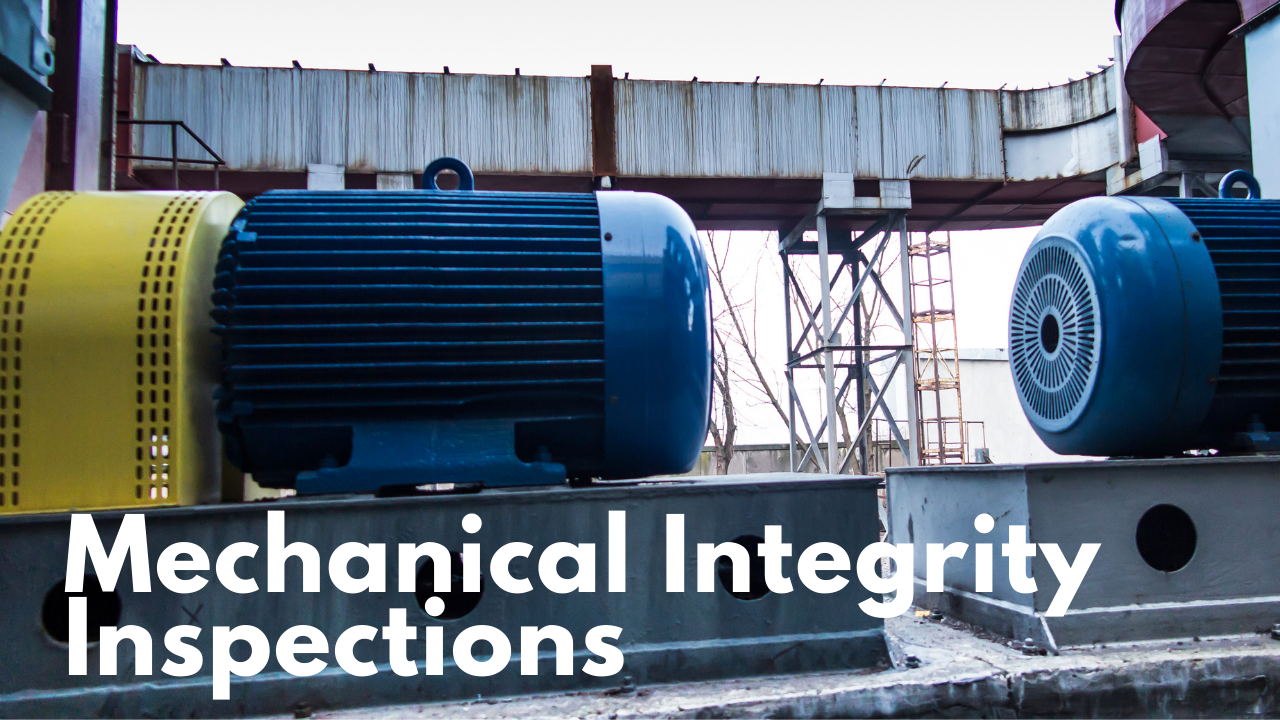
For many organizations, these inspections are something they have to do to meet regulations. And, that’s important – those regulations are there to help provide a workplace that is safe for workers, the environment and the surrounding community. But, some companies are able to leverage those inspections to gain new insights into their operations and build additional efficiencies.
For many organizations, these inspections are something they have to do to meet regulations. And, that’s important – those regulations are there to help provide a workplace that is safe for workers, the environment and the surrounding community. But, some companies are able to leverage those inspections to gain new insights into their operations and build additional efficiencies.
We as safety professionals aren't exempt. Have you seen this: Workers don't change their actions? Tell them again (with a why-didn't-you-listen undertone). Policies and procedures not followed? Write additional (and more detailed) rules. Training didn't change their behavior? Put them through the same training again and again (until they "get it"). Try, try, try again to solve safety problems, but don't confuse persistence with obstinancy.
We as safety professionals aren't exempt. Have you seen this: Workers don't change their actions? Tell them again (with a why-didn't-you-listen undertone). Policies and procedures not followed? Write additional (and more detailed) rules. Training didn't change their behavior? Put them through the same training again and again (until they "get it"). Try, try, try again to solve safety problems, but don't confuse persistence with obstinancy.
One aspect of safety is the reminder to be safe! Just the actual reminder might save someone’s life. It’s not unreasonable to have a safety moment every day. It could be one or two minutes. At some companies, when they have any meeting, they always start with a safety moment. In maintenance, there’s usually a five- or 10-minute section on safety during the daily toolbox meeting in the morning; nothing really elaborate. If you’re going to address a bigger safety topic, it might be a half hour or an hour with a slide presentation.
One aspect of safety is the reminder to be safe! Just the actual reminder might save someone’s life. It’s not unreasonable to have a safety moment every day. It could be one or two minutes. At some companies, when they have any meeting, they always start with a safety moment. In maintenance, there’s usually a five- or 10-minute section on safety during the daily toolbox meeting in the morning; nothing really elaborate. If you’re going to address a bigger safety topic, it might be a half hour or an hour with a slide presentation.