[webinar] Embracing Digital Transformation in Maintenance & Plant Operations | March 13 at 10AM EST – Register Now
EPA Tightens Mercury and Air Toxics Standards for Coal Plants
EPA Tightens Mercury and Air Toxics Standards for Coal Plants
Natalie Johnson
Posted 04/12/2023
The Environmental Protection Agency (EPA) announced a proposal on April 5, 2023, that will tighten existing rules to further limit the emissions of mercury produced by coal-fired power plants. Coal plants are the largest source of mercury pollution in the United States. In 2017 alone 8,800 pounds of mercury emissions were released.
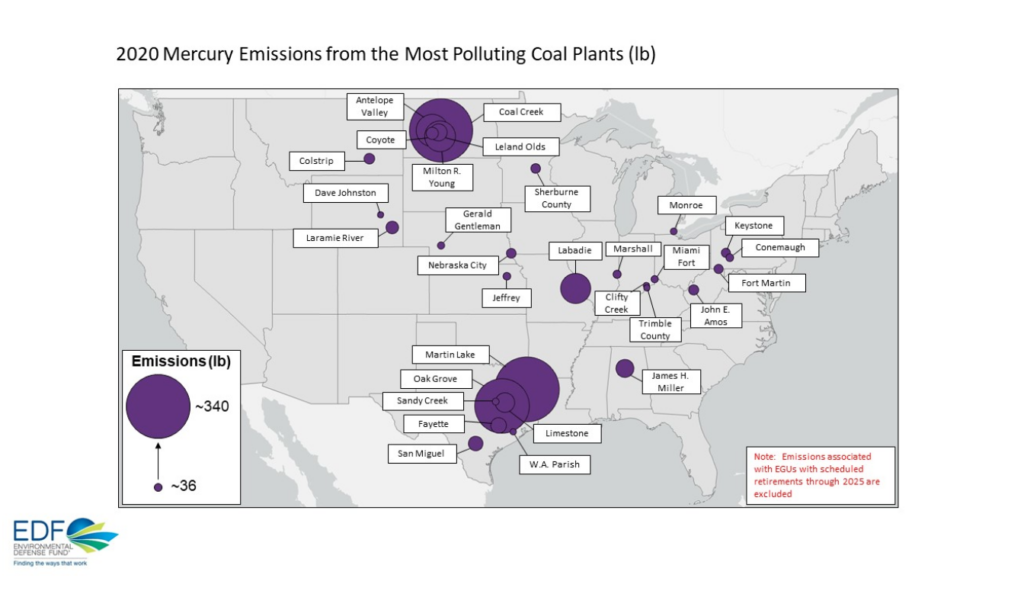
The Mercury and Air Toxics Standards (MATS), enacted in 2012, have already reduced mercury emissions by 90%. The new proposal, which is expected to be finalized in 2024, proposes a 70% reduction in the emissions limit for mercury from lignite-fired sources. Lignite is a type of coal that is considered low grade and high polluting. While lignite plants only account for 8% of the total coal production in the US, the five highest polluting coal plants on the map below burn lignite coal.
Environmental Defense Fund
The revisions will require all coal plants to achieve the same level of emission performance. Currently MATS requires lignite plants to meet a mercury emission standard of 4lbs per trillion British thermal units, while other coal plants are required to limit their emissions to 1.2lbs. The EPA believes this revision is necessary to protect the health of all Americans.
How is Mercury Released into the Environment?
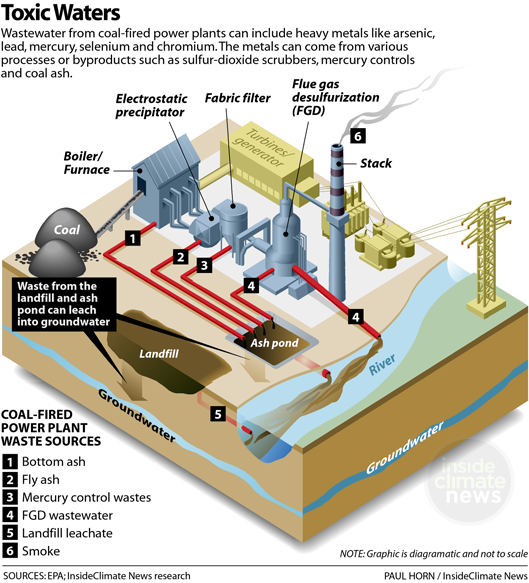
Burning coal produces coal ash, also known as coal combustion residuals. Coal contains a high mercury concentration, and the metal is released in the combustion process.
One power plant can generate 100-300+ pounds of ash for every ton of coal burned. For plants with large generators that burn around 3 million tons of coal each year, 150,000-450,000 tons of coal ash are released.
Inside Climate News
Mercury is the only metal that is liquid at room temperature, when heated the liquid will evaporate into mercury vapor. This vapor is released through smokestacks at plants and most mercury will fall within 9 miles of the smokestack contaminating the surrounding soil and water.
Mercury also contaminates settling ponds used by power plants to discharge wastewater. Plants use water to cool and sluice bottom ash away from the boiler for final disposal. A typical sluice system collects ash from the furnace in an ash hopper, transports this ash through a sluice pipeline, and then dumps the mixture into a pond. These ash ponds pose a significant risk to the environment as mercury and other contaminates can leach into the ground water polluting private wells and waterways.
How does Mercury Impact Humans?
Once mercury reaches waterways it poses a risk to those who drink, bathe, and swim in contaminated water. Individuals residing near coal-fired power plants face a disproportionate level of mercury pollution.
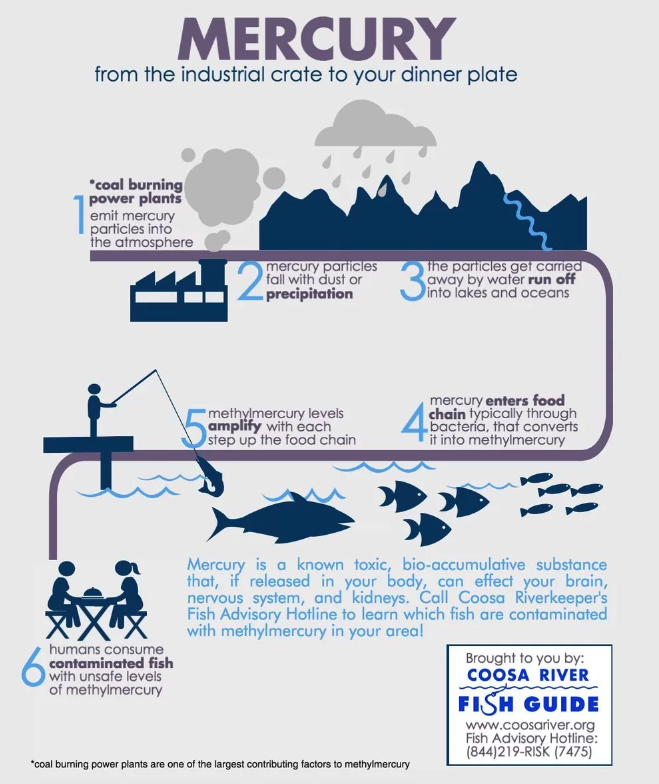
Mercury travels up the food chain to humans as bacteria in water can change it to methylmercury which is absorbed by aquatic organisms. When fish consume these organisms, mercury builds up in fish tissue as it binds to the protein in muscles. Mercury cannot be removed through cooking or cleaning, which is why nearly all fish in the US contain traces of methylmercury and there are consumption advisories in all 50 states.
Coosa Riverkeeper
Mercury exposure damages the brain, heart, kidneys, lungs, and immune system. It has the potential to increase cancer risk and cause developmental delays in children. Fetuses are especially vulnerable to neurocognitive deficits and other birth defects while in their mother’s womb, making it imperative for pregnant women to remove fish and shellfish from their diet.
The revised standards would reduce mercury pollution thereby protecting public health and advancing environmental justice. The EPA believes that under the Clean Air Act they have an obligation to revise the existing standards to further regulate toxic emissions.
Midweek with Maintenance World
Looking for a midweek break? Keep up with the latest news brought to you every Wednesday by the Maintenance World crew.
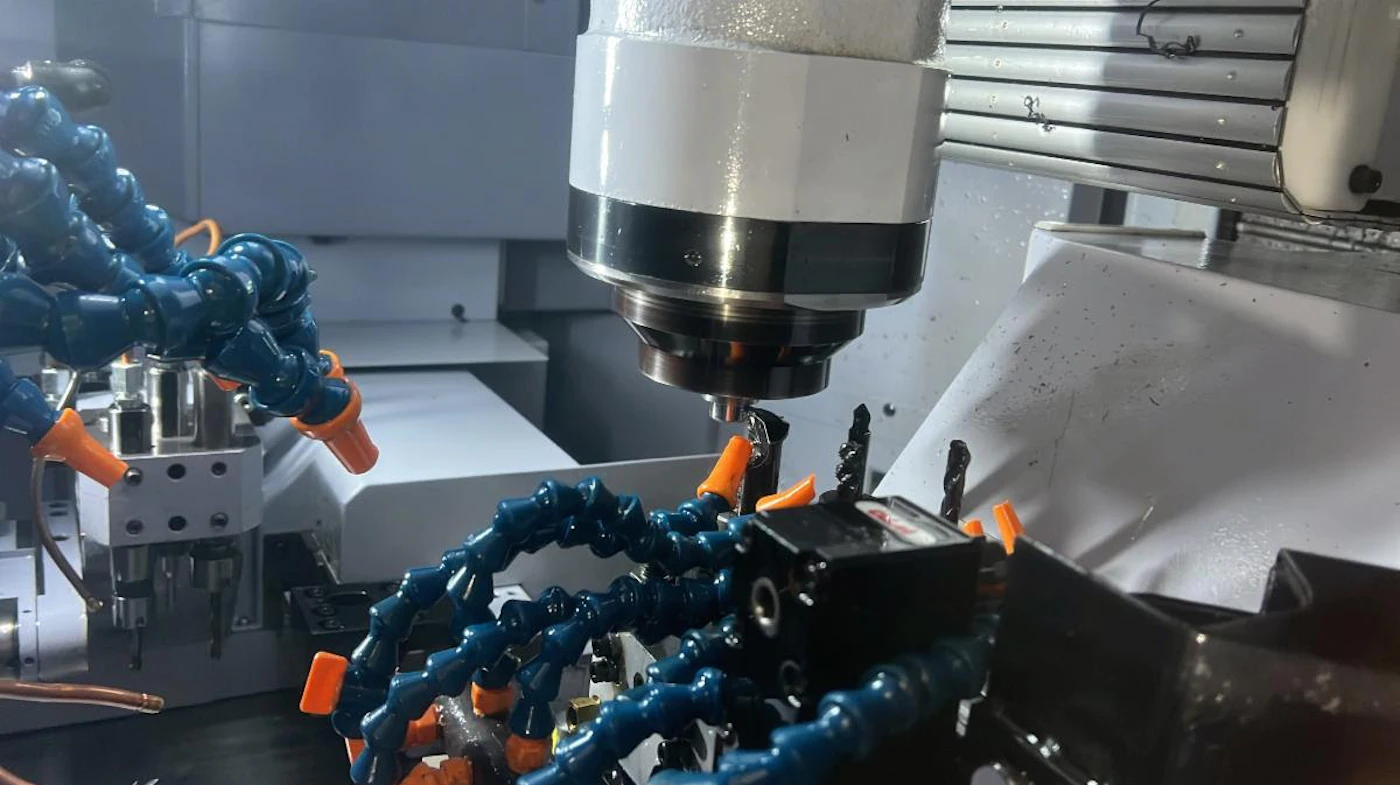
Manufacturing organizations are making a change from standard CNC type lathing and milling machines to newer Swiss-style lathes for the production of high-quality parts in large volumes. What are the reasons for the switch? Traditional CNC lathing and milling machines can involve four different setup processes requiring more than one crew member to run, while the more compact and faster Swiss style machines allow operators to process the entire part in one operation.
Manufacturing organizations are making a change from standard CNC type lathing and milling machines to newer Swiss-style lathes for the production of high-quality parts in large volumes. What are the reasons for the switch? Traditional CNC lathing and milling machines can involve four different setup processes requiring more than one crew member to run, while the more compact and faster Swiss style machines allow operators to process the entire part in one operation.
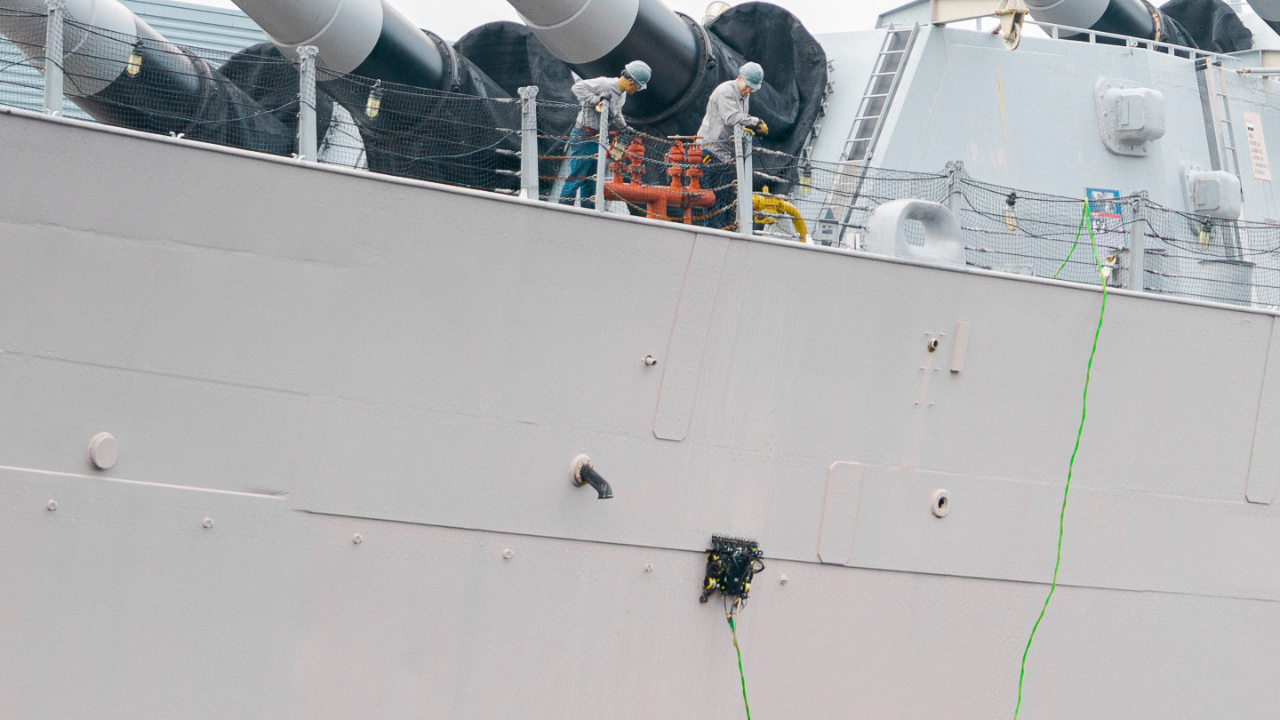
The Navy is grappling with a significant maintenance backlog, hindering its ability to ensure the readiness and availability of its fleet. The $1.8 billion backlog has been attributed to a range of factors including crew shortages, lack of spare parts, and limited shipyards. To address this pressing issue, the Navy has turned to innovative solutions to expedite maintenance processes, alleviate the backlog, and reduce repair time in shipyards.
The Navy is grappling with a significant maintenance backlog, hindering its ability to ensure the readiness and availability of its fleet. The $1.8 billion backlog has been attributed to a range of factors including crew shortages, lack of spare parts, and limited shipyards. To address this pressing issue, the Navy has turned to innovative solutions to expedite maintenance processes, alleviate the backlog, and reduce repair time in shipyards.
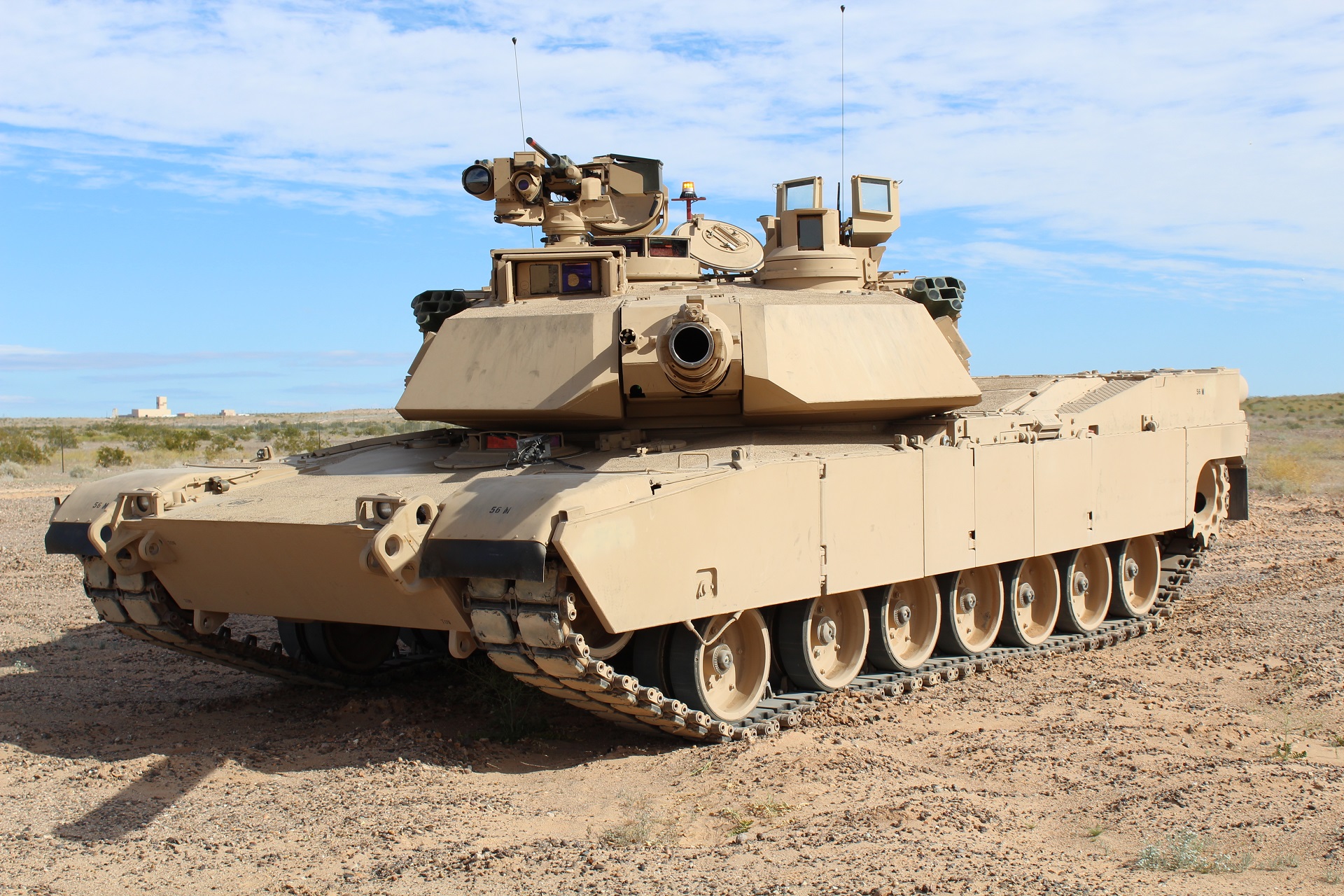
The Pentagon has officially decided to send M1A1 refurbished tanks to Ukrainian forces to aid in the fight against Russia. Initially there was some debate about whether they should send tanks, which models, and how quickly the tanks could be produced as Poland, Taiwan, and Australia have already placed orders at the Ohio Plant.
The Pentagon has officially decided to send M1A1 refurbished tanks to Ukrainian forces to aid in the fight against Russia. Initially there was some debate about whether they should send tanks, which models, and how quickly the tanks could be produced as Poland, Taiwan, and Australia have already placed orders at the Ohio Plant.
The pandemic, recent legislation, climate change initiatives, and worker preference have all been driving factors for the push to clean energy and decarbonization. While the renewable energy industry is growing, the oil and gas industry has taken a major hit the last couple of years. Workers are transitioning from careers in the fossil fuel industry to renewable energy because they are tired of the ups and down in the oil and gas industry and are concerned about climate change.
The pandemic, recent legislation, climate change initiatives, and worker preference have all been driving factors for the push to clean energy and decarbonization. While the renewable energy industry is growing, the oil and gas industry has taken a major hit the last couple of years. Workers are transitioning from careers in the fossil fuel industry to renewable energy because they are tired of the ups and down in the oil and gas industry and are concerned about climate change.
What is the foundation to increased uptime? Preventing failures and extending equipment life. It is essential to define best practices for leadership to clearly communicate the organization’s direction for reliability improvements. Are you implementing the following best practices in your plant?
What is the foundation to increased uptime? Preventing failures and extending equipment life. It is essential to define best practices for leadership to clearly communicate the organization’s direction for reliability improvements. Are you implementing the following best practices in your plant?
We are constantly reading news about industrial accidents and safety violations. Coming up on Safe+Sound Week, why don’t we focus on something positive? This week, we are highlighting OSHA's Voluntary Protection Programs (VPP).
We are constantly reading news about industrial accidents and safety violations. Coming up on Safe+Sound Week, why don’t we focus on something positive? This week, we are highlighting OSHA's Voluntary Protection Programs (VPP).
On February 7, the Environmental Protection Agency (EPA) announced a final Soot Pollution Standard to limit fine particle pollution, which includes soot (black carbon). The adjustment of the standard from a level of 12 micrograms per cubic meter to 9 is expected to prevent up to 4,500 premature deaths and 290,000 lost workdays, as well as increase money for health benefits by 2032. Facility owners will be required to provide plans of how their organizations will meet the new standard. Facilities currently in the process of construction will need to adjust.
On February 7, the Environmental Protection Agency (EPA) announced a final Soot Pollution Standard to limit fine particle pollution, which includes soot (black carbon). The adjustment of the standard from a level of 12 micrograms per cubic meter to 9 is expected to prevent up to 4,500 premature deaths and 290,000 lost workdays, as well as increase money for health benefits by 2032. Facility owners will be required to provide plans of how their organizations will meet the new standard. Facilities currently in the process of construction will need to adjust.
Lorem ipsum dolor sit amet, consectetur adipiscing elit. Nullam rhoncus, odio eget elementum volutpat, enim risus vulputate mauris, et luctus augue massa et sapien. Lorem ipsum dolor sit amet, consectetur adipiscing elit. In efficitur mi in erat lacinia tincidunt. Cras vulputate nec nulla vitae pretium. Integer porttitor mattis justo at fringilla. Donec eleifend massa turpis, at auctor mi pulvinar sit amet. Cras ut turpis id arcu fringilla gravida.