
Case Studies: Implementing CMMS Systems in the Food Processing Industry
Paweł Bęś, Logistics and Maintenance Marketing Expert, QRmaint
Posted 8/25/2026
The European food chain is a massive, highly integrated economic engine. In 2020, the EU food and beverage processing sector alone comprised 291,000 enterprises, employed 4.6 million people, and generated €227 billion in added value. Throughout the entire chain—from farms to the 2.6 million distribution enterprises—uninterrupted production and supply integrity are paramount.
In food manufacturing and FMCG (Fast-Moving Consumer Goods), maintenance is far more than a routine back-office function—it is a critical driver of profitability and operational resilience. We know that companies are measuring even micro downtimes of 1 min or less when machinery stops. With tight margins, perishable raw materials, and strict hygiene standards, even a few minutes of unplanned downtime on a production line can lead to significant financial loss and wasted inventory.
Transitioning from reactive “firefighting”—characterized by chaotic phone calls. There are always some lost emails and fragmented Excel spreadsheets in each company we have visited across Europe. We see that transitioning to a predictive or preventive, digitally managed maintenance process is a major milestone for food producers.
This article contains three real-world case studies based on direct experience in manufacturing food maintenance demonstrating how leading food industry players from the middle of Europe—Cedrob Foods S.A., Dawtona Group, and Asprod S.A.—modernized their maintenance operations by implementing the CMMS system.

Case Study 1: Cedrob Foods S.A. – From Reactive to Predictive
Cedrob Foods S.A. is one of UE’s leading producers of high-quality poultry and meat products. They’re supplying major retail chains, food services, and individual consumers domestically and internationally. Their flagship processing plant in Sosnowiec, Poland, specializes in advanced meat processing—ranging from emulsifying and thermal processing to automated packaging lines—where equipment reliability is paramount.
The Challenge
Operating 5 production plants across Poland, Cedrob Foods faced inconsistent maintenance procedures and fragmented data tracking across locations:
- Dispersed Excel Spreadsheets: Lack of a centralized database made long-term analytics and strategic planning difficult.
- Informal Communication Channels: Maintenance requests submitted via phone calls and emails caused response delays and a lack of process transparency.
- Production Line Continuous Workflow: Transitioning from cellular manufacturing to continuous flow lines meant that any downtime anywhere on the line created immediate, costly bottlenecks.
“The two biggest challenges in the FMCG industry are cost optimization while maintaining top quality and rapid response to orders. The very short shelf life of products requires faultless operation of the machinery fleet.”
— Jakub Skowroński, Optimization Coordinator at Cedrob Foods
“I think the biggest challenge for the maintenance department is organizing work in a way that allows us to stay ahead of corrective actions through prevention and prediction, eliminating unplanned machine downtime.”
— Jakub Skowroński
The CMMS Solution & Impact
Coordinated by Jakub Skowroński, the implementation of CMMS automated and standardized maintenance workflows across plants:
- Centralized Equipment & Service History: Complete visibility into machine technical status, specifications, and life-cycle data.
- Mobile Task & Incident Management: Technicians receive real-time notifications and manage work orders directly on mobile devices while on the plant floor.
- KPI Dashboards & Analytics: Management gained clear dashboards to monitor open tasks, machine failure rates, and maintenance performance metrics.
- Shift to Preventive Maintenance: The team successfully moved from reactive repairs to scheduled preventive inspections.
“One of the main takeaways from implementing the system was its positive adoption—both technically and from the perspective of the maintenance staff who use it daily.”
— Jakub Skowroński
Case Study 2: Dawtona Group and Multi-Plant Integration
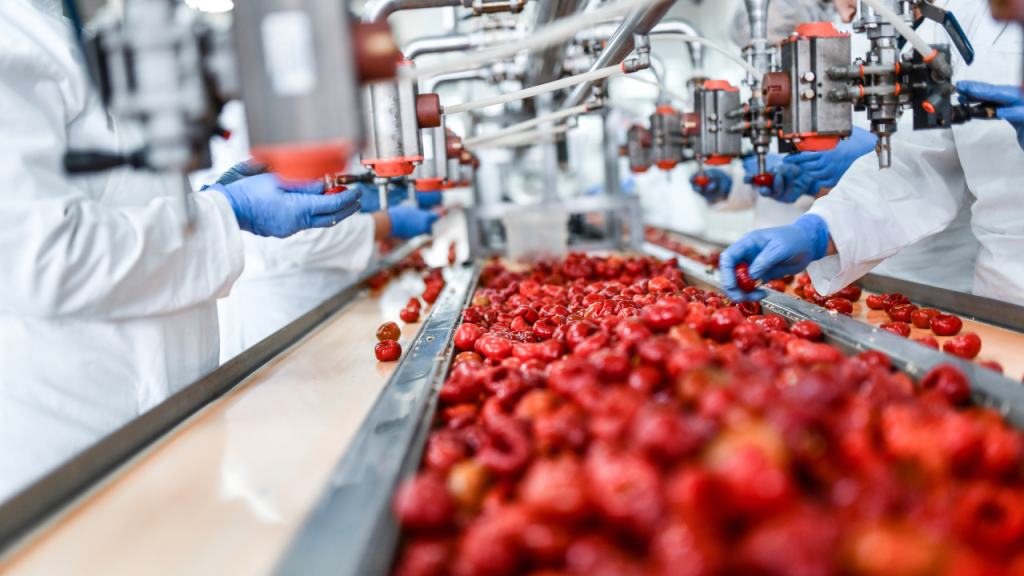
Dawtona is a family-owned Polish fruit and vegetable processing company that has been operating since 1991. Following a “from seed to can” model, Dawtona manages over 5,000 hectares of crops and several processing facilities (including Błoń, Milejów, Leszno, and Lipno). At the Milejów plant alone, a 20-person maintenance team oversees more than 100 complex production and packaging machines.
What was the Challenge?
- Low-Margin FMCG Pressures: Operating in a low-margin sector requires continuous cost reduction and strict control over maintenance expenditures.
- Siloed Spare Parts Inventories: A lack of visibility across 5 separate production plants made it difficult to check spare part availability during unexpected breakdowns quickly.
- Legacy Tools: Previous tools were too complex or lacked multi-plant warehouse management functionality.
“The main task is following market trends and lowering costs. Products in our industry are low margin, so we must strictly control expenditures on machine fleet maintenance. A CMMS system is an extremely important tool for us in this regard.”
— Maciej Słomka, Automation Engineer at Dawtona Milejów
The CMMS Solution & Impact
- Unified Multi-Plant Spare Parts Inventory: Real-time visibility across all 5 plant warehouses allows technicians to source parts internally during emergencies without making redundant purchases or endless phone calls.
- QR Code Machine Identification: Machine operators submit maintenance requests instantly by scanning QR codes placed directly on control cabinets and machines.
- Production Floor Visualizations: Maintenance status dashboards displayed on TV screens across the factory floor provide full transparency on work order priorities.
“The main goal of the implementation was to create a central spare parts warehouse for five plants. We wanted real-time visibility into what parts each plant holds. In case of a breakdown, we can react quickly without having to call each location separately.”
— Maciej Słomka
“It is very user-friendly, feature-rich, and has a well-thought-out interface. Advanced functions are explained, and visual data representation makes daily work much easier for the team.”
— Maciej Słomka

Case Study 3: Asprod S.A. – How to Manage a Distributed Network of Over 90 Retail Stores and Production?
Asprod S.A. is a bakery and confectionery producer with over 30 years of history, operating a modern production plant in Szczecin and a network of over 90 retail bakery-cafes and drive-thru outlets across northwestern Poland. The maintenance team (3 mobile field technicians for retail outlets and 7 plant technicians) manages baking equipment, refrigeration display cases, HVAC systems, and facility infrastructure.
Learn more about their challenges.
- Geographic Dispersion: Coordinating maintenance across 90+ retail locations spread over multiple provinces required fast, organized communication.
- Email & Paper Bottlenecks: Maintenance requests sent via email were hard to prioritize, track, or match against historical repair costs.
- Centralizing Service Documentation: Keeping track of service protocols, invoices, and photos of past interventions was cumbersome without a unified system.
“The biggest challenge is ensuring that production and operations don’t stop, and maintaining full communication between dispatchers, field technicians, and staff at both the factory and retail counters.”
— Agnieszka Stachowicz, Maintenance Systems Assistant at Asprod S.A.
“Human memory is fallible, whereas here we have messages or photos in black and white that can be useful in the future.”
— Agnieszka Stachowicz
The Solution & Impact
Led by Maintenance Department Manager Lech Ziółkiewicz and supported by Agnieszka Stachowicz, the implementation delivered clear benefits within two years:
- Cloud-Based Document & Photo Storage: Attachments, scanned invoices, photos, and progress comments are stored directly within work orders.
- Optimized Mobile Workflows: Mobile service technicians access machine history, asset details, and work logs on-site via mobile devices.
- Future WMS Integration: Plans are underway to integrate with the company’s ERP/WMS system (PSI) for automated spare part usage tracking.
“The system works great for us. We’ve been using it for two years, and it makes things so much easier. We can quickly retrieve information because everything is logged. We don’t have to rely on memory, and quick keyword searches for a specific store or equipment are a huge asset.”
— Agnieszka Stachowicz, Maintenance Engineer
CMMS Systems in the Food Processing Industry Conclusion
The operational journeys of Cedrob Foods S.A., Dawtona Group, and Asprod S.A. demonstrate a critical reality in European food manufacturing. They digitalizing maintenance is no longer just an IT upgrade, but a strong driver of profitability. Shifting from reactive firefighting to structured preventive schedules prevents costly bottlenecks on high-speed continuous lines. Unifying inventory and asset records across multiple facilities prevents redundant spare part purchases.
In an industry governed by tight margins, strict European food safety regulations, and zero tolerance for machinery stops, modernizing maintenance processes converts historical operational data into actionable foresight. A well-implemented CMMS enables food producers to stop reacting to breakdowns and start building a resilient, future-proof manufacturing operation.

Related Articles

Where AI, Industry 4.0, and IIoT Meet Maintenance Data Integrity

Maintenance Software Implementation
Why Should I Upgrade to a Programmable Logic Controller (PLC)?

Benefits of the Checklist Generator in the CMMS System

Cloud-Based vs. On-Premise CMMS Compared