

Destratification Fans: A Solution for Temperature Stratification in Industrial Spaces
Jamie Tuinstra, Modine Manufacturing
Posted 5/28/2026
In industrial spaces, temperature stratification is common and costly. The solution may be simpler than you think.
Industrial facilities can be harsh and unforgiving environments, leading to many challenges for building maintenance teams. One of the most acute challenges is ensuring temperature consistency. In any large industrial space, whether a manufacturing floor or a distribution center, uneven temperatures can quickly inflate utility costs, all while creating uncomfortable conditions for employees.
One of the big issues is that temperatures tend to stratify, leading to certain parts of the space being warmer than others. Destratification fans can be an essential solution, helping maintenance teams ensure stable temperatures and predictable energy expenses.
Stratification: a common challenge
Temperature stratification occurs when warm air rises to the ceiling, leaving cooler air pooling closer to the floor. The effect of stratification may be virtually unnoticeable in spaces with lower ceilings, including residential and traditional office buildings. In high-ceilinged industrial spaces, however, the effects of stratification can be severe. In some instances, the difference in temperature between ceiling and roof can be 20 degrees or more.
This unevenness can create a number of operational challenges. For one thing, heating systems must work significantly harder to create comfortable temperatures for employees. Facility teams may find themselves cranking the thermostat to accommodate for colder zones near the floor, where personnel are active. All of this means wasted energy, higher utility bills and premature wear and tear for heating systems.
Another problem: employee wellness and safety. Employees working in colder zones may experience discomfort during winter months, while stagnant airflow in warmer areas can create stuffy conditions. In facilities that operate around the clock, maintaining a comfortable environment is mission-critical for ensuring morale. And that’s to say nothing of how uneven or fluctuating temperatures can affect electronics and inventory items.
The bottom line is that destratification is a real challenge for industrial maintenance teams… and the taller the building, the bigger the problem.
How destratification fans help
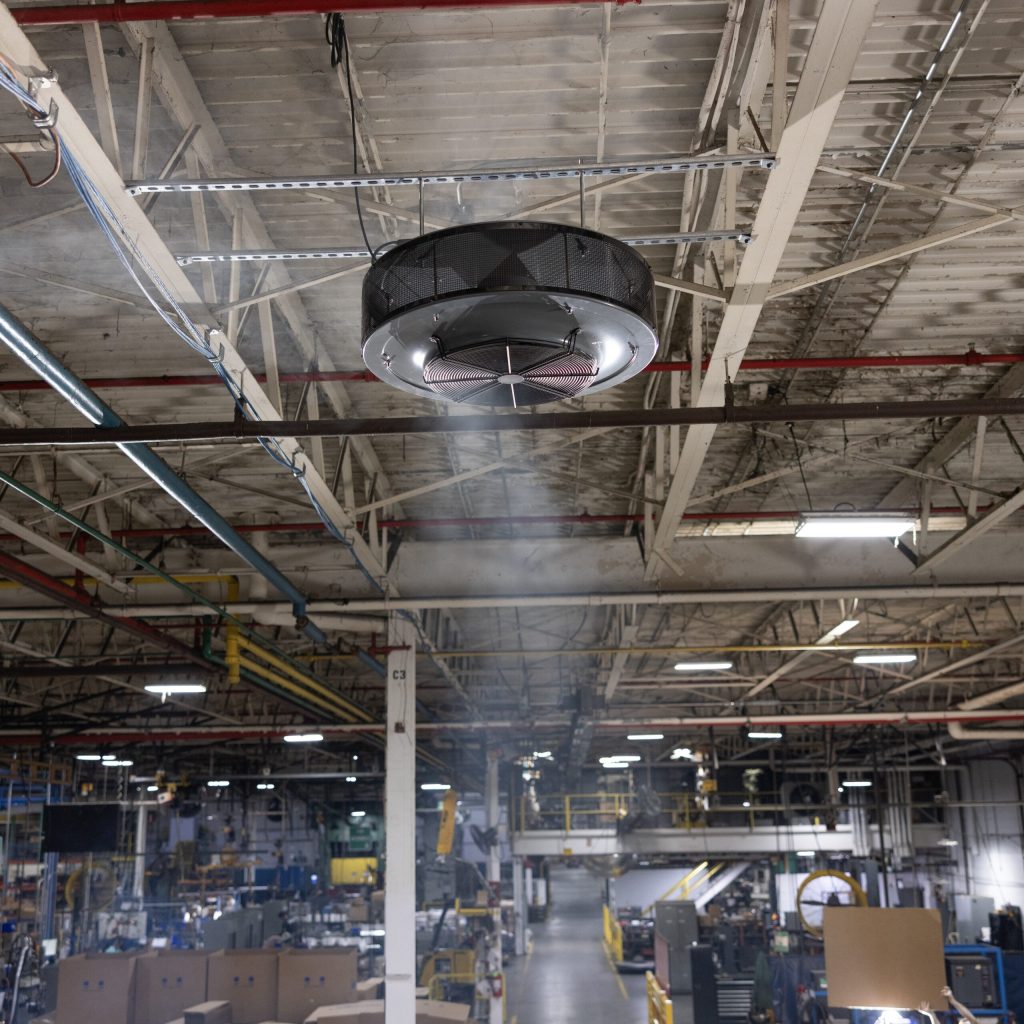
To address these problems, more industrial maintenance teams are turning to destratification fans.
These specialized, ceiling-mounted fans are designed to circulate air vertically throughout the facility, effectively breaking up those different temperature strata and creating a more even, comfortable building-wide climate.
Destratification fans can be advantageous no matter the season:
- In colder weather, warm air generated by the facility’s heating systems naturally rises. The destratification fan will gently redirect that air downward and evenly distribute it throughout the facility. This reduces the need for additional heating or for placing the thermostat on an unusually high setting.
- When the season turns warmer, these fans continue to support healthier airflow by reducing stagnant air pockets and improving overall circulation. When paired with HVAC systems, they can improve ventilation and help facilities maintain more balanced conditions for employees.
Installing destratification fans may yield a number of benefits. Foremost among them is improved energy efficiency. Because destratification fans redistribute heated air, instead of constantly generating heat, they can significantly curb heating expenses during winter seasons, resulting in meaningful annual savings.
A destratification fan can also improve overall system performance. Heating and cooling systems experience less strain when temperatures remain consistent facility-wide. Reduced cycling and workload can help extend equipment lifespan and lower maintenance requirements over time.
Also note that the typical destratification fan is purpose-built for industrial environments. Unlike residential ceiling fans, industrial destratification systems are designed to withstand demanding operating conditions such as dust, vibration and extreme humidity. Rugged motors, corrosion-resistant materials and durable mounting systems make these fans well-suited for warehouses and production floors.
Finally, destratification fans offer ample flexibility. For example, zoning strategies make it possible to manage different operational areas independently. Destratification fans can support these efforts by directing airflow to specific sections of a building where temperature imbalances are most pronounced. This allows facility managers to customize airflow patterns based on factors like occupancy and equipment heat loads.

Proper fit, maximum effect
To get optimal results from a destratification fan, it’s critical to choose the right model and to install it strategically. Careful planning is required, as every facility has unique airflow patterns, ceiling heights, equipment layouts and operational demands. A one-size-fits-all approach never works.
One major consideration is ceiling height. High-bay industrial facilities may need destratification fans tailored to tall ceilings or extended coverage areas. Placement matters, too, ensuring even airflow as opposed to isolated circulation zones. Obstructions such as cranes, ductwork, lighting systems or storage racks can potentially block circulation and limit the effects of a destratification fan.
Control systems can also be used to enhance the efficacy of a destratification fan. Facilities with shifting occupancy levels or changing seasonal demands can particularly benefit from automated controls that adjust fan operation when needed. Temperature sensors and programmable zoning controls are also essential for curbing unnecessary runtime.
For industrial maintenance teams, stagnant air can be a costly challenge. When rightly installed, destratification fans can offer a lasting solution. They’re not just good for promoting comfort; they are smart investments in a smoother operation.

Related Articles

Embracing the Power of Computer Aided Facility Management
Heating Solutions: Avoid Heating Concerns with Preventative Maintenance

What Is Facilities Management? Challenges, Solutions, & More
Facilities Management Technology for 2023
Digital Maps for Plants and Factories

Breaking Tech Barriers to Excel in a Competitive FM Arena