
[webinar] Embracing Digital Transformation in Maintenance & Plant Operations | March 13 at 10AM EST – Register Now
Managing Today’s Castles with InMapz
Sri Peruvemba
Posted 12/20/2022
If you are managing a large facility using blueprint floor plans and spreadsheets to track assets, this article is for you. If, the last time you had a water leak during off hours and it took the emergency repair tech a half hour to get to it after wading thru paper maps, this is for you. If the third-party maintenance crew could not locate the empty sanitizer dispenser after 3 weeks of complaining, you will find this interesting. If your HVAC repair technician got lost on the roof while looking for unit #34 that required maintenance, this might be useful. If your employees must accompany the auditors for days and you regularly find assets that are missing or assets that aren’t recorded on paper, please read on. If your employees have your facilities management team on speed dial, then this was written for you.
A thousand years ago when the first castle or palace was built, they probably had ushers to provide directions and instructions. Do they remind you of today’s airports and large malls where they still have ushers and hard to read printed maps on the wall? A thousand years ago the role of a facilities manager was to provide safety and comfort, that is still the major requirement in most buildings today. A thousand years ago, the facilities manager in a palace provided lighting using candles, heating by burning wood or coal, cooling by opening the windows and doors, water for drinking, cooking, and bathing, hygiene by pest control and routine cleaning, space allocation plus management and navigation. These are still the bulk of the services provided by the facilities manager albeit with newer tools like air conditioning, modern plumbing and devices that run on electricity. Yet, most of today’s facilities managers still rely on paper maps that are usually dog eared, stained and hard to read, with lots of notes and cryptic markings usually denoting the changes they made the last time they upgraded a panel or relocated a safety valve.
Today’s skyscrapers, malls, airports, hospitals, factories, and warehouses are quite a bit sophisticated, they have hundreds of rooms and destinations, thousands of assets, doors, elevators, safety equipment and sensors; they require an army of personnel to manage if you are using printed maps, spreadsheets on someone’s computer and signs on the walls. In addition to providing safety and comfort, today’s facilities managers are tasked with conserving energy, reducing carbon emission in an ever-changing environment of regulations and code.
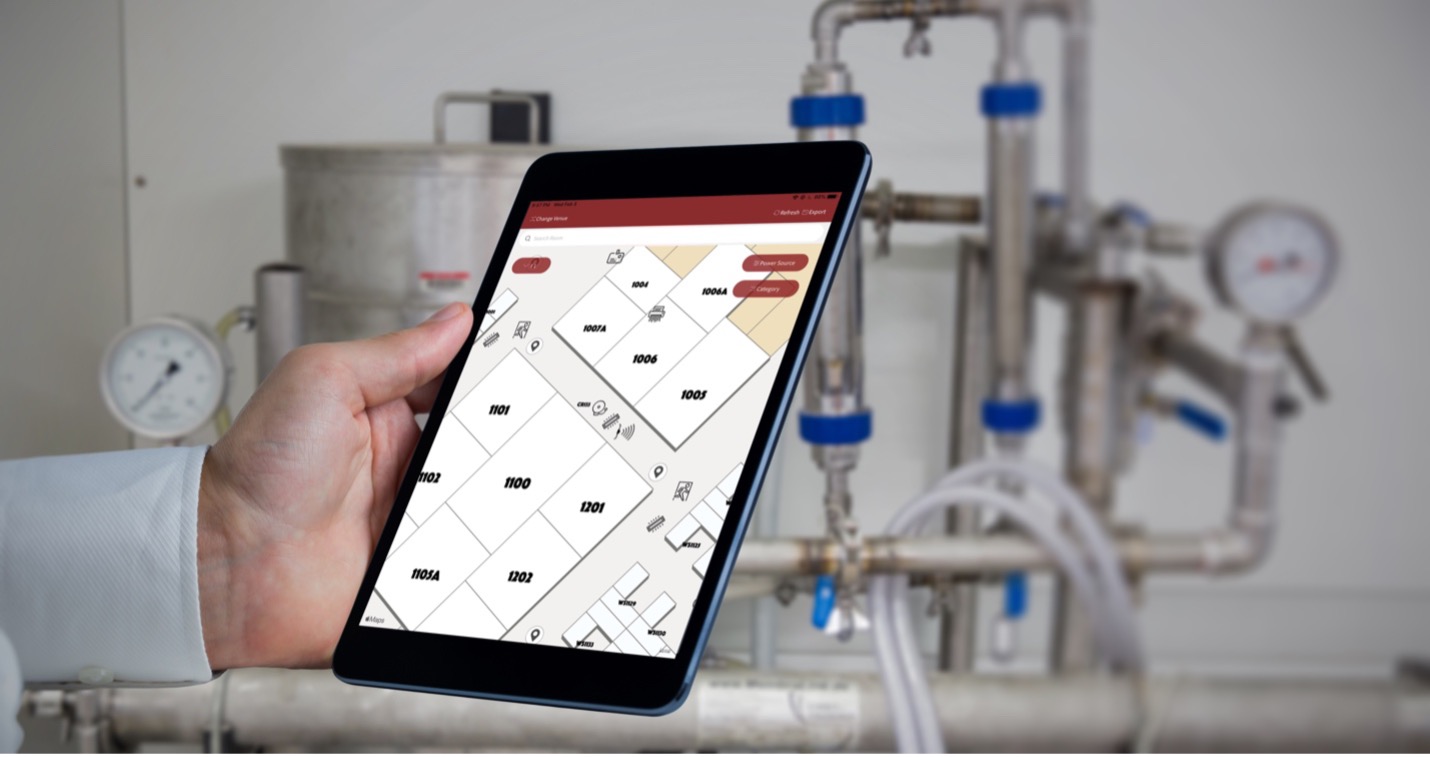
So, what is the solution? Recently introduced indoor mapping technology that converts static floor plans into the building’s digital twin through an automated process. One such solution is provided by InMapz. Each structure shown on the floor plan becomes a smart object with its own attributes such as GPS location, serial number, photographs, and description. Conference rooms, HVAC equipment, IoT sensors, etc. can be extracted from the floor plan. Users can easily add, edit, and delete other mechanicals. Next time you get a maintenance call in the middle of the night about a pipe leaking, rather than drive to the office, pull up floor plans and search spreadsheets, you can simply locate the shut off valve on your mobile app, in seconds. Want to manage today’s castles? There is a way.
About InMapz
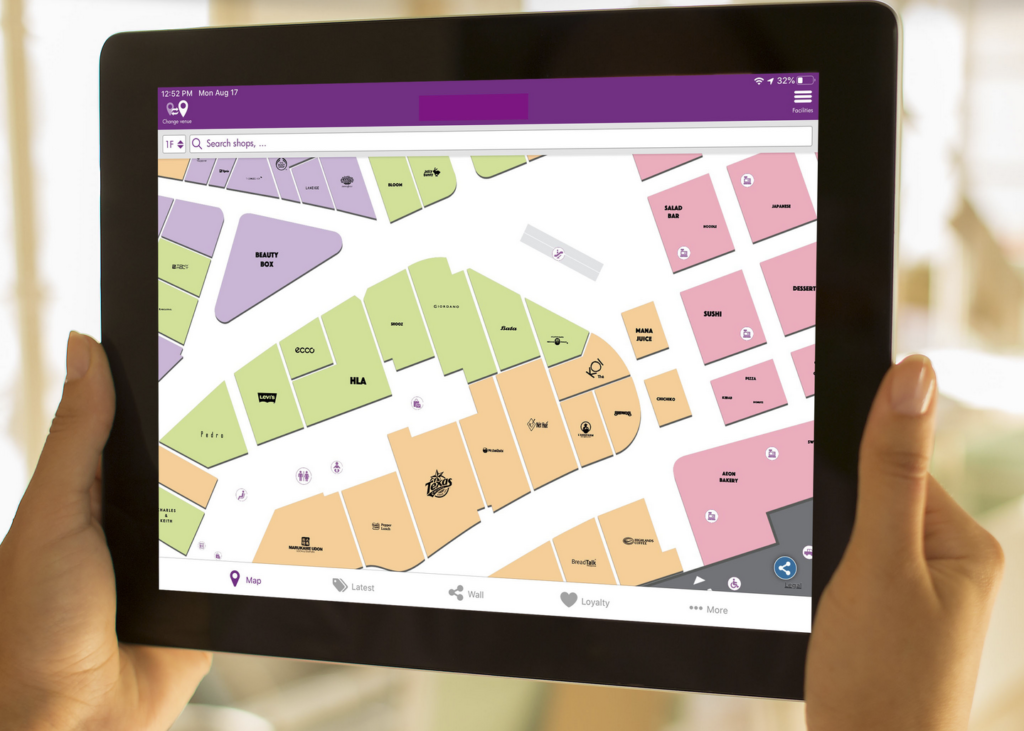
Founded by MIT and Caltech engineers, InMapz created fundamental technology to convert static floor plans into digital twins through an automated process. Each structure shown on the floor plan can become a smart object with its own attributes such as GPS location, model number, serial number, photographs, and so forth. For example, conference rooms, HVAC equipment, IoT sensors, etc. can be extracted from the floor plan. Users can easily add, edit, and delete other mechanicals. Rather than having to go to the office to pull up paper floor plans and cross-reference spreadsheets, users can access their building’s digital twin via the InMapz app or web browser on their phone, tablet, or laptop. Through selection and filtering options, users can both visualize on the digital twin and see a list of whatever smart objects are specified.
InMapz saves time and money for facilities managers, building auditors, third party maintenance teams, emergency response personnel, airport travelers, trade show organizers and attendees. The company has mapped hundreds of millions of square feet, including over 300 international airports, 1500 worldwide malls, hospitals, schools, universities, trade shows, office buildings, data centers, factories, and hotels.
Sri Peruvemba is CMO at InMapz an indoor mapping technology company that converts static floor plans into dynamic digital twins to manage your buildings from anywhere. Peruvemba serves technology companies in advisory and board roles; he has a bachelor’s degree in engineering, a master’s in business and a post graduate diploma in management.He can be reached by email at: sri@inmapz.com
Aging Facilities in the US are entering the Renovation Phase. The average facility age is 50 years old. For many facility managers, the risks and costs associated with mid to old-age facilities is new territory. Aging facilities that are reaching 40 to 60 years old are facing a new stage of capital investment that many are not prepared for.
Many facility managers continue to rely on paper maps, blueprints, and spreadsheets to track assets, navigate spaces, and manage emergencies. While digitized floor plans are often seen as an improvement, it remains limited in functionality, offering little more than a digital version of its paper counterpart. This is where a dynamic mapping solution, takes the lead.
Like most mature job functions, facilities management regularly face the scenario of senior employees retiring, more so than newer industries like artificial intelligence or electric vehicles. Everyone of us can related to throwing a surprise party for a fellow colleague, and then it hits us, when Tim walks out that door, along go 4 decades of knowledge. But Tim's job is done, he has earned a well-deserved retirement and it's time for new employees to take the reins.
Over the past twenty years, building information modeling (BIM) has been steadily securing itself as an essential tool in the architecture, engineering, and construction fields. Its advanced 3D capabilities are used in just about every design and construction phase. However, with new developments in real-time data collection, the advantages of BIM can extend beyond the completion of a facility.When applied to facility management, BIM opens the door to better asset management, improved safety, and optimized maintenance strategies that ensure that a building performs at its best 100 percent of the time.
When looking at HVAC units for K-12 schools, it is important to install a system that will create the optimal learning environment. Installing a single-room, single-packaged vertical unit (SPVU) ventilator provides important benefits that will keep the air fresh, clean and safe for students. These units are installed in individual classrooms, so they can be adjusted to optimize and address individual needs. Since these operate within a single room, unit ventilators eliminate cross-contamination. Airborne pathogens, such as the flu virus or RSV, will be contained within that room.
Neglecting heating system maintenance can quickly result in decreased energy efficiency. When filters become dirty, coils get clogged, or system components wear out, your heating system must exert more effort to maintain the desired temperature. Consequently, energy consumption rises, leading to higher utility bills.
Chillers and their refrigerants require ongoing preventative maintenance. Preventing refrigerant from leaving, preventing air from entering, and preserving refrigerant quality are all a part of chiller maintenance. By maintaining your chillers and by preventing chiller leaks you will also keep your operating costs down.
Lorem ipsum dolor sit amet, consectetur adipiscing elit. Nullam rhoncus, odio eget elementum volutpat, enim risus vulputate mauris, et luctus augue massa et sapien. Lorem ipsum dolor sit amet, consectetur adipiscing elit. In efficitur mi in erat lacinia tincidunt. Cras vulputate nec nulla vitae pretium. Integer porttitor mattis justo at fringilla. Donec eleifend massa turpis, at auctor mi pulvinar sit amet. Cras ut turpis id arcu fringilla gravida.