[webinar] Embracing Digital Transformation in Maintenance & Plant Operations | March 13 at 10AM EST – Register Now
3 Ways to Improve Motor Health with Vibration Testing
3 Ways to Improve Motor Health with Vibration Testing
Fluke
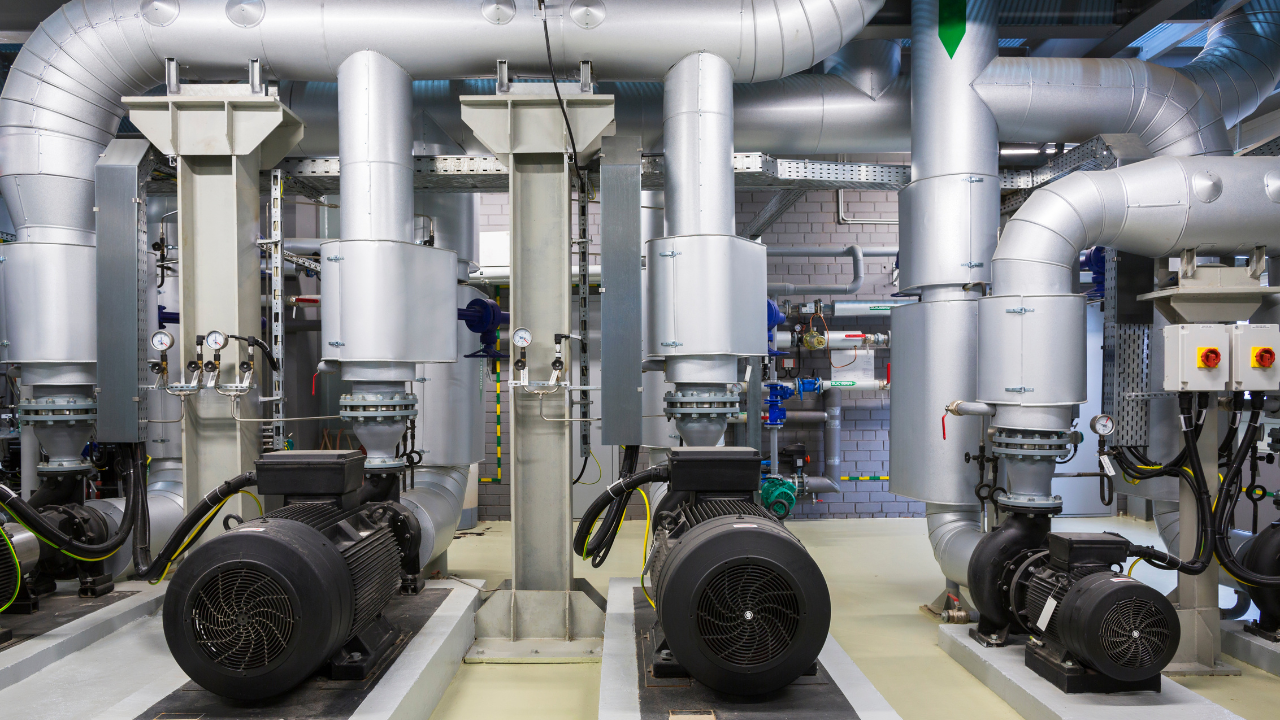
It’s essential that maintenance teams focus on failure modes to match the most suitable tool to the most likely problems. Vibration analysis helps diagnose the most common faults that rotating machines are susceptible to: imbalance, looseness, misalignment, and wear. The compatible trio of owning the right tools, knowing what to test, and sustaining a functional vibration testing program can potentially reduce repair costs and limit unproductive maintenance hours.
1. Test common faults and failures
Unchecked machine vibration can accelerate rates of wear (i.e., reduce bearing life), damage equipment, create noise, cause safety problems, and degrade plant working conditions. In the worst cases, vibration can knock equipment out of service and halt plant production. So where does the vibration come from?
Imbalance is caused by manufacturing defects or maintenance issues. As machine speed increases, the effects of imbalance become greater. It can substantially reduce bearing life.
Looseness can lead to vibration-derived damage, likely bearing wear or mount fatigue.
Misalignment happens when, for example, the axis of a motor and pump are not parallel. This fault can occur during assembly or develop over time due to shifting components or if reassembled incorrectly after scheduled or unplanned maintenance.
Wearing of drive belts, gears, or roller bearings can also cause vibration.
Most machines are basic and feature a pair of shafts with two bearings each and something (either a belt, coupling, or gearbox) that connects the two shafts. Many teams get stuck repeating repairs to the same machines. The common stop-gap is to replace motor and pump bearings. This often leads to repeat failure and another round of replaced bearings. It doesn’t matter which country a facility calls home—worn bearings and seals are symptoms of a problem that rarely reveals a root cause.
Research shows that up to 50% of damage to rotating machinery is a consequence of misalignment. Opting to replace worn bearings instead of regularly aligning machines can lead to losing thousands of dollars per year, not to mention wasted resource hours. One misconception is that installing flexible couplings negates misalignment’s ill effects. This approach, however, simply transfers forces to the seals and bearings, which causes rapid wear and unescapable failure.
One would be hard-pressed to find a facility manager who doesn’t want maintenance operations to run as smoothly as possible. Detecting signs of motor components failure becomes easier when combined with a preventive vibration program.
2. Start and sustain a vibration testing program
Brand new vibration programs face obstacles that are challenging, but not impossible to overcome. These four tips are key to starting up a new maintenance program:
Start small, show success, and earn more budget to grow. A great method is to start with 25 to 50 assets and gain a few successes. Then let the company higher-ups know that reliability is paying off in a big way. This is a better recipe for success than trying to change company culture overnight.
Start with simple machines and focus on problem machines. Start with machines that have a tracked history of failure. Even small machines that aren’t deemed big enough for a reliability group to monitor may be important to the maintenance and operations groups because they are the ones that require the most attention.
Focus on the common machine fault. The four most common faults account for 80 to 90% of all machine faults. Collaborate with your service provider and have them focus on the few, infrequent, and complex faults on your more complex machines.
Use automation and proven measurement methodology to get a complete picture of the machine’s entire power train. Maintenance technicians and operators don’t have time to look over reams of data—they have a plant to run. The goal should be a system that screens the data and provides answers about what is wrong with the machine and instructs on how to fix it.
3. Buy the right vibration testing tools
Handheld vibration meters, such as the Fluke 805 FC, help technicians track bearing health, impacting, surface temperature, and overall vibration level. Multiple-function screening tools employ algorithms that can spot flaws earlier, providing methods to share digital results with team members. These meters often employ a sensor tip that detects vibration and force while compensating for user variance and can be used on most equipment types and components. In a vibration program, the vibration meter is used to screen machines, determining whether they are healthy or show signs of impending problems.
Laser shaft alignment tools, such as the Fluke 830, can provide up to 65% reduction in seal repairs, up to 50% longer bearing life, and 10% reduction in energy waste. These tools do not require extensive alignment training when operating or interpreting results. The newest models utilize an intelligible user interface that essentially walks the mechanic through the alignment testing task, all while completing complicated calculations for the user. These features help teams quickly align shafts in most of a plant’s machines, instead of just a few.
Industrial machinery requires continuous and precise lubrication to maintain operational efficiency and prevent unexpected failures. Automatic lubrication systems and monitoring solutions play a key role in preventive maintenance, ensuring that the right amount of lubricant is applied at the correct intervals. This minimizes wear, reduces downtime, and extends equipment lifespan.
Industrial machinery requires continuous and precise lubrication to maintain operational efficiency and prevent unexpected failures. Automatic lubrication systems and monitoring solutions play a key role in preventive maintenance, ensuring that the right amount of lubricant is applied at the correct intervals. This minimizes wear, reduces downtime, and extends equipment lifespan.
In the June/July 2016 Uptime article, "Condition Monitoring and MEMS Accelerometers: What You Need to Know," several attributes of microelectromechanical system (MEMS) accelerometers were presented that make the technology compelling for condition monitoring applications. This article reviews data demonstrating the state of MEMS technology development and performance levels by comparing it to a commercially available piezoelectric (PZT) condition monitoring accelerometer.
In the June/July 2016 Uptime article, "Condition Monitoring and MEMS Accelerometers: What You Need to Know," several attributes of microelectromechanical system (MEMS) accelerometers were presented that make the technology compelling for condition monitoring applications. This article reviews data demonstrating the state of MEMS technology development and performance levels by comparing it to a commercially available piezoelectric (PZT) condition monitoring accelerometer.
Nowadays most everyone has a powerful computer in their pocket, their phone. Many of us are using them in maintaining our plants. Whether you are neutral or a devotee of the iPhone or Android devices, I think it’s safe to say we have only just scratched the surface of possibilities for using our smartphones to maintain our plants. Just think about how good it is to always have a great camera in your pocket with pictures viewable instantly. Does anybody remember the hassle of film? Waiting days to find out if an image was captured and how well it looked.
Nowadays most everyone has a powerful computer in their pocket, their phone. Many of us are using them in maintaining our plants. Whether you are neutral or a devotee of the iPhone or Android devices, I think it’s safe to say we have only just scratched the surface of possibilities for using our smartphones to maintain our plants. Just think about how good it is to always have a great camera in your pocket with pictures viewable instantly. Does anybody remember the hassle of film? Waiting days to find out if an image was captured and how well it looked.
Visiting plants in different corners of the world, we often are asked: “What are the current best practices for preventive maintenance (PM)?” We usually answer that we define preventive maintenance using 95 key elements. We also point out, to some people’s dismay, that there is no single silver bullet for improving PM, but rather many combined efforts will be required to eventually yield results. Here are a few key elements that have been extracted from our program of Current Best Practices (CBP) along with test questions and best practice (BP) examples to help you gauge how well your plant practices measure up.
Visiting plants in different corners of the world, we often are asked: “What are the current best practices for preventive maintenance (PM)?” We usually answer that we define preventive maintenance using 95 key elements. We also point out, to some people’s dismay, that there is no single silver bullet for improving PM, but rather many combined efforts will be required to eventually yield results. Here are a few key elements that have been extracted from our program of Current Best Practices (CBP) along with test questions and best practice (BP) examples to help you gauge how well your plant practices measure up.
If you are currently running a vibration monitoring program in-house or outsourcing it to a consultant, before you potentially throw any more money in the toilet, you really need to audit your vibration monitoring program and ask yourself if you are getting any value out of it. If you do not know what benefits you are getting from a vibration monitoring program, you are probably not getting any benefits at all!
If you are currently running a vibration monitoring program in-house or outsourcing it to a consultant, before you potentially throw any more money in the toilet, you really need to audit your vibration monitoring program and ask yourself if you are getting any value out of it. If you do not know what benefits you are getting from a vibration monitoring program, you are probably not getting any benefits at all!
Contrary to popular opinion, a centrifugal pump is not designed to develop a specific head at a certain capacity as requested by the pump purchaser. In fact a pump is designed and built to produce a whole range of head-capacity conditions as identified by it’s performance curve. The pump will operate on that curve if it is driven at the designated speed.
Contrary to popular opinion, a centrifugal pump is not designed to develop a specific head at a certain capacity as requested by the pump purchaser. In fact a pump is designed and built to produce a whole range of head-capacity conditions as identified by it’s performance curve. The pump will operate on that curve if it is driven at the designated speed.
Carbon brush grades are usually classified according to the manufacturing processes and the types of carbons, graphites, and other ingredients used. The 4 main brush grade families are carbon-graphites, electrographitics, graphites, and metal-graphites.
Carbon brush grades are usually classified according to the manufacturing processes and the types of carbons, graphites, and other ingredients used. The 4 main brush grade families are carbon-graphites, electrographitics, graphites, and metal-graphites.